
How to Find Money in Your Dryer Safely

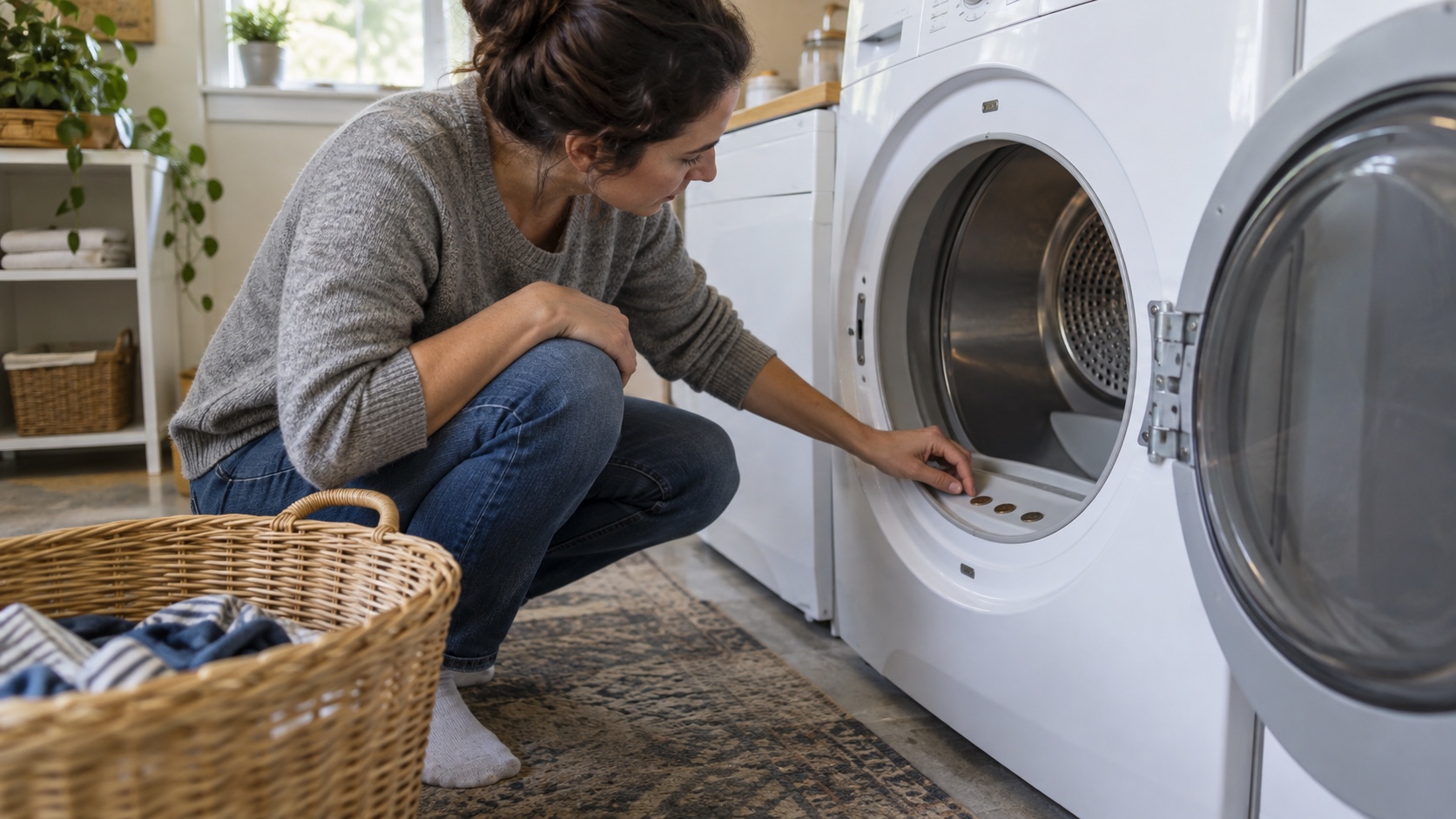
You may find a few coins that were left in pockets, but cleaning out a dryer is not a reliable way to make money. There is no typical payout: a random dryer only contains whatever its users accidentally sent through the laundry. Treat the search as a five-stop maintenance check, ranked from the easiest, lowest-risk place to inspect to the point where an owner's manual or service technician should take over.
This guide covers only areas designed for routine user access. Turn the appliance off, let it cool, and disconnect power before reaching beyond the drum. Never remove a dryer's cabinet panels, reach toward a blower, disconnect a gas line, or dismantle a washing machine just to look for money.
1. Check the dryer drum and door opening
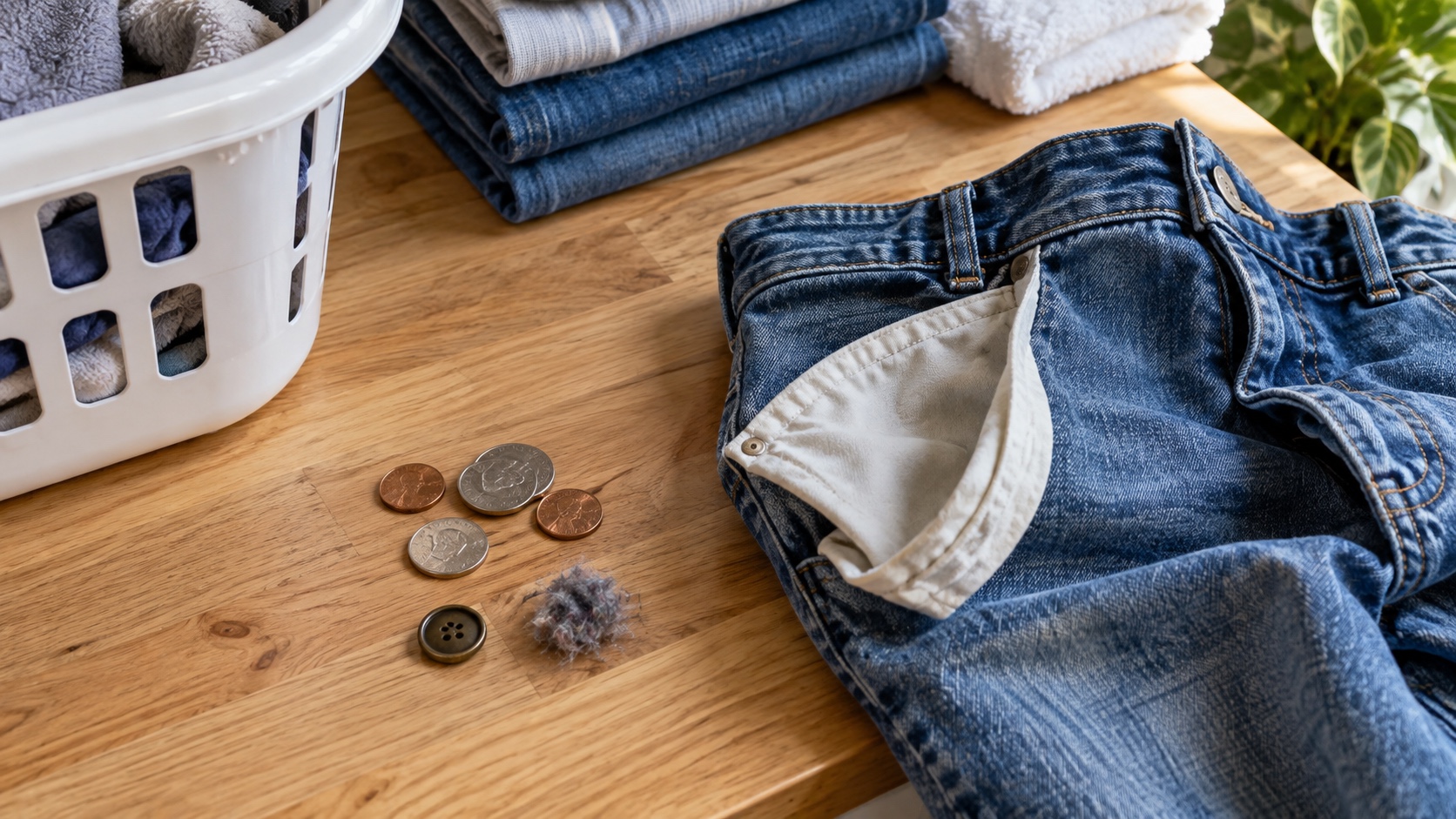
Best first check: the empty drum, door lip, and the floor immediately in front of the dryer. Coins, buttons, keys, and other small objects can make a rattling sound when they tumble. Maytag's current troubleshooting guidance specifically tells owners to remove loose items from the drum and notes that coins can also reach the lint chute.
Wait until the dryer is cool, open the door, and use a flashlight. Turn the drum slowly by hand only if your owner's manual permits it. Pick up objects that are fully visible and easy to grasp. If a coin is wedged in a seam, behind a baffle, or between the drum and cabinet, stop. The value of a coin does not justify scratching the drum, damaging a seal, or placing fingers near parts you cannot see.
Also check the floor beside the dryer, the gap below the door, and a removable pedestal drawer. Vibration and unloading can move pocket change outside the machine. Use a flashlight for visible debris, but do not tip or drag a heavy appliance by yourself.
2. Inspect the lint screen and the visible part of its chute
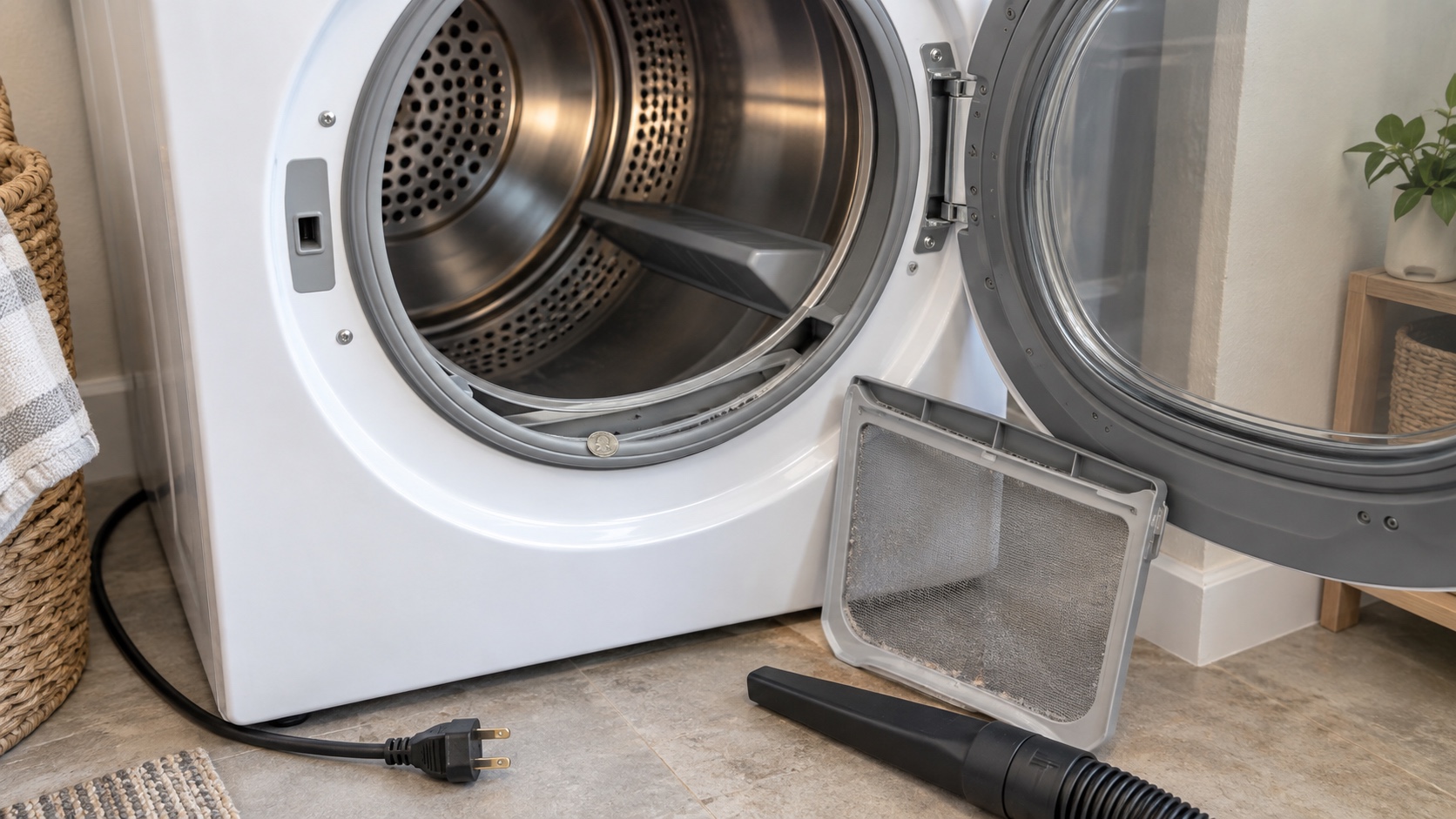
Best for: a coin or button you can see near the removable lint screen. Pull the screen out using the method in the model's manual, remove lint, and inspect the opening with a flashlight. Maytag says a vacuum crevice tool can be used carefully in the lint-trap opening, while the screen itself should be cleaned after every load.
Keep the distinction clear: the lint-screen slot is user-accessible; the blower and internal airflow path are not. Do not insert a coat hanger, screwdriver, or hand into a hidden compartment. If an object has fallen out of sight or the dryer starts knocking, scraping, or failing to dry normally, leave the panels in place and arrange service.
This check is useful even when it produces no money. The U.S. Fire Administration warns that failing to clean the lint filter and dryer vents increases dryer-fire risk. Follow its maintenance advice and your manual's schedule; searching for a coin is not a substitute for proper vent care.
3. Check the washing machine's drum and door gasket
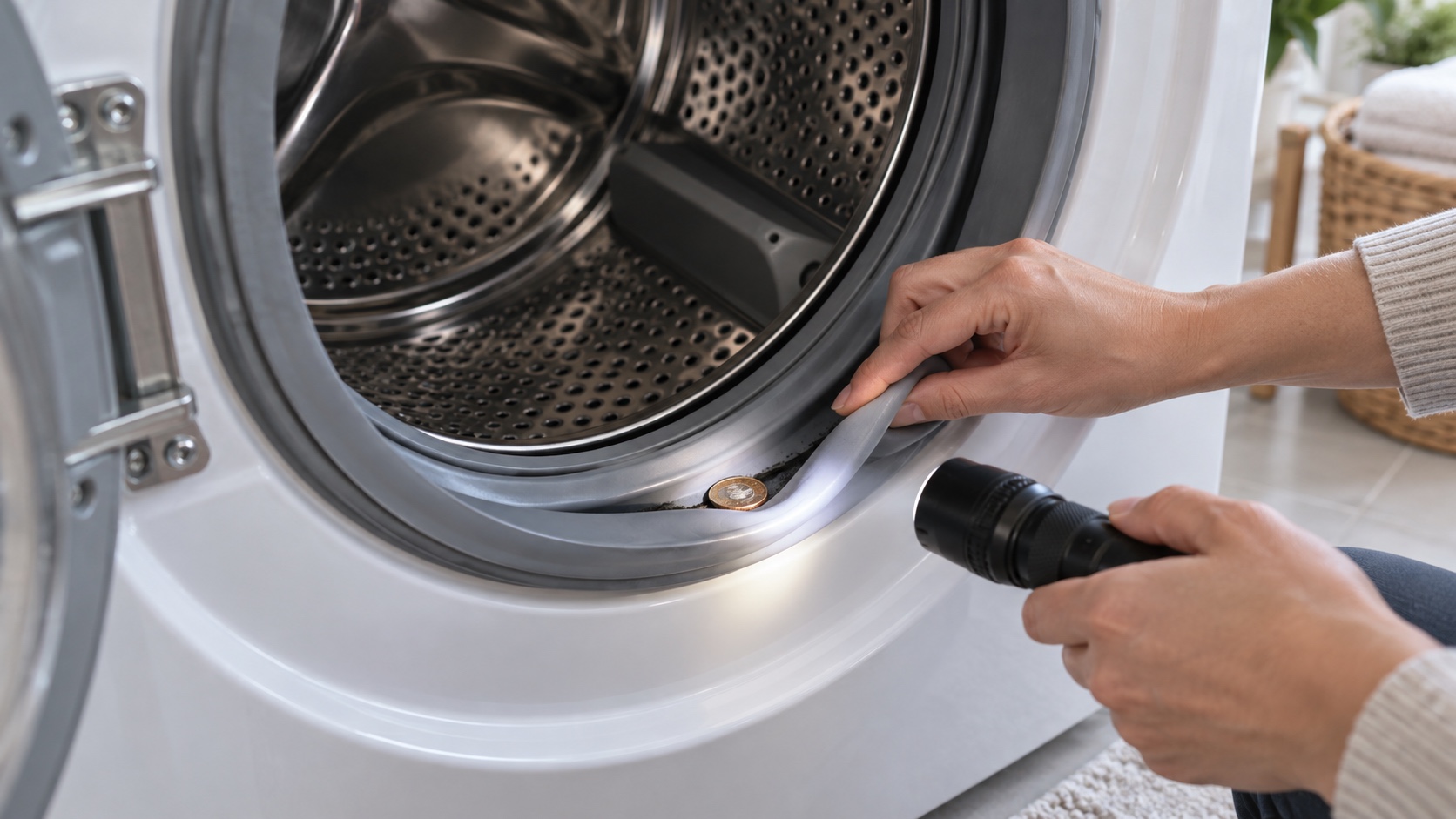
Best companion check: the washer drum, top-load wash plate area, or the accessible fold of a front-load door gasket. Money reaches a dryer only after surviving the washing machine, so the washer is often the more logical place to look. Turn it off, remove the laundry, and retrieve only objects that are plainly visible.
LG advises checking pockets before washing because loose objects can reach the drain system. On its top-load models, a visible coin caught between the wash plate and drum can interfere with operation; if no object is visible but the noise or error continues, LG recommends service. Do not pry into a gap or remove the wash plate just to hunt for change.
4. Open only a model-approved washer pump filter
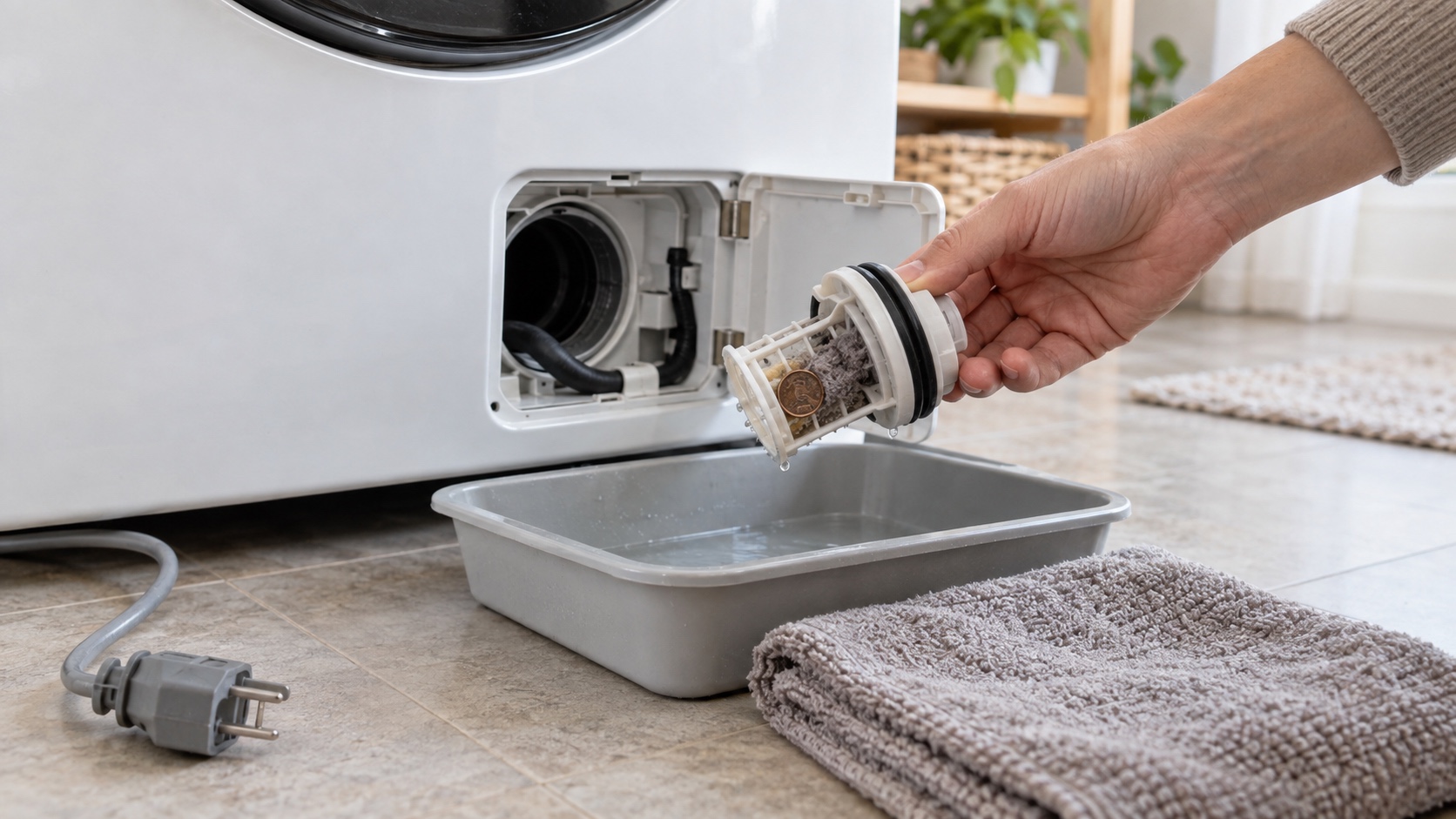
Best model-specific check: a filter that the manufacturer explicitly tells the owner to clean. Do not assume every washing machine has the same filter or compartment. LG's support guidance says its drain-pump filter is present on front-load washers and combo units, not its top-load models. Those instructions describe particular product families, not a universal design.
If your manual identifies a user-cleanable filter, follow its sequence exactly. A typical front-load procedure may require turning the washer off, unplugging it, draining residual water into a shallow pan, removing the filter, and reinstalling it securely. Water may be hot, and a poorly reseated filter can leak. If the manual does not identify the access point, do not improvise.
5. Stop at the panel—and use the manual or a technician

Best rule for anything internal: once retrieval requires a screwdriver, a cabinet panel, a hose, a wire connector, or a gas fitting, the search is over. Whirlpool's instructions say not to repair or replace dryer parts unless the work is specifically recommended in the owner's manual and the user understands and has the skills to perform it. Maytag likewise recommends professional help for difficult internal noise and blower-wheel problems.
If access requires moving the dryer, first read the installation and moving instructions for that exact model. A power cord, rigid vent, flexible gas connector, drain hose, or stacked installation changes the risk. Whirlpool says to disconnect power before servicing and replace every part and panel before operation. A gas dryer or direct-wired electric dryer is a clear stop point for a qualified professional.
Tell a technician what you heard, where the sound occurs, and whether the object is visible. A loose coin can be a clue, but rattling can also come from a zipper, buckle, uneven appliance, blower issue, or another mechanical problem. Diagnosis matters more than the face value of whatever may be inside.
The better way to stop losing money in laundry
Put a small catchall beside the hamper and empty every pocket before clothes enter the washing machine. Close zippers, secure hooks, and keep keys, receipts, pens, and coins out of both appliances. Our laundry-hacks guide covers more ways to simplify the routine, while these fact-checked laundry detergent notes explain why product type and dosing still need model-specific judgment.
The practical payoff is prevention: less noise, fewer foreign objects in filters, and a lower chance of paying for a repair caused by something that began in a pocket. If you find change during routine cleaning, consider it a refund from your own jeans—not a business model.
Frequently asked questions
How much money can you find in a dryer?
There is no reliable average. The amount depends entirely on what users left in their pockets and where loose items traveled. Expecting incidental change is reasonable; expecting a profit is not.
Can I take apart a dryer to find money?
Not just to search for coins. Check the drum, lint screen, and other user-accessible areas described by the owner's manual. If a panel must come off or the object is near internal parts, use a qualified service technician.
Where do coins go in a washing machine?
They may remain in the drum, sit in an accessible front-load door gasket, or reach a user-cleanable drain-pump filter on some models. Designs differ, so use the exact model's manual before opening any filter access.
Should I run the appliance if I hear a coin rattling?
Stop the cycle and remove any visible loose item. If the sound continues after the drum and lint screen are clear, leave internal panels closed and ask the manufacturer or a service technician for model-specific guidance.
Sources and verification
Safety and maintenance details were checked September 21, 2026 against Maytag dryer-noise guidance, Maytag lint-trap guidance, a current Whirlpool dryer owner's manual, LG drain-pump filter instructions, and the U.S. Fire Administration dryer-safety flyer. Appliance designs vary; the manual for the exact model controls.