12 Laundry Detergent Facts That Make Every Load Smarter


Cold water is a good default for many ordinary loads, but there is no detergent rule that fits every fabric and stain. The useful facts are more specific: water heating consumes most of a washer's operating energy, surfactants and builders do different jobs, “fragrance-free” is not the same as “unscented,” and concentrated packets require locked storage.
These 12 laundry detergent facts were checked September 21, 2026, against current U.S. government guidance, a manufacturer history, and a current washer manual. They replace the old article's product rankings and broad “eco-friendly” claims with details you can use at the machine.
1. Cold water works for many loads—not every stain
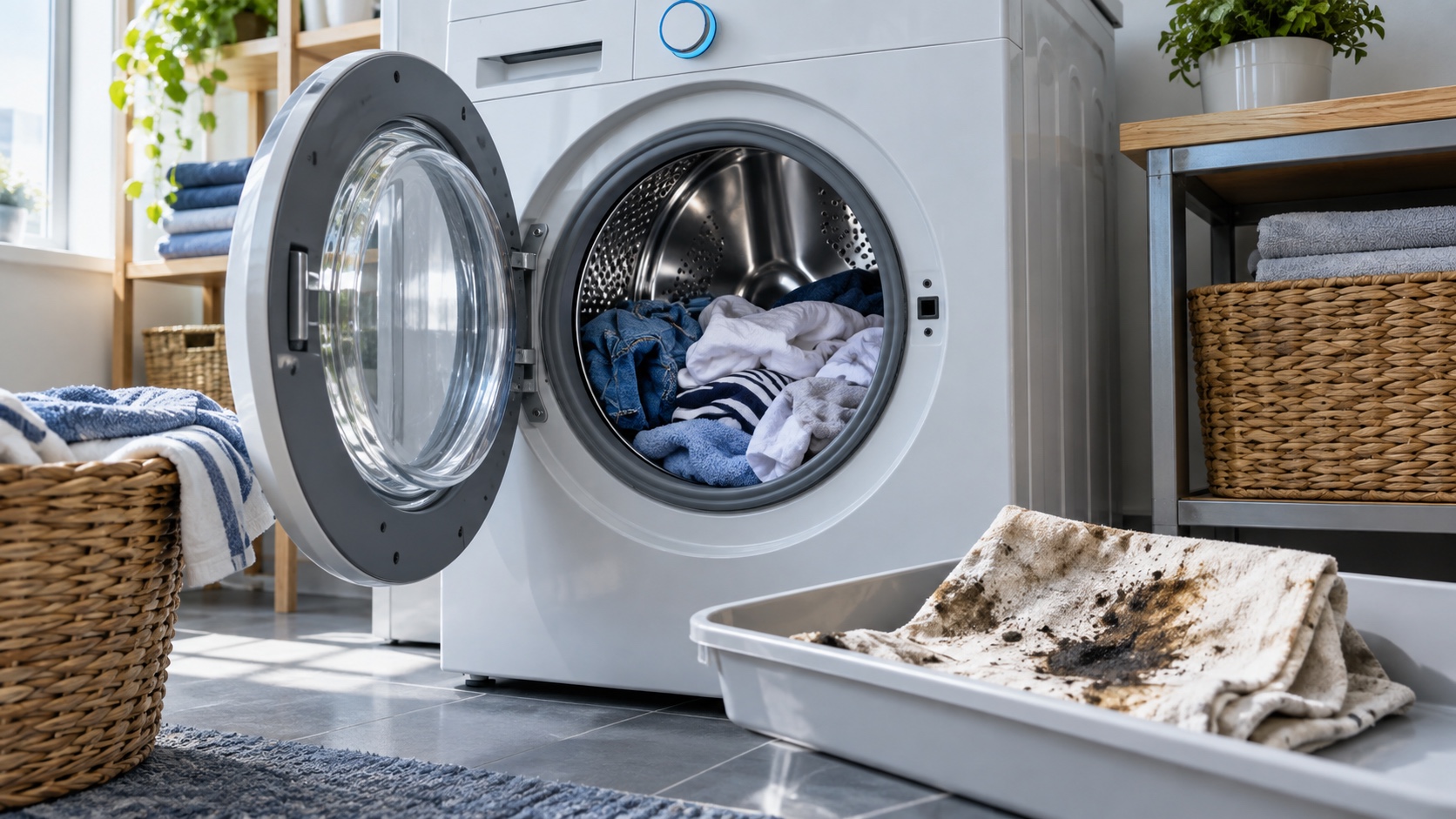
ENERGY STAR says washing in cold water will generally do a good job unless the load contains oily stains. That is a better rule than the familiar claim that laundry detergent “works best” in cold water. Modern formulations can clean everyday clothes at lower temperatures, but performance still depends on the detergent, water hardness, cycle, soil, and fabric.
Start with the garment's fabric care label, then check the washer and detergent instructions. Pretreat a difficult stain as directed instead of automatically heating the entire load. ENERGY STAR also notes a temporary hot-water exception when someone in the household is sick; that is a situation-specific precaution, not a reason to wash everything hot.
2. The biggest cold-wash saving comes from heating less water
According to ENERGY STAR's clothes-washer guidance, water heating accounts for about 90% of the energy used to operate a washer. Changing from hot to warm can cut energy use substantially, and cold reduces it further. The detergent itself does not create that energy saving; the lower temperature does.
A full but not overloaded machine also matters. Clothes need room to move, and detergent needs enough water and mechanical action to reach soil and rinse away. If you want more practical load-by-load advice, our laundry routine guide covers sorting, drying, and stain handling separately.
3. Household synthetic detergent arrived before Tide
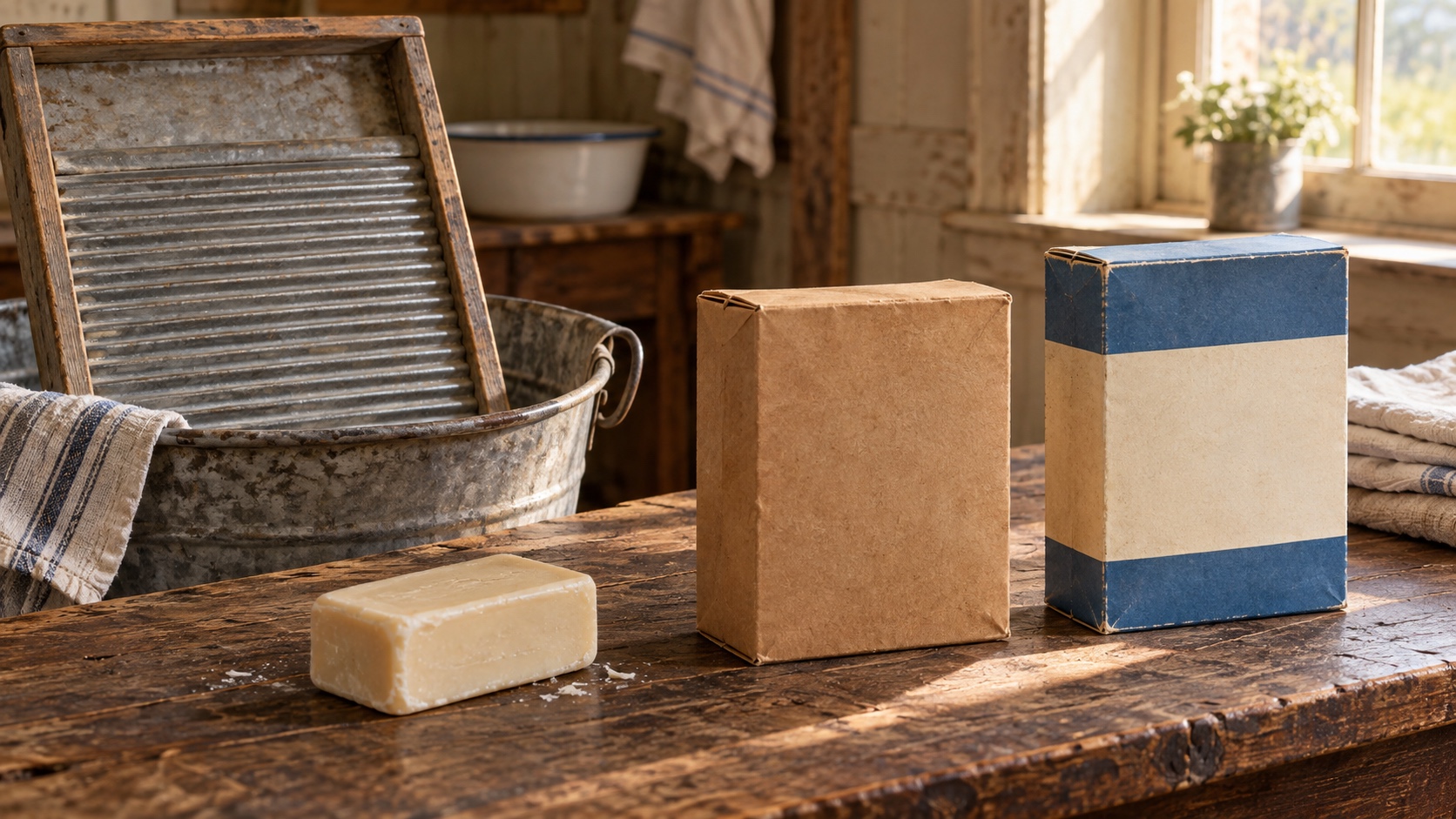
Procter & Gamble's corporate history dates Dreft to 1933 and describes it as the first household synthetic detergent. Tide followed in 1946 after years of development aimed at tougher cleaning. That sequence corrects an easy mix-up: Tide was a major postwar breakthrough, but P&G itself places Dreft earlier.
“First” here is the company's claim about a household synthetic detergent, not a claim that laundry chemistry began in 1933. People had long used soaps, alkalis, mechanical agitation, and commercial washing aids. What changed was the rise of formulated synthetic detergents designed to work across a wider range of water conditions.
4. Detergent and soap solve the same problem differently
Soap is produced from fats or oils and an alkali. Laundry detergent is a blend built around synthetic or other surfactants plus supporting ingredients. Both help water interact with oily soil, but soap can form insoluble deposits with calcium and magnesium in hard water. Detergent formulations can include builders or chelating agents that manage those minerals.
This is why dish liquid, hand soap, and laundry detergent are not interchangeable simply because all can make bubbles. Their concentration, foaming behavior, rinse profile, and intended surface differ. Follow the labeled use rather than moving a cleaner from one job to another.
5. Surfactants, builders, and enzymes do different jobs
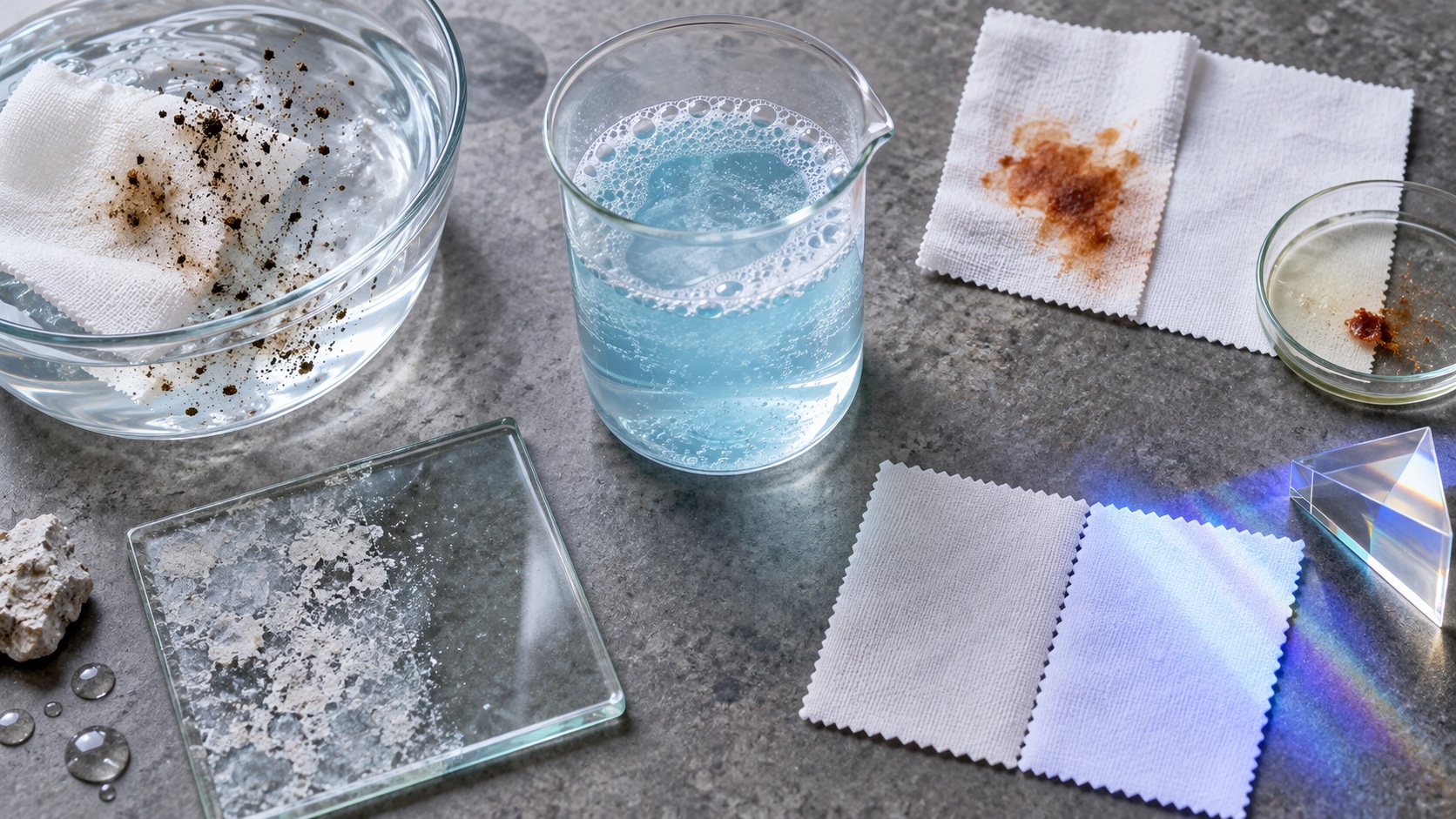
EPA's Safer Choice criteria explain that surfactants reduce surface tension, solvents dissolve or suspend materials, and chelating agents reduce water hardness. Enzymes are another tool: different enzyme classes can help break down protein, starch, or fat-based stains. Optical brighteners do not remove soil; they change how fabric reflects light.
That division of labor matters when comparing formulations. “More ingredients” is not automatically better, and “fewer ingredients” is not automatically gentler. Look for the functions needed for your typical clothes and water, then use the smallest effective dose within the label instructions.
6. Powder, liquid, and packets trade control for convenience
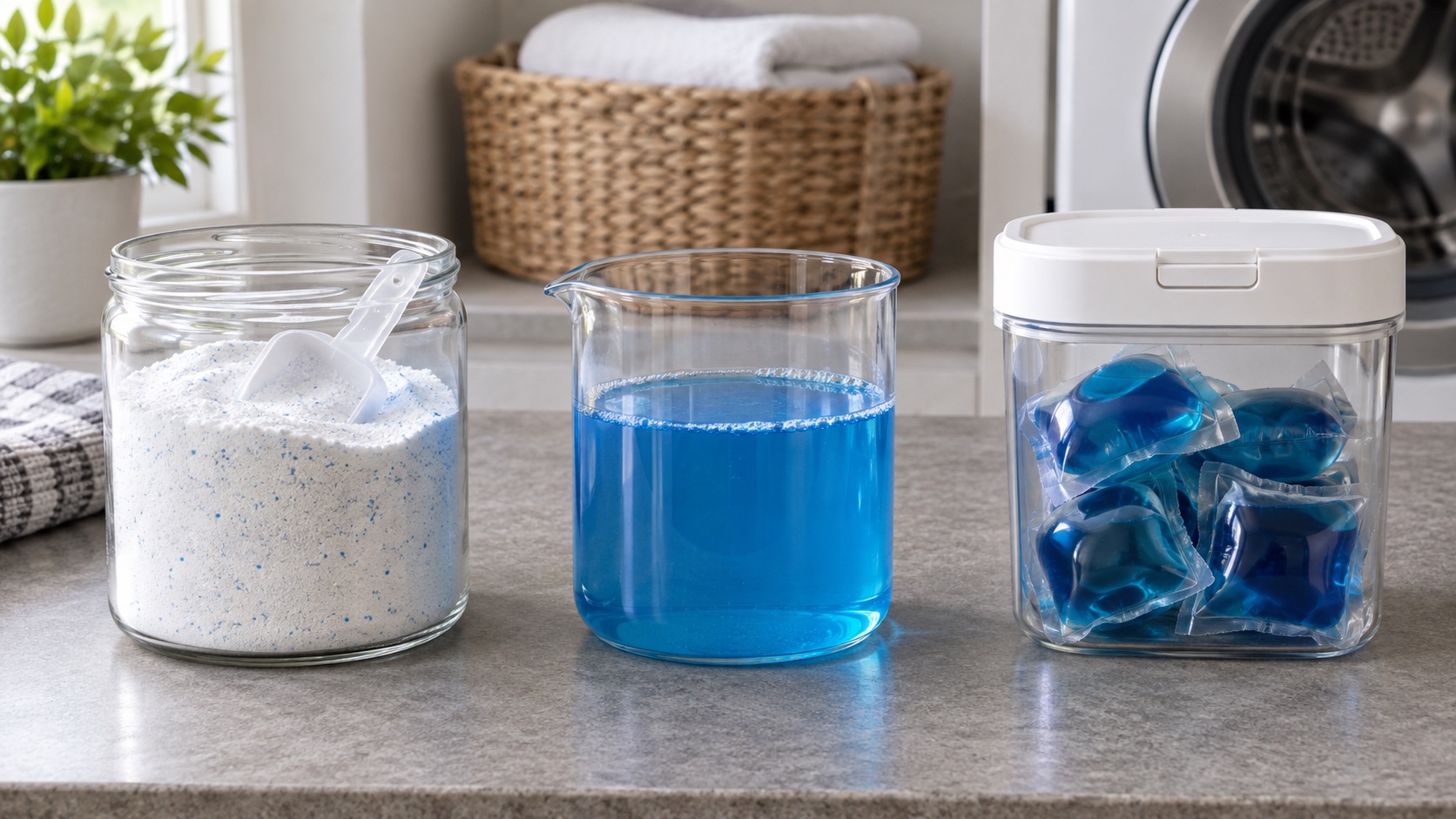
Powder is easy to measure and can be economical, but it needs to dissolve and stay dry in storage. Liquid pours quickly and can be applied to some stains when the label permits, but an oversized cap makes overpouring easy. Single-dose packets are convenient and reduce measuring, yet their fixed dose may be too much for a very small load or too little for an unusually large, dirty load.
Choose by washer compatibility, the loads you actually run, storage safety, and dosing control—not by a popularity claim. Whatever the form, keep it in its original container so the directions, warnings, and product identity stay with it.
7. Concentrated packets are a poisoning and eye-injury hazard

The U.S. Consumer Product Safety Commission warns that single-load liquid packets can cause serious injury if children swallow their concentrated contents or get them in their eyes. Its current safety guidance says not to let children handle packets and to keep them sealed in their original packaging, locked up, and out of a child's sight and reach.
Handle packets with dry hands so their water-soluble film does not begin breaking down. If a packet is swallowed or its contents reach an eye, follow the product's first-aid directions and contact Poison Help at 1-800-222-1222 in the United States. Do not present a home remedy as a substitute for poison-control guidance.
8. “Fragrance-free” and “unscented” are not synonyms
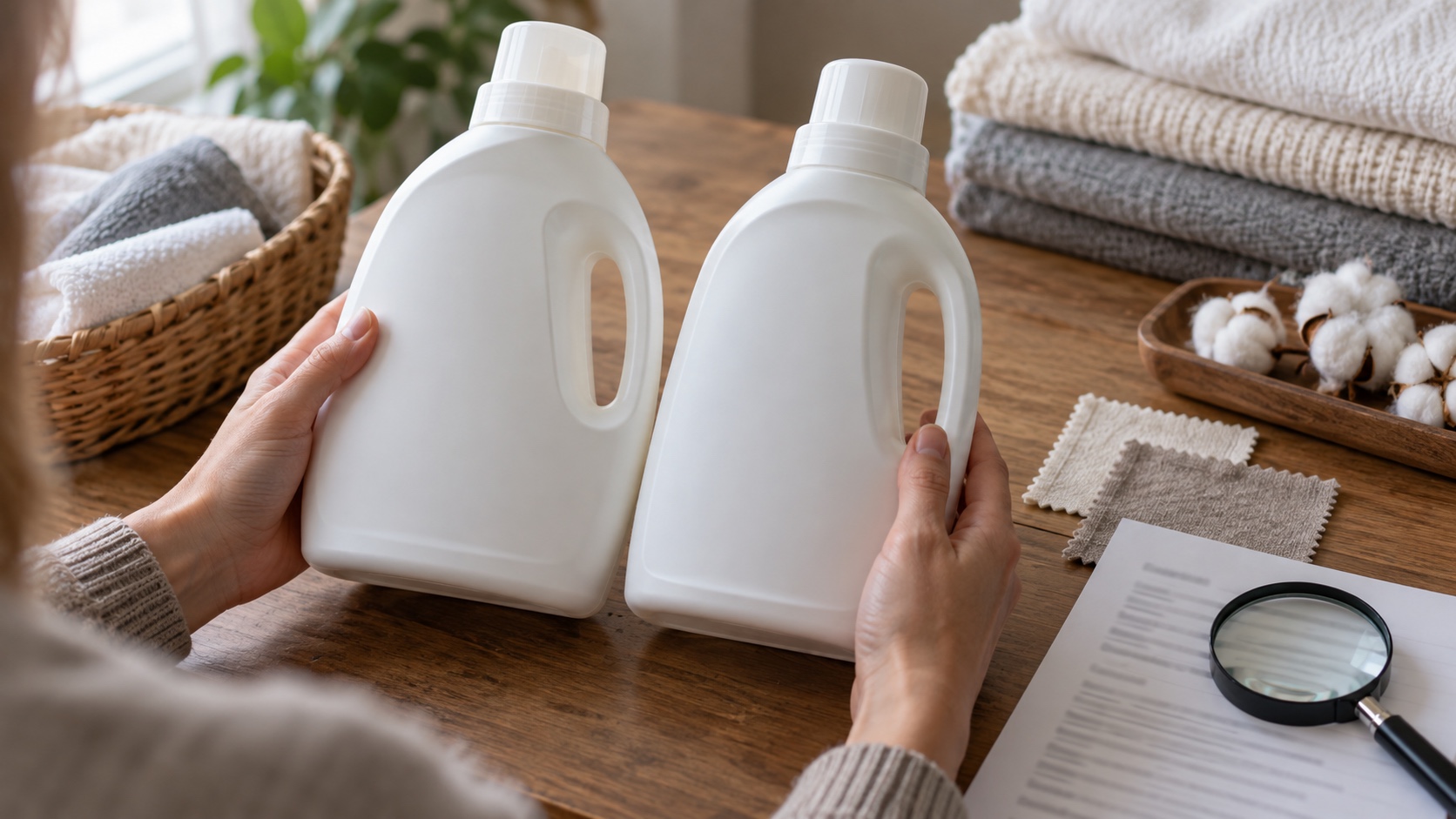
EPA's fragrance-free criteria draw a useful line. “Fragrance-free” means fragrance materials and masking scents are not used. “Unscented” can mean the odor has been neutralized or masked, so a product may still contain fragrance-related chemicals.
If fragrance is a concern, look for a specific verified fragrance-free claim rather than relying on “hypoallergenic,” “gentle,” or a lack of smell. A label cannot diagnose why skin is irritated. Stop using a suspected product and seek qualified medical advice when a reaction is significant or persistent. Fabric choice also changes comfort; our guide to nylon versus cotton underwear separates fiber properties from marketing claims.
9. “Plant-based” does not prove the whole product is safer
A surfactant may begin with plant-derived feedstock, petroleum-derived feedstock, or a mix, but origin alone does not describe the finished ingredient's hazard, concentration, biodegradation, cleaning performance, packaging, or total environmental impact. The term “plant-based” should identify what percentage or component it describes.
The FTC Green Guides summary warns against broad, unqualified claims such as “green” or “eco-friendly” because they imply benefits that are difficult to substantiate. A specific claim—such as a stated percentage of renewable material—can be evaluated. A green leaf on a bottle cannot.
10. EPA Safer Choice reviews ingredients and performance

EPA's Safer Choice label explanation says every intentionally added ingredient is reviewed and labeled products must perform comparably to conventional products. The program also evaluates packaging and limits certain environmental and health concerns. Participation is voluntary, so the absence of the label is not proof that a product is unsafe.
EPA notes that surfactants can affect aquatic life and that rapidly degrading surfactants are safer after wastewater treatment. Builders can matter too: inorganic phosphate at high concentrations contributes to algae growth and oxygen loss, and Safer Choice-certified products exclude inorganic phosphate builders. That is more precise than saying any detergent is simply harmless or harmful to “the environment.”
11. More detergent can make a low-water washer perform worse
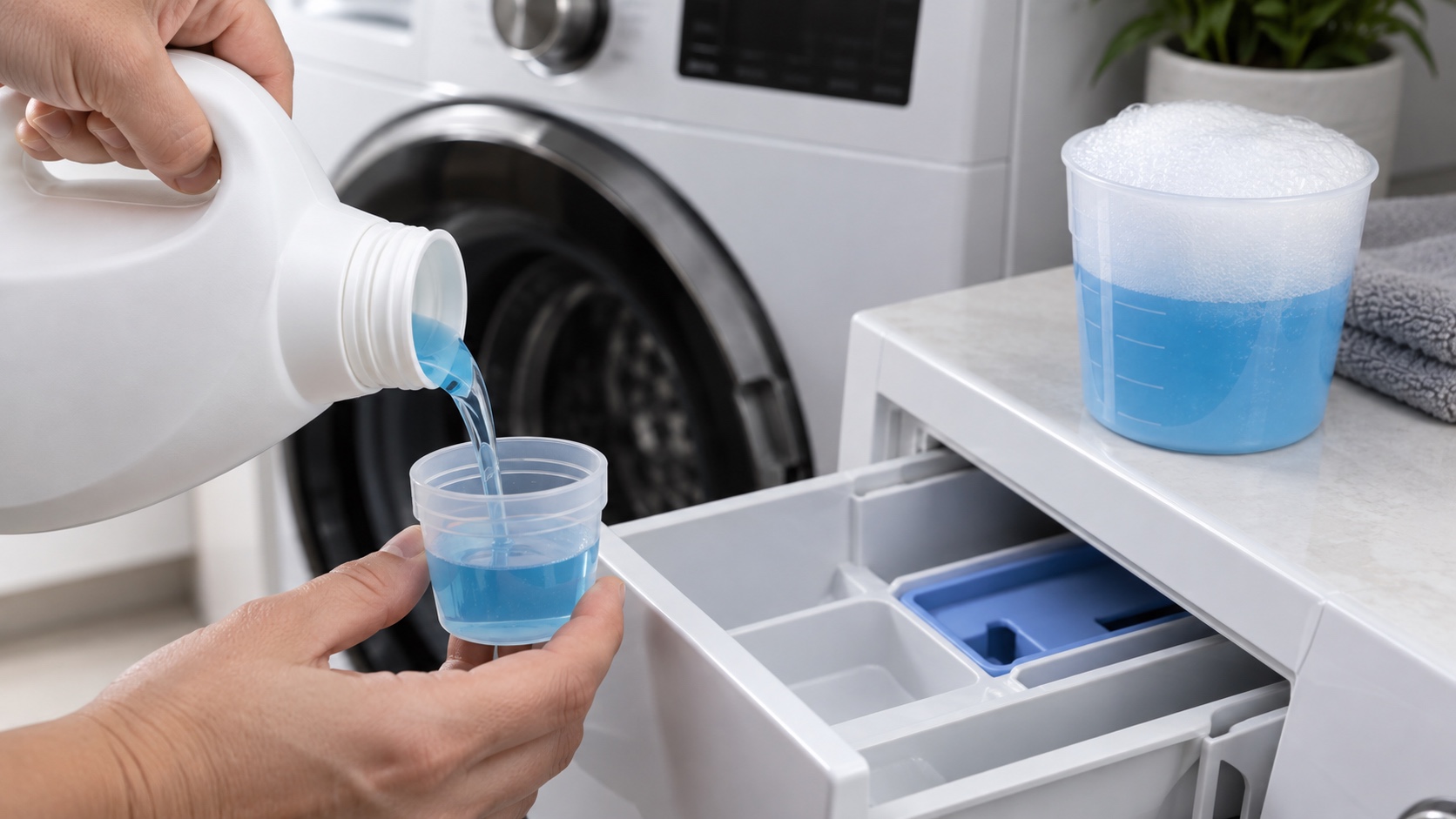
A current Whirlpool owner manual says low-water washing can produce excessive suds with non-HE detergent. It warns that this may lengthen cycles, reduce rinsing performance, contribute to buildup, and eventually affect components. For an HE washer, use a High Efficiency product marked “HE.”
The right amount then depends on the product concentration, load size, soil, and sometimes water hardness. Follow the detergent maker's directions without exceeding the dispenser's maximum line. If clothes feel coated or the machine repeatedly reports a suds condition, adding even more detergent is the wrong experiment.
12. Homemade mixtures are not automatically washer-safe
Online recipes often combine grated soap with washing soda, borax, baking soda, or fragrance oils. That creates a mixture; it does not prove cleaning performance, complete rinsing, stable storage, safe concentration, or compatibility with a particular washer and fabric. Soap-heavy recipes can also behave differently in hard water from a formulated detergent.
The same Whirlpool manual specifically notes that some natural, organic, or homemade products may generate high suds in an HE machine. Check the washer warranty and manual before using one. Never combine laundry products unless their labels explicitly direct it, and do not add chlorine bleach, ammonia, acids, or other cleaners to a recipe.
What to check before your next load
Read three things in order: the fabric care label, the washer manual, and the detergent label. Use cold water for routine loads when those directions allow it; choose another temperature when the fabric, stain, or hygiene need justifies it. Match the product to an HE machine, measure rather than guess, keep packets locked away, and treat specific certification criteria as more useful than vague natural or green language.
Frequently asked questions
Does laundry detergent work in cold water?
For many ordinary loads, yes. ENERGY STAR says cold water generally cleans well unless you are dealing with oily stains. Follow the garment, washer, and detergent directions when another temperature is appropriate.
Is fragrance-free the same as unscented?
No. EPA says fragrance-free products omit fragrance materials and masking scents, while unscented products may use ingredients that neutralize or mask odor.
Are laundry detergent pods safe around children?
They require strict storage. CPSC says to keep them sealed in their original packaging, locked up, and out of a child's sight and reach because exposure can cause serious injury.
Is homemade laundry detergent safe for an HE washer?
Do not assume it is. Some homemade mixtures can oversuds in low-water machines. Use the washer manual and an HE-labeled product as your compatibility guide.
Sources and verification
Cold-water cleaning and washer-energy statements were checked against ENERGY STAR. Ingredient functions, fragrance terminology, surfactants, builders, and certification limits were checked against the U.S. EPA's Safer Choice Standard, program FAQ, and fragrance-free criteria. Packet storage and exposure guidance comes from the CPSC. Environmental-marketing limits come from the FTC. Dreft and Tide dates come from P&G's history. HE and homemade-detergent limitations come from the linked Whirlpool owner manual. Product availability and individual formulations were not ranked.