
10 Things Wealthy People Don't Waste Money On


The expenses worth avoiding are the ones that deliver little value, hide their total cost, or keep charging after they stop being useful. This is not a survey of every affluent household, and income alone does not make people disciplined shoppers. Instead, this ranked guide uses four practical criteria: how preventable the cost is, how clearly the buyer can measure value, whether the expense repeats, and what other financial goal the money could support.
The order runs from the clearest mathematical mismatches to choices that depend more heavily on personal use. A wealthy person can enjoy a lottery ticket, a designer jacket, or a premium gym. The useful habit is not reflexive frugality; it is refusing to pay on autopilot. That distinction also keeps money advice honest: resources, health needs, time, and risk tolerance differ from one person to another.
1. Convenience food that is cheap only at checkout

Verdict: avoid paying repeatedly for convenience that neither saves enough time nor supports the way you want to eat. The original article treated cheap food as automatically unhealthy and expensive food as automatically better. Neither claim holds. USDA MyPlate says people can make healthy choices within a budget and recommends planning meals, comparing similar products, and using affordable staples. Our guide to dollar-store food deals applies the same unit-price test.
Compare the full meal, not a single sticker. A restaurant combo may be worth it during a long shift; prepared vegetables may prevent waste for a one-person household. The weak purchase is a habit you do not value: delivery fees on ordinary meals, food that spoils before it is used, or a “premium” package with no meaningful advantage. Health needs are individual, so cost comparisons should not become nutrition prescriptions.
2. Lottery tickets treated as an investment

Verdict: a ticket can be entertainment, but it is not an investment. The official Powerball prize chart lists jackpot odds of 1 in 292,201,338 and overall prize odds of about 1 in 24.87 for the standard game as checked September 21, 2026. Those odds describe the game; they do not promise a return. Investments involve their own risks, but they are chosen around goals, time horizon, costs, and a potential return—not a random drawing.
A fixed “fun money” amount can make a lottery purchase no different from paying for a movie. The problem begins when hope replaces a savings plan, losses lead to larger bets, or money needed for bills goes into tickets. Set the entertainment limit before the jackpot headline appears. If gambling stops feeling optional or controllable, seek qualified help rather than treating another ticket as a solution.
3. Preventable late fees

Verdict: a fee for forgetting is one of the clearest expenses to prevent. The Consumer Financial Protection Bureau explains that a credit-card payment generally must be received—not merely mailed—by the due date to count as on time. Processing cutoffs matter, and a delayed bill-pay transfer can still arrive late. Calendar reminders, low-balance alerts, and autopay for at least the minimum can reduce that risk when the account has enough cash.
Autopay is not magic. Review the statement for errors, keep a buffer in the payment account, and confirm that a changed card or bank connection still works. If a rare mistake happens, contact the issuer and ask whether it will waive the fee; the CFPB notes that a customer can make that request. People with irregular income may need due-date changes or manual scheduling rather than a blanket automatic withdrawal.
4. Disposable clothes bought for a microtrend

Verdict: skip the garment when its likely cost per wear is poor, regardless of its price or brand. A low-priced shirt worn fifty times can be better value than an expensive jacket worn twice. Check seam density, fabric feel, care requirements, return policy, and whether the piece works with clothes you already own. Alterations and basic repairs can extend useful life without turning the decision into a luxury purchase.
The environmental case for using clothing longer is also concrete, though the available national data are dated. EPA's material-specific dataset reports that U.S. landfills received 11.3 million tons of municipal solid-waste textiles in 2018 and notes that clothing is the main source. That figure does not prove one retailer or shopper caused the waste. It supports a narrower takeaway: fewer unwanted garments and more reuse can reduce what eventually enters the waste stream.
5. A car payment chosen without the total cost
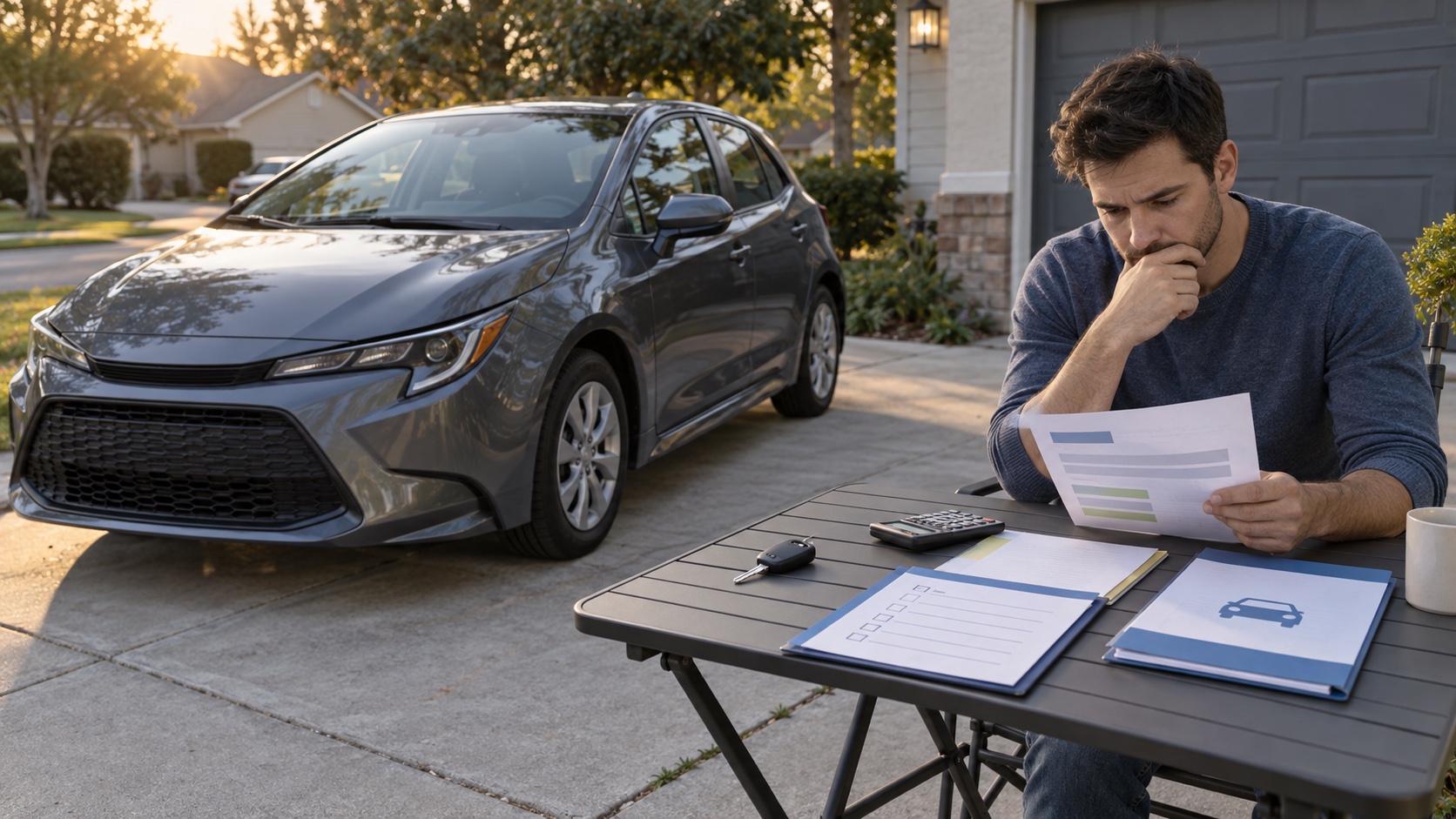
Verdict: compare the total loan and ownership cost, not the monthly payment alone. The CFPB's auto-loan guide says monthly payment or vehicle price by itself does not show the whole picture. Amount financed, annual percentage rate, loan length, finance charge, and financed add-ons determine what the loan costs over its life. Insurance, fuel, registration, maintenance, repairs, and depreciation sit outside that payment but still claim resources.
A reliable car that protects work or caregiving time can be worth paying for. The mistake is stretching the term merely to make an expensive car look affordable each month. Compare written offers with the same down payment and term, then add a realistic ownership budget. Our cars with strong value for the money guide provides another starting point, but local prices and individual financing still decide the deal.
6. Long-term money left in a low-yield account by default

Verdict: do not confuse accessible cash with a complete long-term plan. Investor.gov says a savings account can be a good fit for an emergency fund or short-term goal, while long-term investing offers more growth potential with more risk. Eligible bank deposits may be federally insured; securities are not, and investments can lose principal. That makes “move every dollar out of savings” just as careless as leaving every long-term dollar in the first account you opened.
Separate money by job. Keep upcoming bills and an emergency cushion accessible, compare annual percentage yield, fees, minimum balances, and withdrawal rules, then make a distinct decision for long-term goals. Anyone approaching retirement, carrying high-interest debt, or managing a complicated tax situation may need personalized advice. For a broader checklist, see our guide to catching up on retirement savings.
7. Extended warranties with overlapping coverage

Verdict: decline coverage that duplicates a manufacturer warranty or excludes the failure you actually fear. The Federal Trade Commission explains that a service contract—often marketed as an extended warranty—is separate from the warranty included with a product. For a used car, the FTC recommends comparing coverage, duration, deductibles, repair locations, claim procedures, cancellation terms, provider reputation, and the likely repair cost.
Self-insuring a small appliance may be easy; absorbing a major repair may not be. Coverage can provide real value when the contract is reputable, the protection is broader than existing rights, and the buyer values predictable costs. Read the actual agreement before the sales counter, not after a claim. Never treat high-pressure calls or mailers as proof that a warranty is expiring.
8. Subscriptions nobody is using

Verdict: recurring charges deserve a recurring review. Search two or three months of bank, card, and app-store statements; annual renewals can disappear from a one-month snapshot. Divide each fee by real uses, not intended uses. A service used weekly may be excellent value, while a cheap app opened once can be pure leakage. Do not cancel insurance, security, storage, or professional tools merely because they are not entertaining.
The FTC advises keeping cancellation records and watching statements after a subscription is canceled. If charges continue, consumers may be able to dispute them with the card provider and report problems. Before starting a free trial, note the renewal date and price. Before canceling, export data you need and check whether the change removes family access, cloud files, or a negotiated rate.
9. Impulse purchases that bypass the plan
Verdict: add friction when the purchase is unplanned and easy to regret. CFPB research on spending management found that consumers often struggle to use budgets at the moment of purchase; participants expressed strong interest in real-time feedback. That study does not prove one app will change anyone's behavior, but it supports a practical design: make the budget visible before checkout.
Use a 24-hour pause for nonessential online purchases, remove stored payment details, or keep a wish list with a review date. The exception is a genuine urgent need or a scarce item already planned and researched. Spontaneity has value, too: a dedicated fun-money category lets people enjoy an unplanned dinner or book without pretending the purchase was an investment.
10. Premium gym memberships without premium use
Verdict: pay for the fitness environment you will use, not the identity you hope the price will create. Calculate cost per visit over the last eight to twelve weeks and include initiation, annual, locker, class, parking, and cancellation fees. Then compare the facilities that matter: location, hours, accessibility, childcare, coaching, pool, equipment, and crowding at the time you train.
A premium membership can be rational when convenience increases consistent use, specialized equipment supports a health goal, or coaching replaces another expense. A basic gym can be wasteful if it is too far away. Review medical limitations with a qualified health professional and inspect the contract before joining. The ranking ends here because value is most personal: the “cheapest” option is not a bargain when it goes unused.
A five-question spending audit
- Would I choose this again today? If not, investigate cancellation, resale, return, or a cheaper tier.
- What is the total cost? Add interest, fees, maintenance, time, and required add-ons.
- How often did I use it? Use statements, calendars, or receipts instead of memory.
- What risk does it solve? Keep insurance, warranties, and cash reserves when the protection is worth the terms.
- Where would the money go instead? Name the bill, emergency reserve, debt payment, experience, or investment rather than invoking vague “savings.”
This article provides general educational information, not personalized financial, investment, tax, credit, legal, nutrition, or medical advice. The right choice depends on your income, obligations, health, time horizon, contract terms, and tolerance for risk.
Frequently asked questions
Do wealthy people never buy lottery tickets?
No. A ticket can be entertainment within a preset budget. It should not be presented as an investment or financial plan.
Is it always wrong to keep money in a savings account?
No. Accessible savings can fit emergency funds and short-term goals. Long-term goals require a separate decision about risk, insurance, fees, and potential return.
Are extended warranties always a waste?
No. Compare the contract with existing coverage and the cost you could absorb. Useful protection has clear terms, a reputable provider, and coverage that matters to you.
What should I audit first?
Start with preventable fees and unused recurring charges because they are measurable, repeat automatically, and usually require no change to your essential needs.
Sources and freshness note
Consumer guidance was checked September 21, 2026. Primary references include USDA MyPlate on healthy eating on a budget, the official Powerball prize chart, CFPB guidance on when card payments are late and comparing total auto-loan cost, EPA's textile waste data, Investor.gov's saving and investing overview, FTC advice on service contracts and subscription cancellation, and CFPB's spending-management research. Rules, rates, contracts, and game terms can change; verify the current source before acting.