10 Appliance Repair Mistakes Houston Homeowners Should Avoid

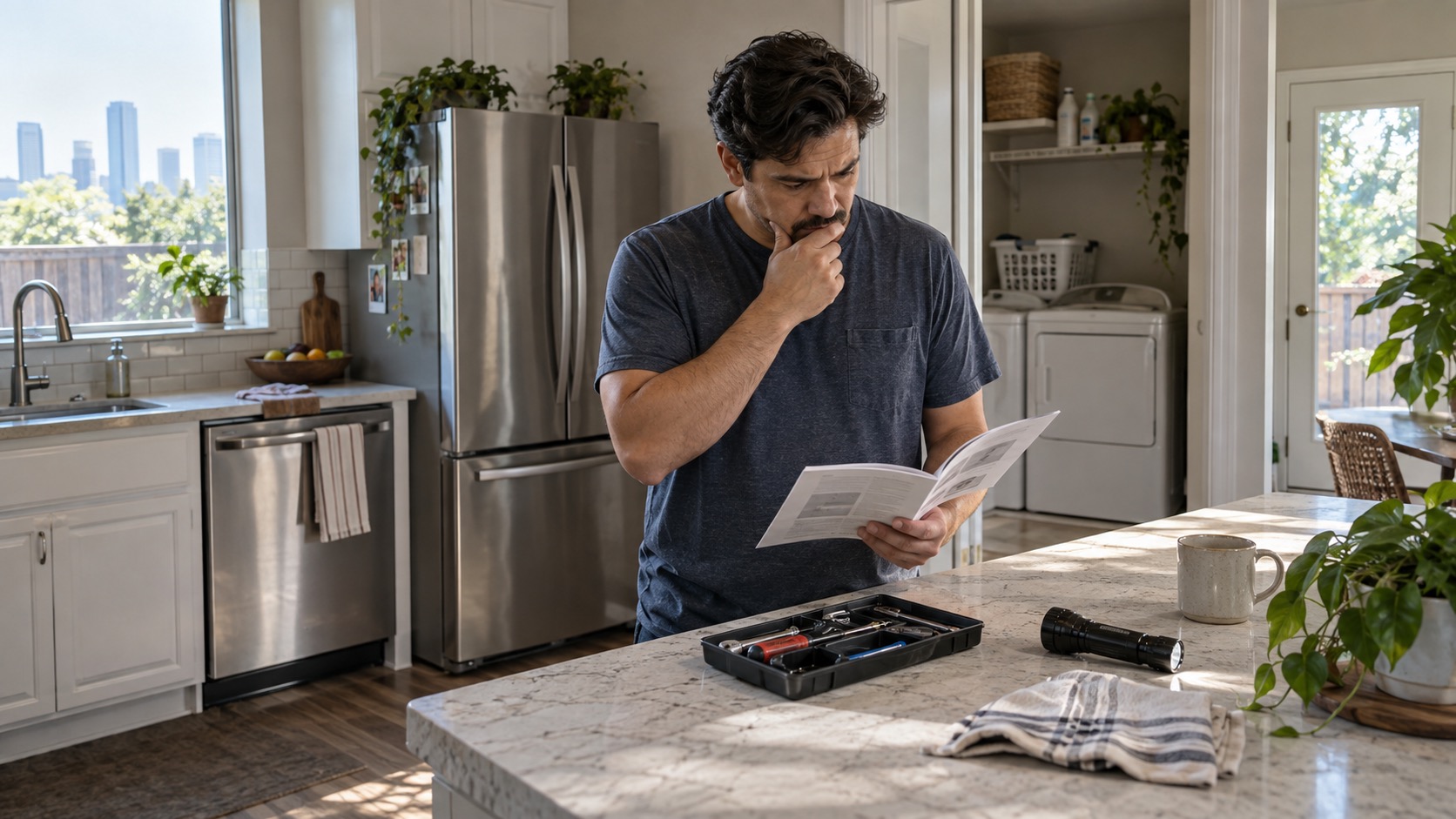
The costliest appliance-repair mistake is treating every problem like a do-it-yourself project. A suspected gas leak, damaged power cord, smoke, sparking, or repeated breaker trip is a stop-work signal. For lower-risk symptoms, the best first move is usually to record the model number and error code, check the owner’s manual, and rule out simple external causes without opening a powered appliance.
We ranked these ten mistakes by potential consequence first—life safety, fire, water damage, and major equipment damage—then by how often a rushed decision can waste time or money. The order is editorial, not a claim about Houston service-call frequency. Appliance designs differ, so the manual for your exact model outranks any generic checklist.
1. Trying to repair a gas appliance after you smell gas

Why it ranks first: a gas odor is an evacuation problem, not a troubleshooting prompt. CenterPoint Energy tells Greater Houston customers to leave immediately on foot, avoid switches, phones, vehicles, or anything that could create a spark, and call 911 and CenterPoint only after reaching a safe place. Do not return or attempt to locate the leak yourself.
Carbon monoxide is different: it has no smell, color, or taste. The U.S. Consumer Product Safety Commission recommends working CO alarms on every level and outside sleeping areas. A yellow flame alone is not a universal diagnostic because appliance designs vary, but soot, repeated ignition trouble, a CO alarm, or combustion symptoms all justify shutting the appliance down and getting qualified help.
2. Using the wrong tool—or forcing a connection
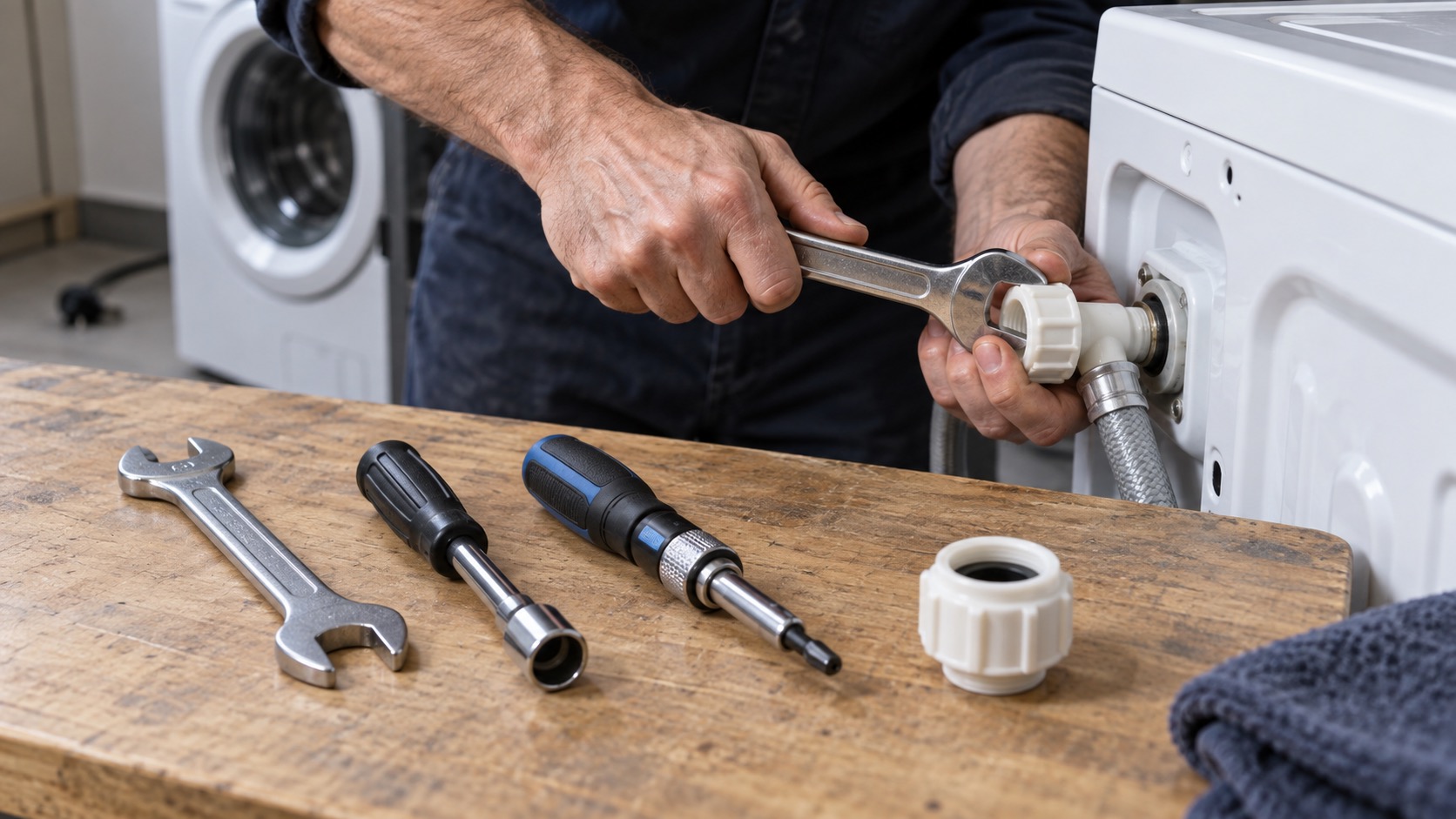
Best rule: if the manual specifies a tool, torque, sealant, or replacement procedure, follow it exactly. Pliers can deform plastic nuts, the wrong driver can strip a fastener, and “one more turn” can crack a fitting that initially looked dry. Shut off the relevant power and water supply before approved maintenance, and verify the connection under the manufacturer’s procedure before pushing the appliance back into place.
Do not improvise on gas fittings, sealed refrigeration systems, high-voltage microwave components, or internal electrical work. A multimeter is not a safety credential. When a procedure requires live testing or access to a hazardous component, the appropriate tool is a trained technician.
3. Treating a restricted dryer vent as a minor inconvenience
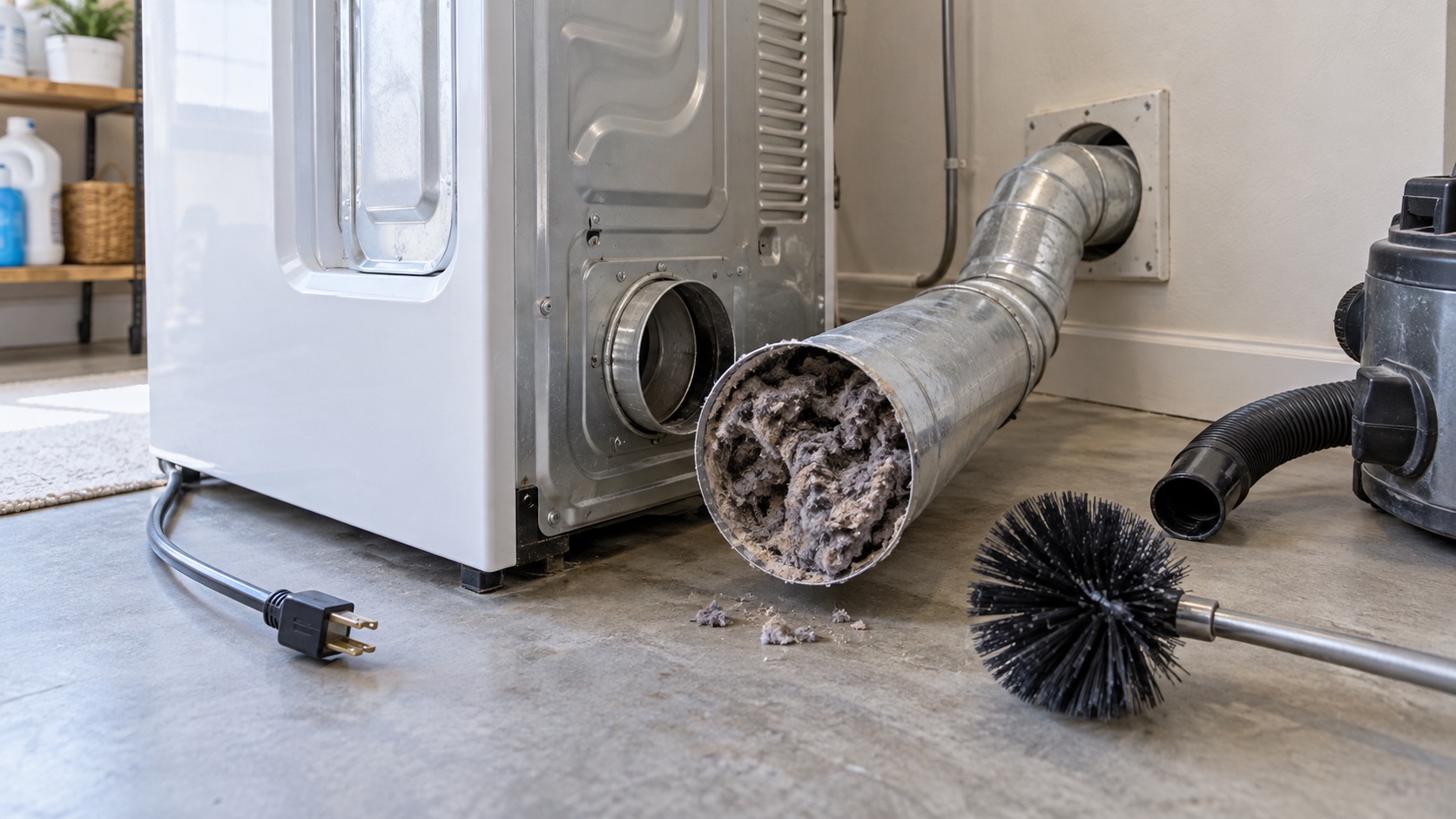
Why it matters: U.S. Fire Administration data for 2018–2020 identified failure to clean as the leading factor in 31% of home clothes-dryer fires. Clean the lint filter before or after every load, keep combustibles away from the dryer, and check that the outside damper opens while the machine runs.
Longer drying times, unusual heat, a burning smell, or a damaged, crushed, or restricted duct call for stopping and inspecting the system. USFA recommends periodic cleaning by qualified service personnel, especially when drying takes longer than normal, and favors rigid, non-ribbed metal duct over plastic or coiled-wire foil. The right interval depends on the installation and manufacturer guidance; “once a year” is not a universal guarantee.
4. Ordering a replacement part by appearance alone
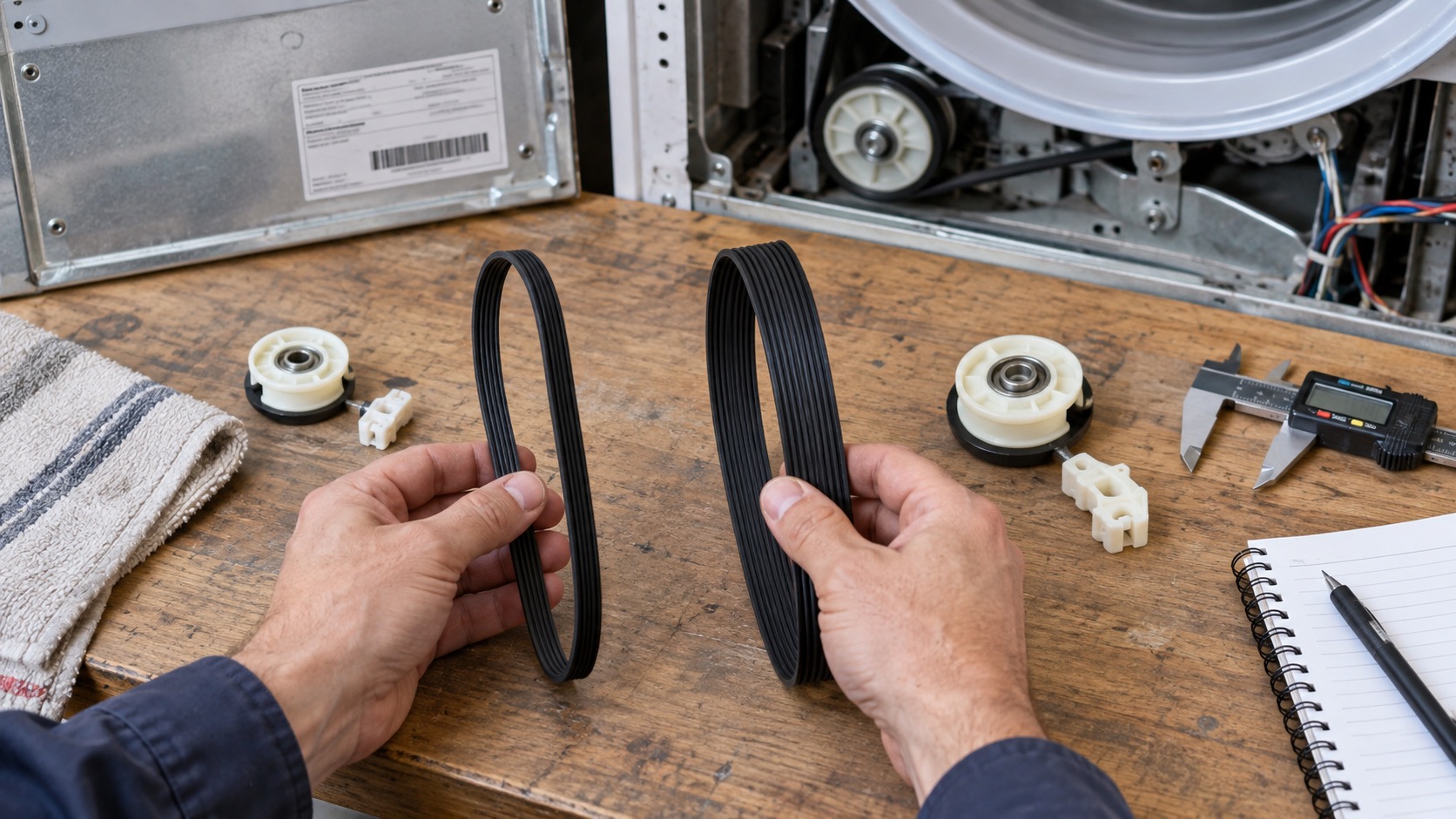
For whom this matters: anyone repairing an appliance that has several revisions under one product name. Record the complete model and serial number from the rating plate, then use the manufacturer’s parts catalog or an authorized distributor. Whirlpool, for example, requires model and serial numbers for support and provides model-specific manuals, troubleshooting, and replacement-parts lookup.
“Universal” does not mean compatible with every installation. Compare the official part number, revision, connector, dimensions, electrical rating, and warranty terms. Factory-specified parts simplify fit verification, but a third-party part can be reasonable when its maker explicitly lists your exact model and the safety ratings match. Keep the old part until the repair is verified.
5. Reading an error code without checking the exact model
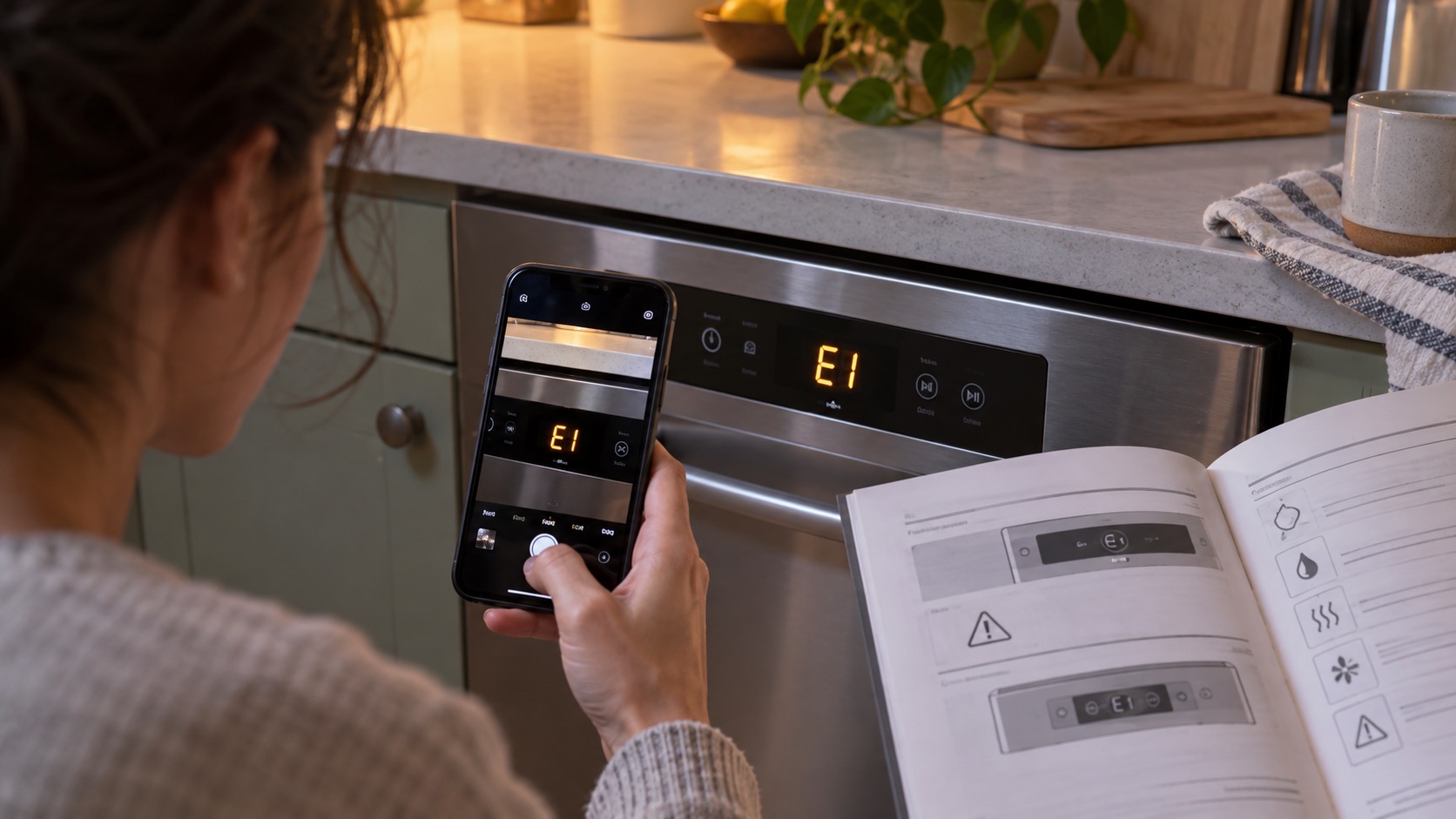
The useful move: photograph the display, note what the appliance was doing, and look up the code in the manual for that model. The same letters can mean different things across brands—and sometimes across product families from the same brand. Whirlpool’s own error-code guidance repeatedly directs owners back to the model-specific manual.
An error code identifies a condition detected by the control system; it does not automatically name the failed part. A drain code, for example, can reflect a kinked hose, blockage, pump problem, wiring fault, or installation issue. Do not clear the code repeatedly, bypass a switch, or order a sensor until the approved diagnostic path supports that conclusion.
6. Calling for service before checking safe external basics
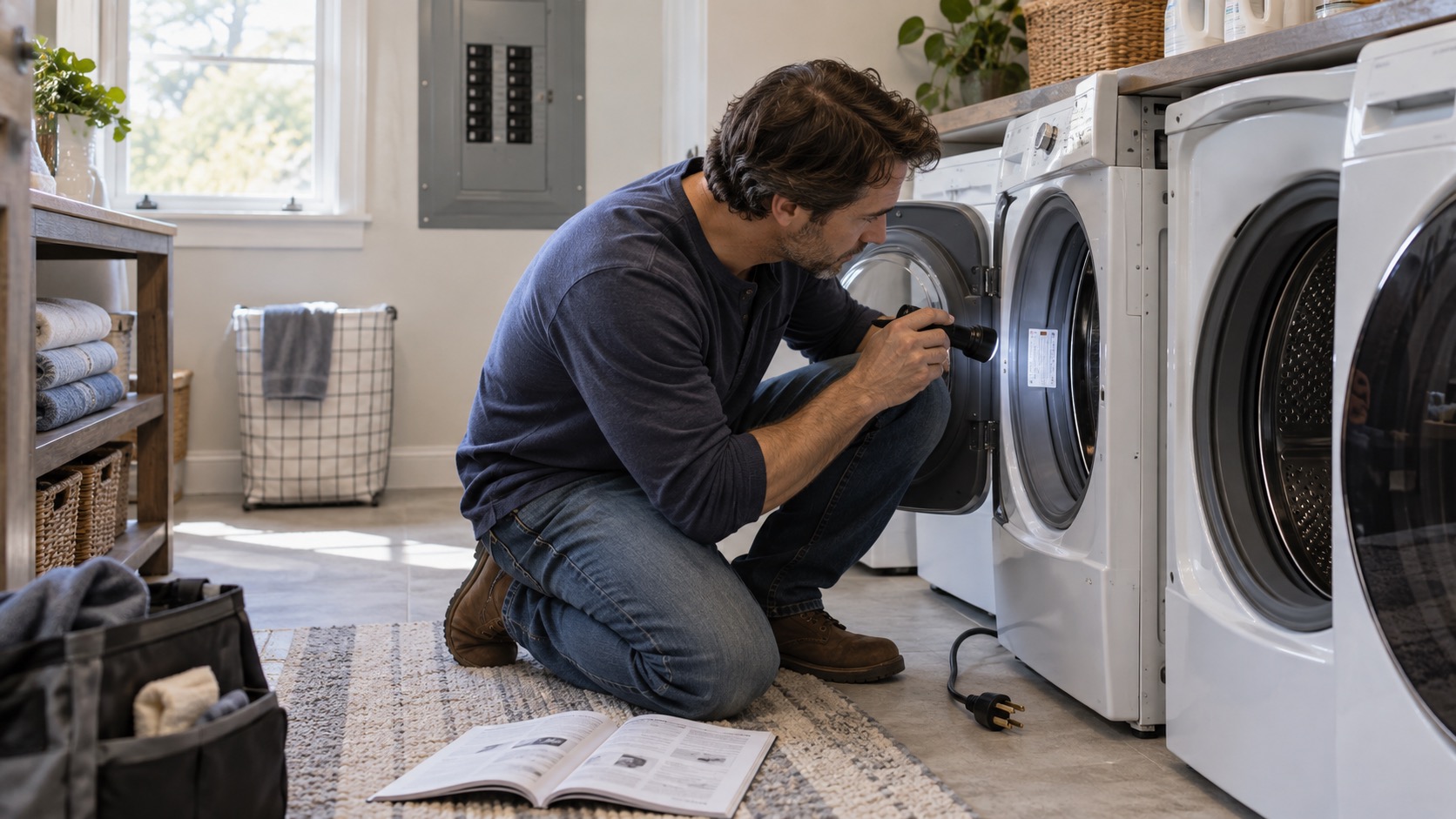
Best for: a machine that is simply not starting, filling, draining, cooling, or heating as expected, with no gas odor, smoke, sparking, leak, damaged cord, or repeated breaker trip. Confirm the door is fully latched, controls are not locked or delayed, hoses are not visibly kinked, the water valve is open where applicable, and the appliance is connected as its manual requires.
Check the breaker once. If it trips again, stop resetting it and arrange qualified electrical or appliance service. Use a reset button or power-cycle procedure only when the manual describes it; arbitrary unplugging can erase useful codes without fixing the cause. When you do call, provide the complete model number, code, symptom, and steps already tried.
7. Assuming Houston water is equally hard at every address
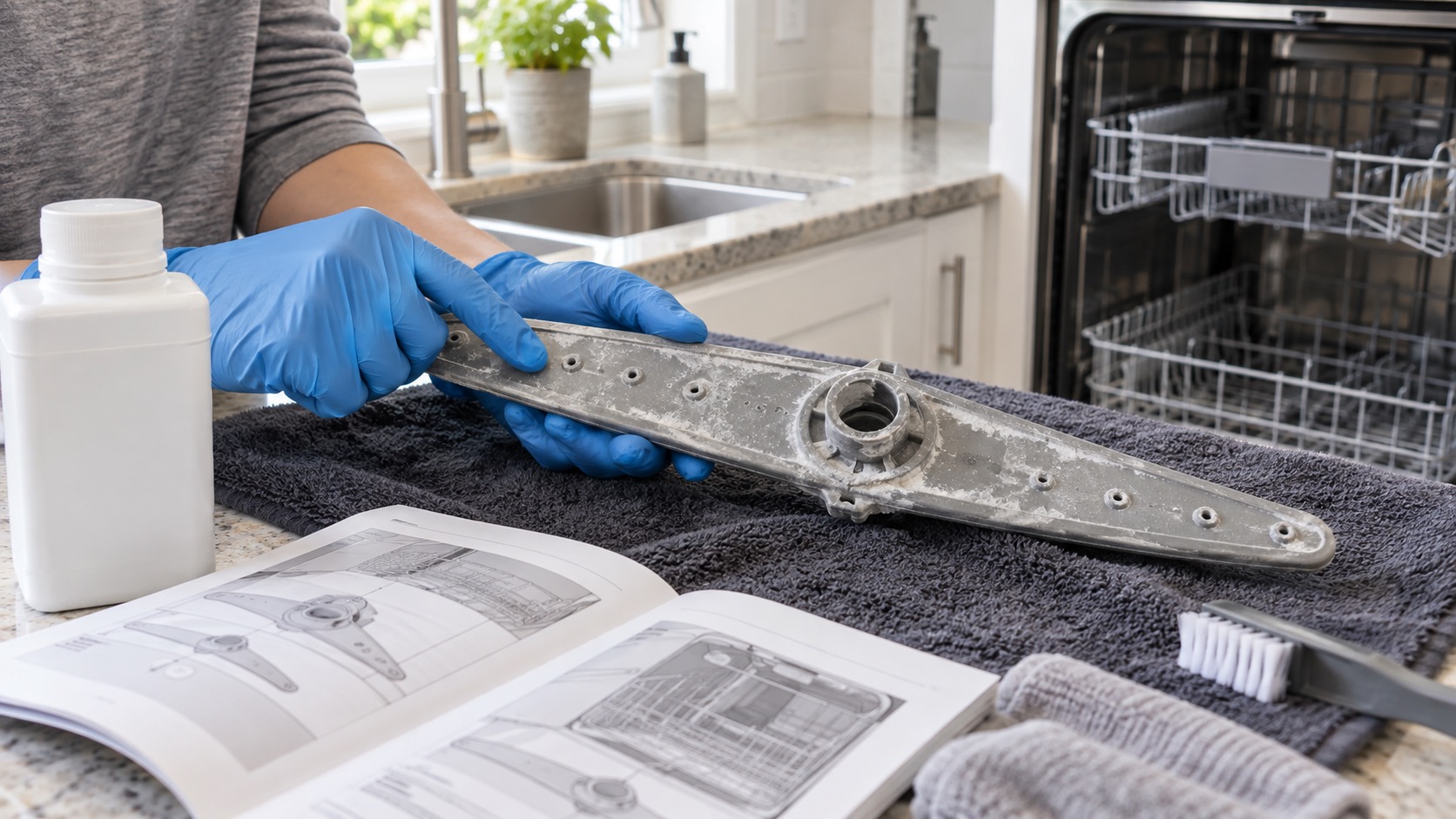
The local nuance: Houston’s 2025 Water Quality Report measured total hardness in the main system from 43.5 to 229 parts per million as calcium carbonate, averaging 135.5 ppm. That wide range is why a citywide label is less useful than your utility report, exact service area, and the deposits you actually observe.
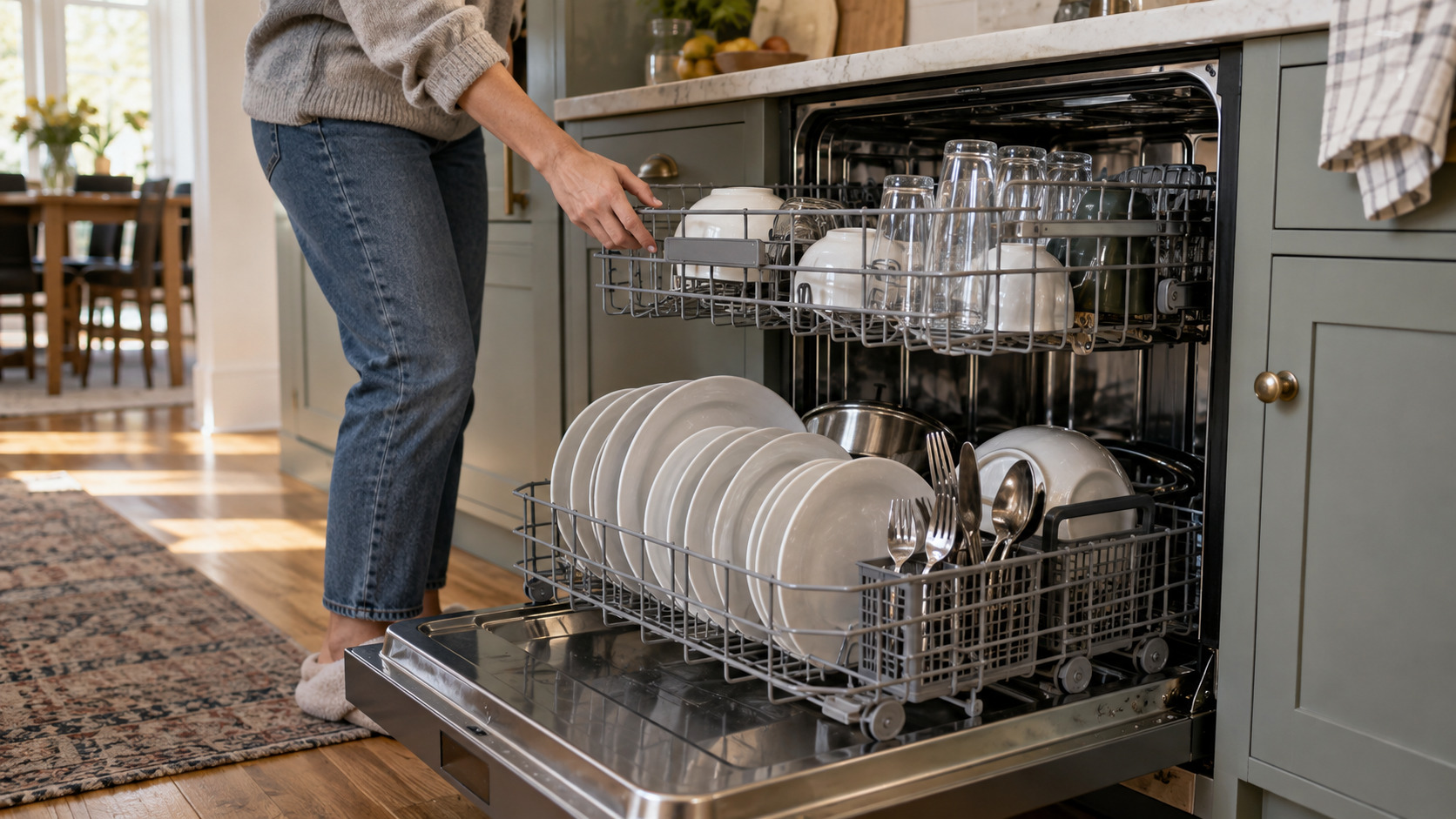
Minerals can leave scale on heating surfaces, valves, spray openings, and ice-making components, but they do not prove that every appliance problem is a hard-water problem. Follow the model’s cleaning instructions and use only compatible products. Skip internet recipes that prescribe vinegar, citric acid, or a monthly schedule for every machine; acids and cleaners that are acceptable in one product may damage seals or finishes in another. Our guide to loading a dishwasher correctly covers a separate source of poor wash results.
8. Cleaning refrigerator coils without checking the design
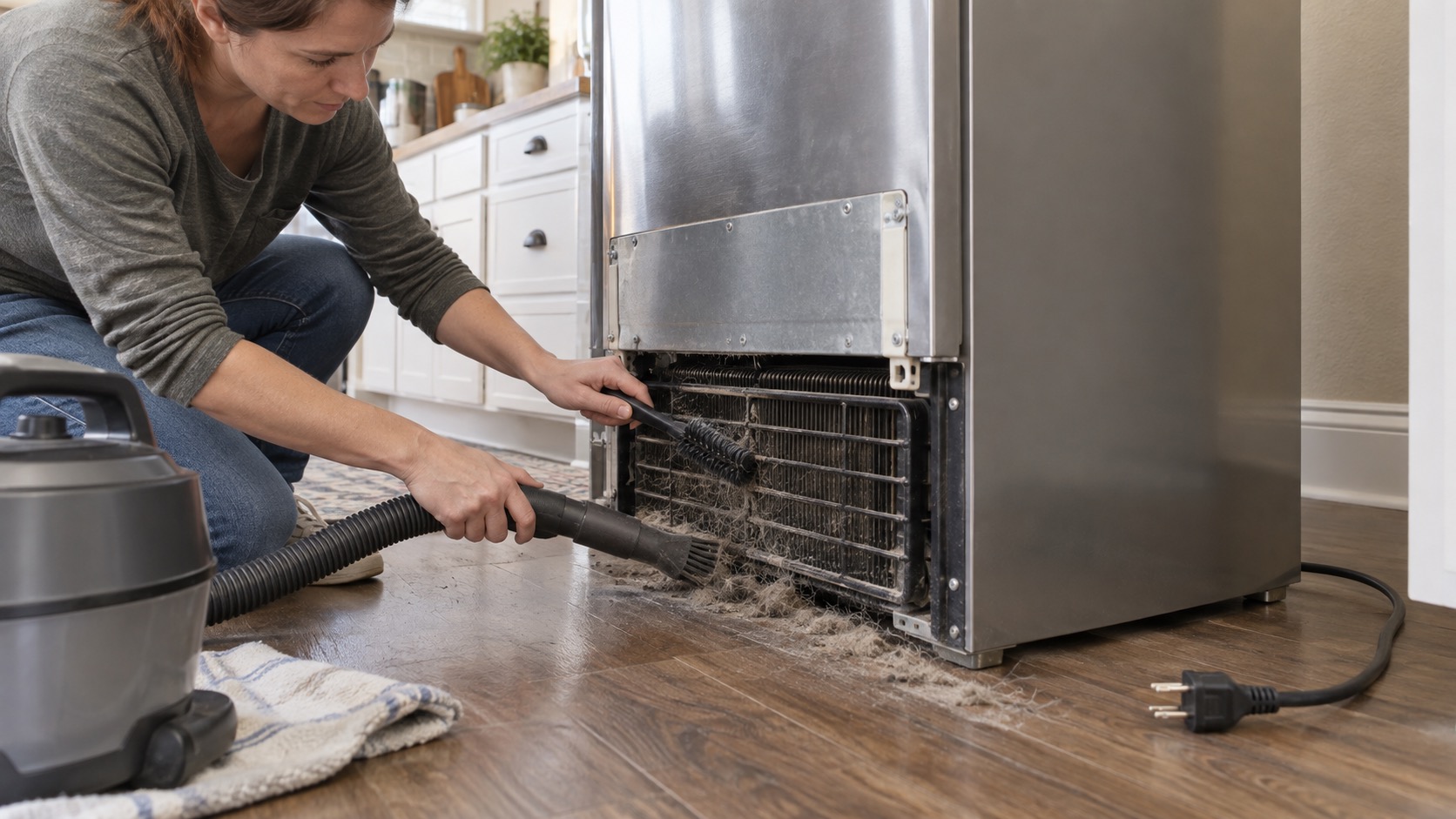
Why this is model-specific: dust on an accessible condenser can obstruct airflow and make heat rejection harder, but not every modern refrigerator exposes coils for owner cleaning. Some designs place the condenser behind a service panel or use configurations the manual does not ask the owner to touch.
If your manual includes coil cleaning, unplug the refrigerator, protect the floor, use the recommended brush or vacuum method, and avoid bending tubing or fan blades. If the refrigerator is not cooling, food-safety time matters more than a cleaning experiment: keep the doors closed, move perishables to safe cold storage, and get service when the manual’s external checks do not resolve the problem.
9. Letting a warning symptom “limp along”
Best decision point: separate harmless quirks from symptoms that can spread damage or create a hazard. Stop using an appliance that leaks onto wiring or flooring, smells hot or burnt, sparks, smokes, repeatedly trips a breaker, shakes violently after leveling and load checks, or makes a new grinding or metal-on-metal sound.
For a nonhazardous symptom, document when it happens and compare repair, remaining warranty, expected service life, energy use, and replacement cost. The familiar “replace it if repair exceeds 50% of a new one” line is only a budgeting heuristic, not an engineering rule. A young premium appliance, an unavailable replacement size, or a safety recall can change the answer.
10. Hiring a repair service without a written scope
For Houston homeowners: choose a service before an emergency if possible. Ask whether the company works on your exact brand and product type, whether it is manufacturer-authorized when warranty work requires that, and whether specialized electrical, plumbing, or gas work will be performed by someone with the credentials required for that trade.
Before authorizing work, get the diagnostic fee, proposed labor, part numbers, part status (new, used, or refurbished), tax, disposal charges, and warranty terms in writing. The Texas Attorney General’s consumer guidance recommends written bids with specific work and materials, checking references and applicable licenses, resisting pressure, and keeping copies of everything signed. Reviews can provide leads, but they do not replace a written estimate, proof of insurance, or a clear change-authorization policy.
A safer five-minute decision tree
- Gas odor, CO alarm, smoke, sparks, burning smell, active leak, damaged cord, or repeated breaker trip? Stop using the appliance and follow the relevant emergency or professional guidance.
- No immediate hazard? Record the full model and serial number, error code, symptom, and what happened immediately before it.
- Check the exact manual. Perform only external checks and owner maintenance it explicitly allows.
- Still unresolved? Request a written diagnosis and estimate before parts are installed or the appliance is disassembled beyond the agreed scope.
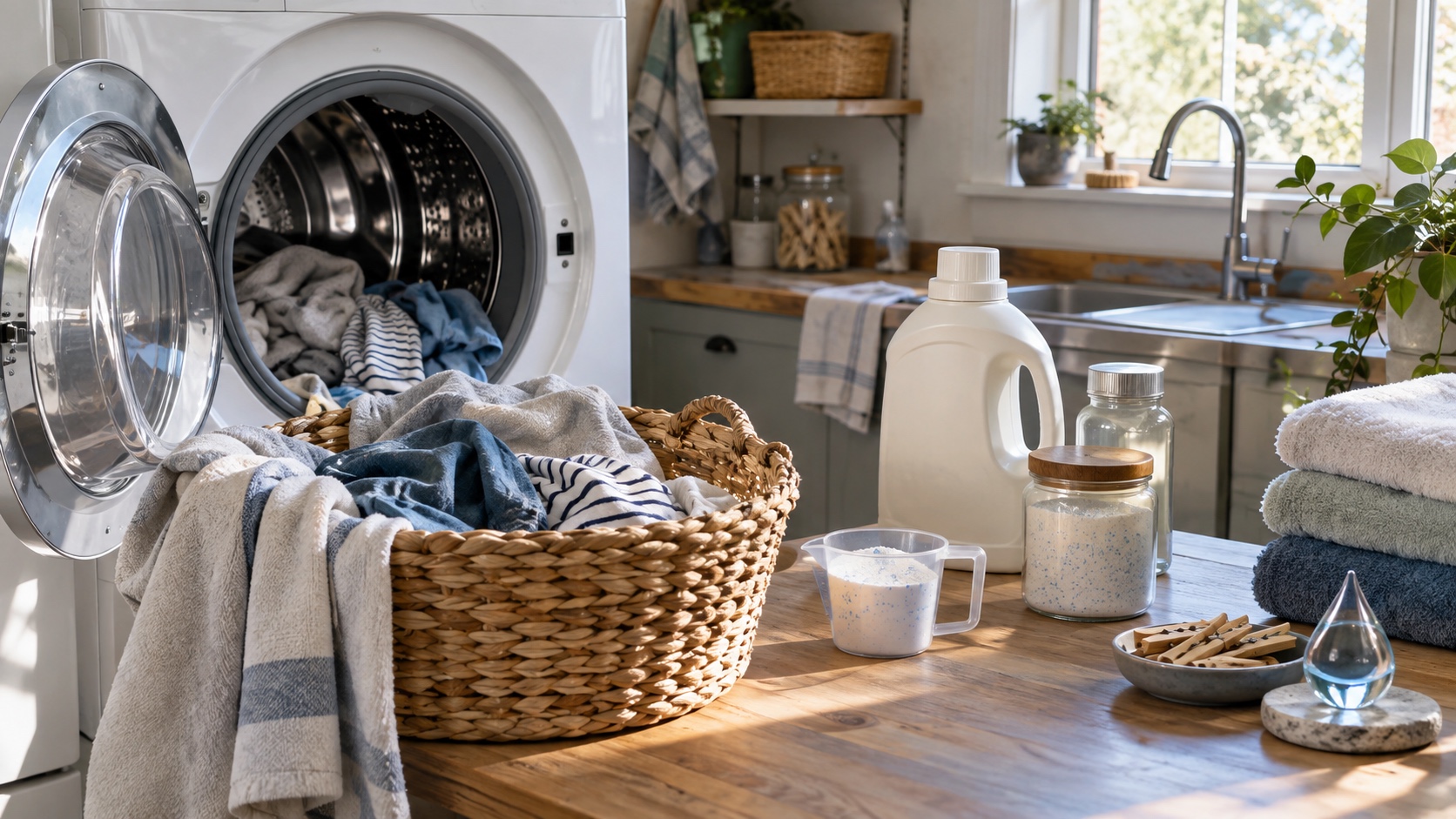
Routine care helps too: correct loading, keeping vents clear, and using the right detergent dose are lower-risk habits than opening a cabinet. If laundry is the recurring trouble spot, these laundry-detergent facts explain why more product is not automatically better.
Frequently asked questions
Should I reset an appliance before calling for repair?
Only use the reset or power-cycle procedure in the manual for your exact model. First photograph any error code. If a breaker trips again, or you notice heat, smoke, sparking, gas odor, or a leak, stop rather than reset.
Is Houston’s water hard enough to damage appliances?
Houston’s main-system hardness varied widely in the 2025 report, averaging 135.5 ppm as calcium carbonate. Scale can affect some components, but the water report and appliance manual—not the city name alone—should guide maintenance.
How often should a dryer vent be cleaned?
There is no single interval for every home. Clean the lint filter every load, inspect airflow and the duct, follow the dryer and duct instructions, and arrange qualified cleaning when drying slows or the system is restricted.
When should I stop a DIY appliance repair?
Stop when the work involves gas, sealed refrigeration, high-voltage components, live diagnostics, a safety interlock, or any procedure beyond the owner-maintenance section of the manual.
Sources and review date
Reviewed September 21, 2026. Safety and maintenance claims were checked against CenterPoint Energy’s gas-leak instructions, the U.S. Consumer Product Safety Commission’s carbon-monoxide guidance, the U.S. Fire Administration’s appliance and dryer-fire guidance, the Houston Public Works 2025 Water Quality Report, Whirlpool’s model-specific manual lookup, and the Texas Attorney General’s written-contract guidance.