How Hospital Food Evolved: 7 Milestones From Bedside Flasks to Smart Trays

Modern hospital food is the product of seven overlapping shifts: therapeutic diets, professional dietetics, centralized tray lines, cook-chill production, verified clinical diet orders, room-service menus, and digital ordering. This chronology selects milestones by five consistent criteria: food safety, clinical nutrition, meal temperature, patient choice, and food waste.
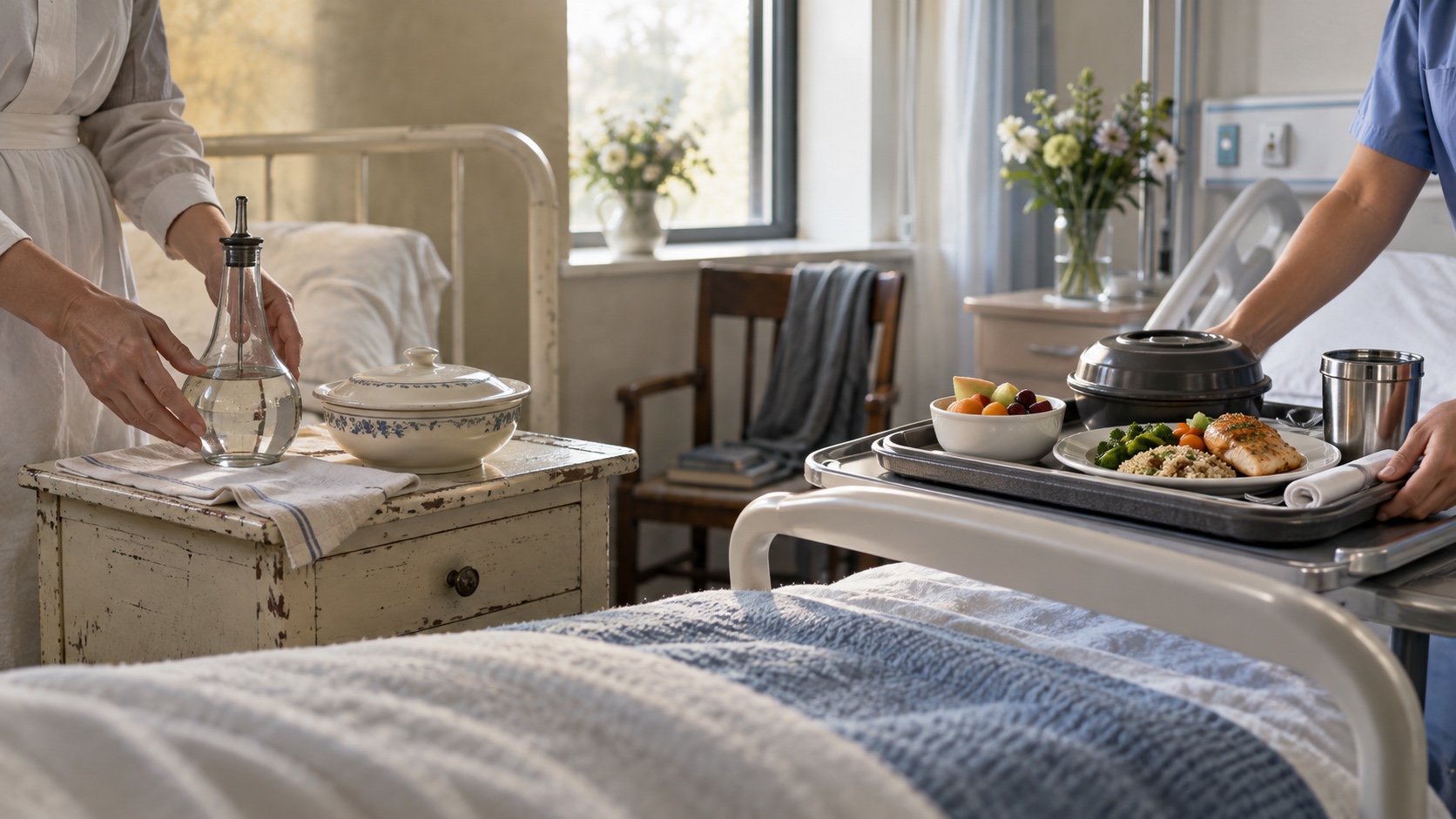
The old phrase “tablet feeding” can mislead American readers. It usually points to a meal-tray system—not feeding someone a computer tablet. Today, hospitals may use centralized tray lines, insulated carts, room-service ordering, or a combination. The equipment matters, but the harder job is getting the correct meal to the correct hospital bed at a safe temperature while respecting a patient's medical, cultural, and practical needs.
1. Therapeutic diets moved feeding into clinical care
Hospitals did not pass through one universal “gruel era.” Menus differed by country, institution, class, diagnosis, and available supplies. What changed over the nineteenth century was the growing effort to treat food as part of organized care rather than an incidental household task. The Florence Nightingale Museum records that Nightingale improved food supplies at Scutari and championed a healthy diet alongside sanitation and ward reform.
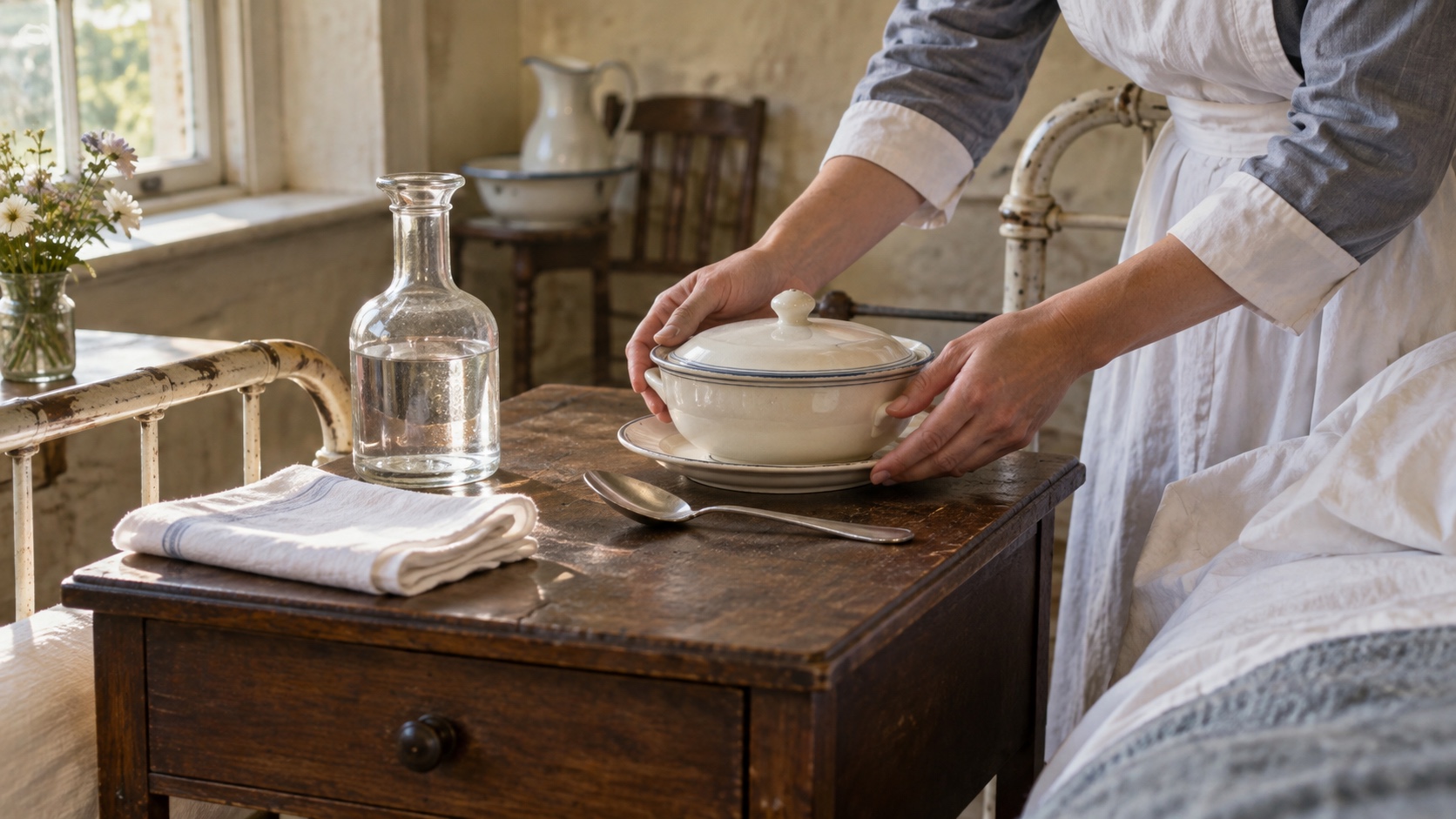
At the bedside, simple vessels such as flasks, bowls, and covered cups made liquids easier to deliver to a sick patient. They did not provide precise nutrition on their own. The milestone is the clinical question behind the meal: what can this person safely eat, and what does the care plan require? That distinction matters more than a romantic story about every patient receiving the same thin soup.
2. Dietetics became an organized profession
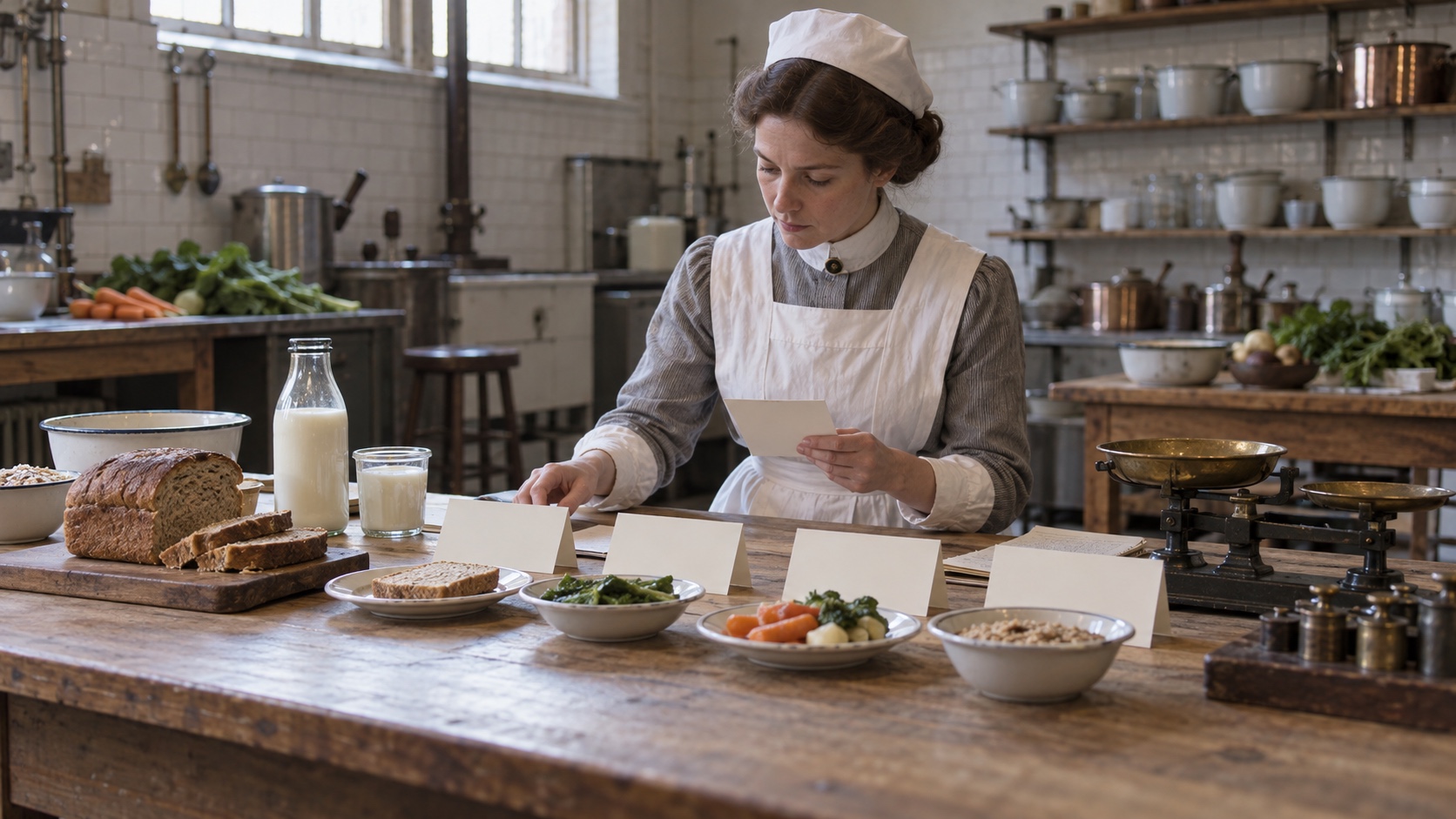
The next milestone was expertise. The Academy of Nutrition and Dietetics traces its organization to 1917, when a group led by Lenna F. Cooper and Lulu C. Graves formed the American Dietetic Association. Their immediate concerns included public health, nutrition, and wartime food conservation. The date did not invent dietetics, but it marks the profession building a shared identity and standards in the United States.
Hospital dietitians and nutritionists could translate a physician's diet order into menus, portions, preparation methods, and instructions for staff. That made the meal part of a coordinated service instead of a cook's guess. Professional judgment still has limits: a dietitian can specify an appropriate meal, but staffing, ingredients, appetite, swallowing ability, procedures, and the patient's condition all affect whether it is ordered, delivered, and eaten.
3. Central tray lines changed hospital-scale delivery
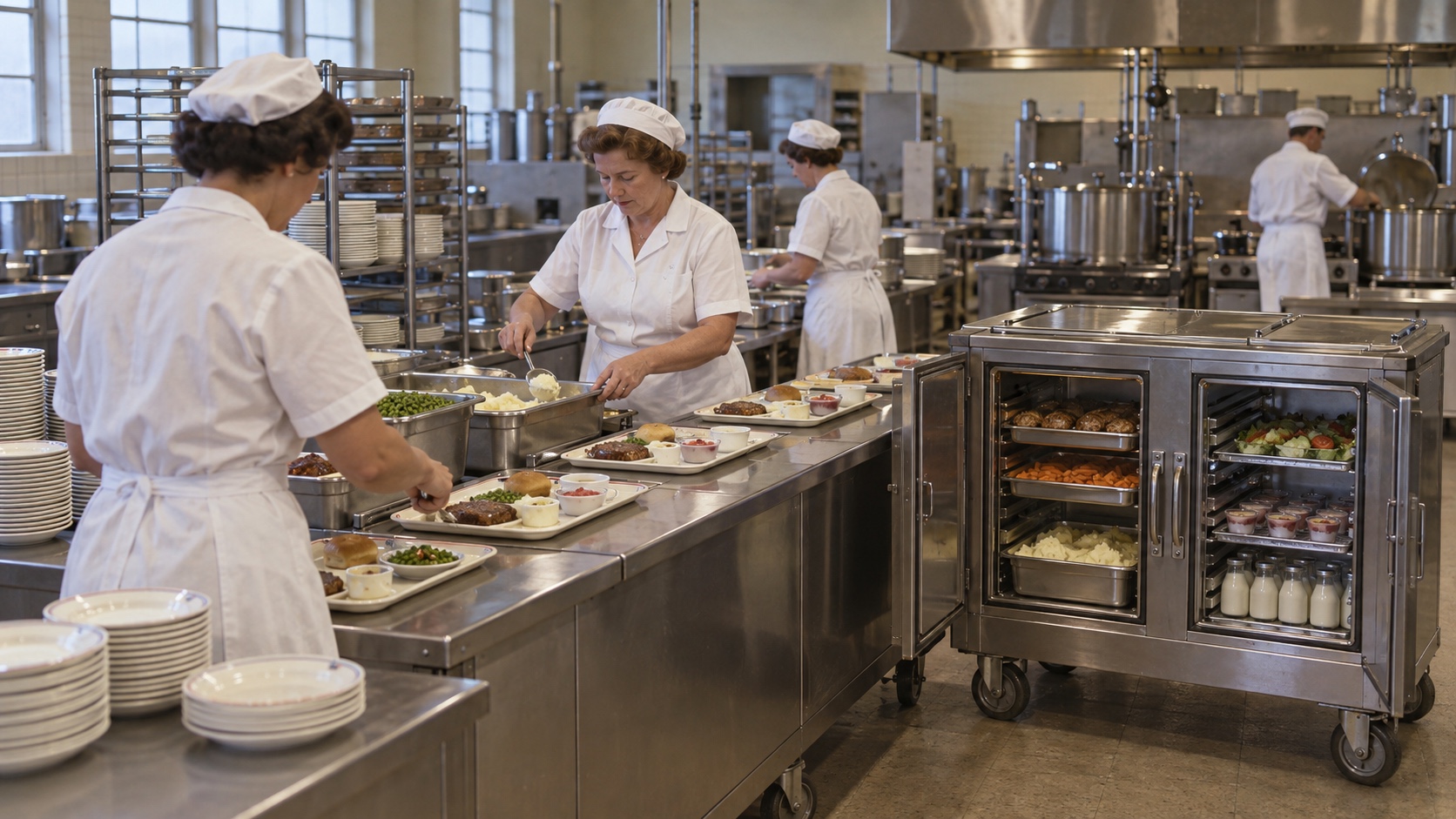
As hospitals grew, producing food was only half the problem. Kitchens also had to assemble hundreds of individual meals and move them through long corridors without losing the diet order or the temperature. A Becker Medical Library history of Barnes Hospital describes a 1950 system inspired by airline catering: cold selections traveled on prepared trays while hot food rode separately in an insulated, heated compartment.
The U.S. Army then tested centralized ward food service at Valley Forge General Hospital from 1951 to 1955. Its official medical history describes selective menus, central tray assembly, and carts with hot and cold sections. The project reported a 25% reduction in food losses, but that number belongs to one program, not every hospital. Centralization improves control and portion consistency; it can also create delays when elevators, distances, or tray-line timing work against the kitchen.
4. Cook-chill systems made timing more flexible
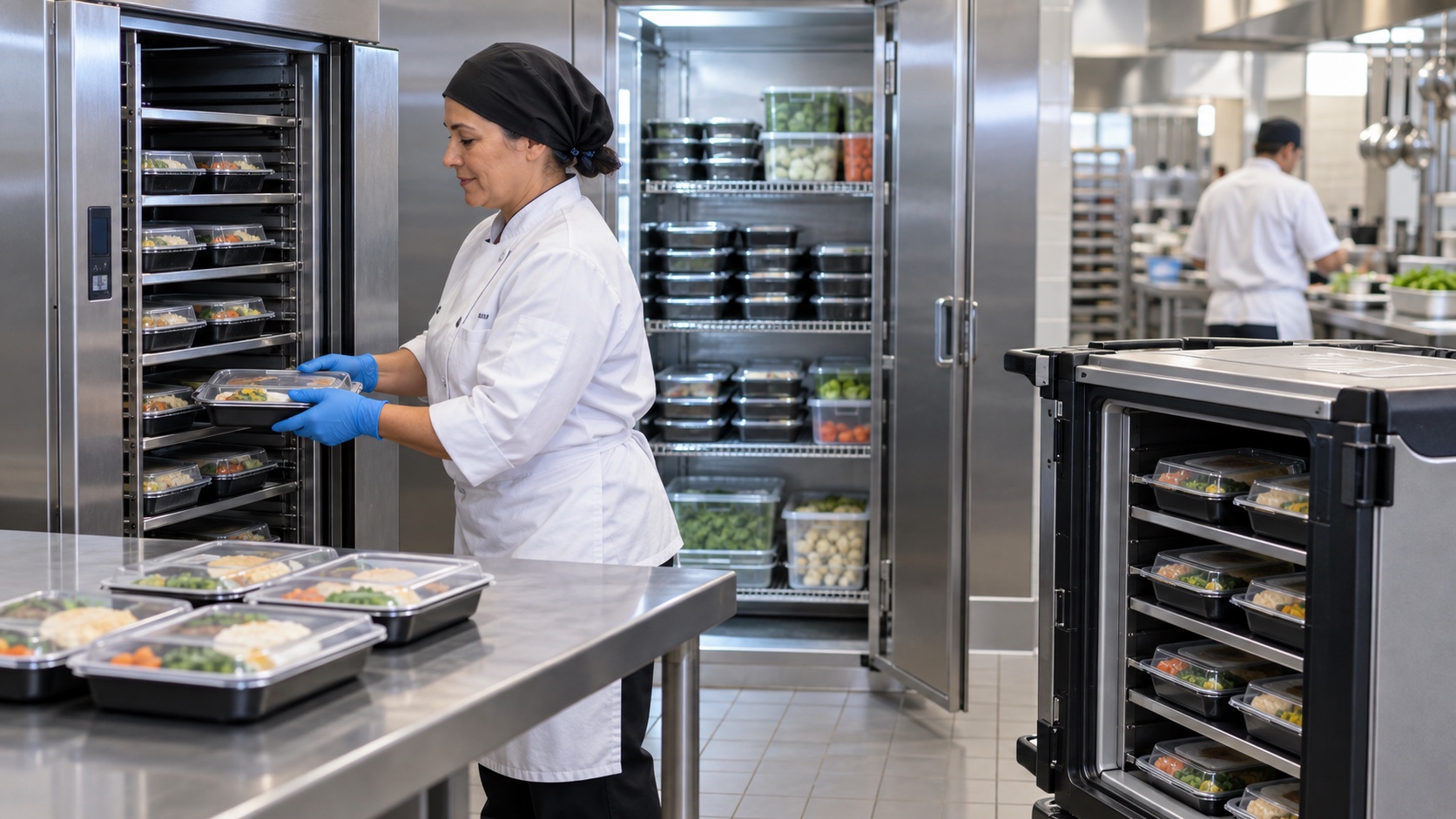
Traditional cook-fresh service prepares food near the time it is served. Cook-chill separates those moments: food is cooked, rapidly cooled under controlled conditions, stored cold, and reheated for service. The British Dietetic Association's Nutrition and Hydration Digest lays out these systems and their operational trade-offs. Cook-chill can smooth production and support distant wards, but it demands disciplined cooling, storage, regeneration, and quality control.
Temperature is not just about whether potatoes arrive appetizingly warm. Some foods require time and temperature control to limit pathogen growth. The FDA Food Code supplies a model framework that U.S. jurisdictions can adopt into food-service rules. It is not one federal law that automatically governs every hospital in identical form. The practical lesson is narrower: tray technology helps only when the entire kitchen-to-bedside process preserves safe controls.
5. Clinical diet codes made the tray part of treatment
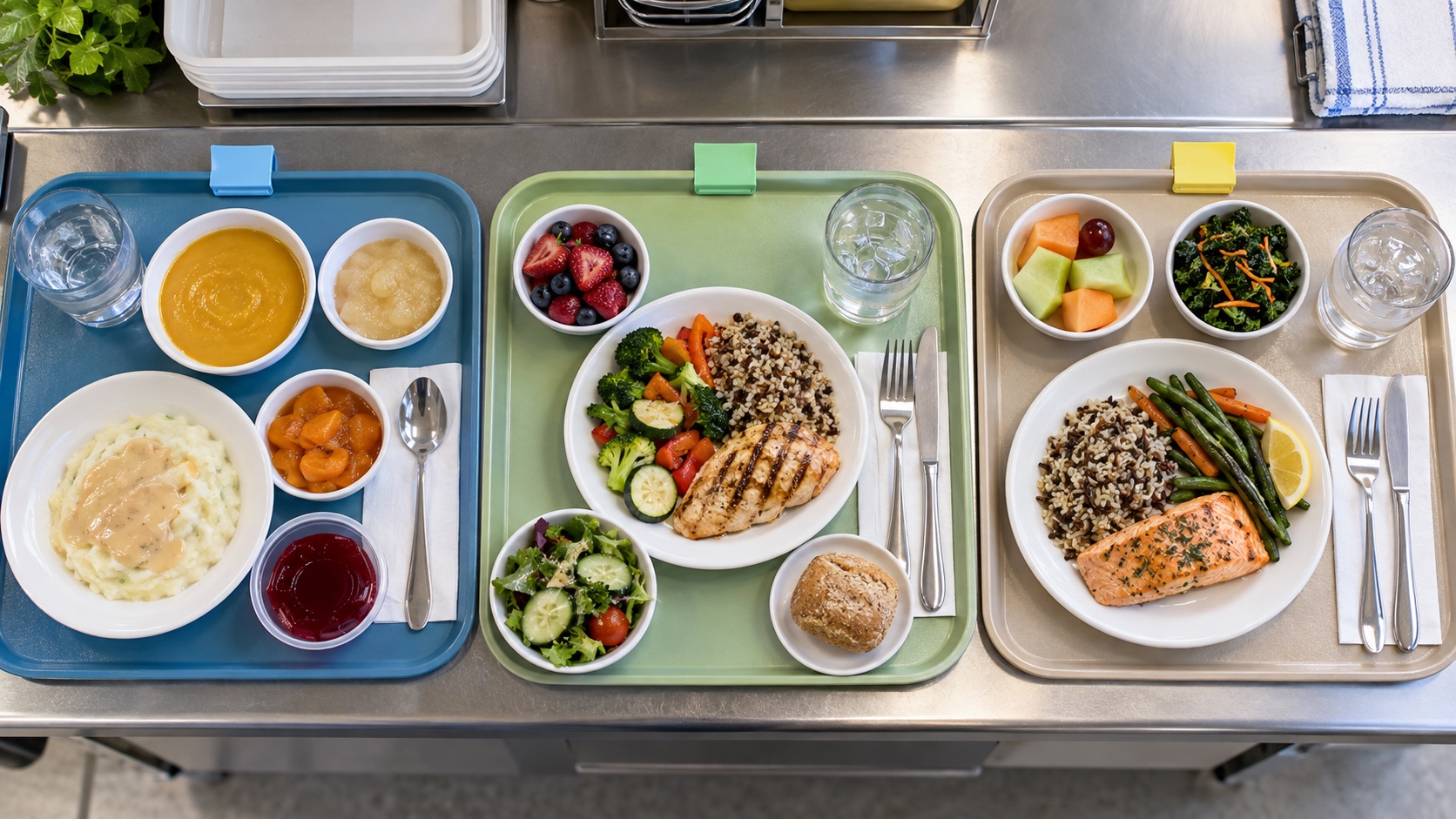
Modern tray lines do more than separate hot food from cold. They must distinguish regular meals from texture-modified food, carbohydrate-controlled menus, sodium restrictions, allergen exclusions, and other ordered diets. Choice also includes cultural and religious needs where a hospital can provide them. In the United Kingdom, national hospital-food principles have explicitly called for varied menus, religious options, drinking water, and food beyond fixed mealtimes.
The key advance is verification: matching the meal, diet code, and patient before service. A colored clip or printed ticket is not proof by itself, and no responsible system should promise that every preference or allergy can always be accommodated. Patients and caregivers should report allergies and swallowing concerns to the clinical team rather than relying on the appearance of a tray. For a related example of why nutrition labels and portions need context, see our guide to comparing frozen pizzas.
6. Room service shifted choice closer to the patient
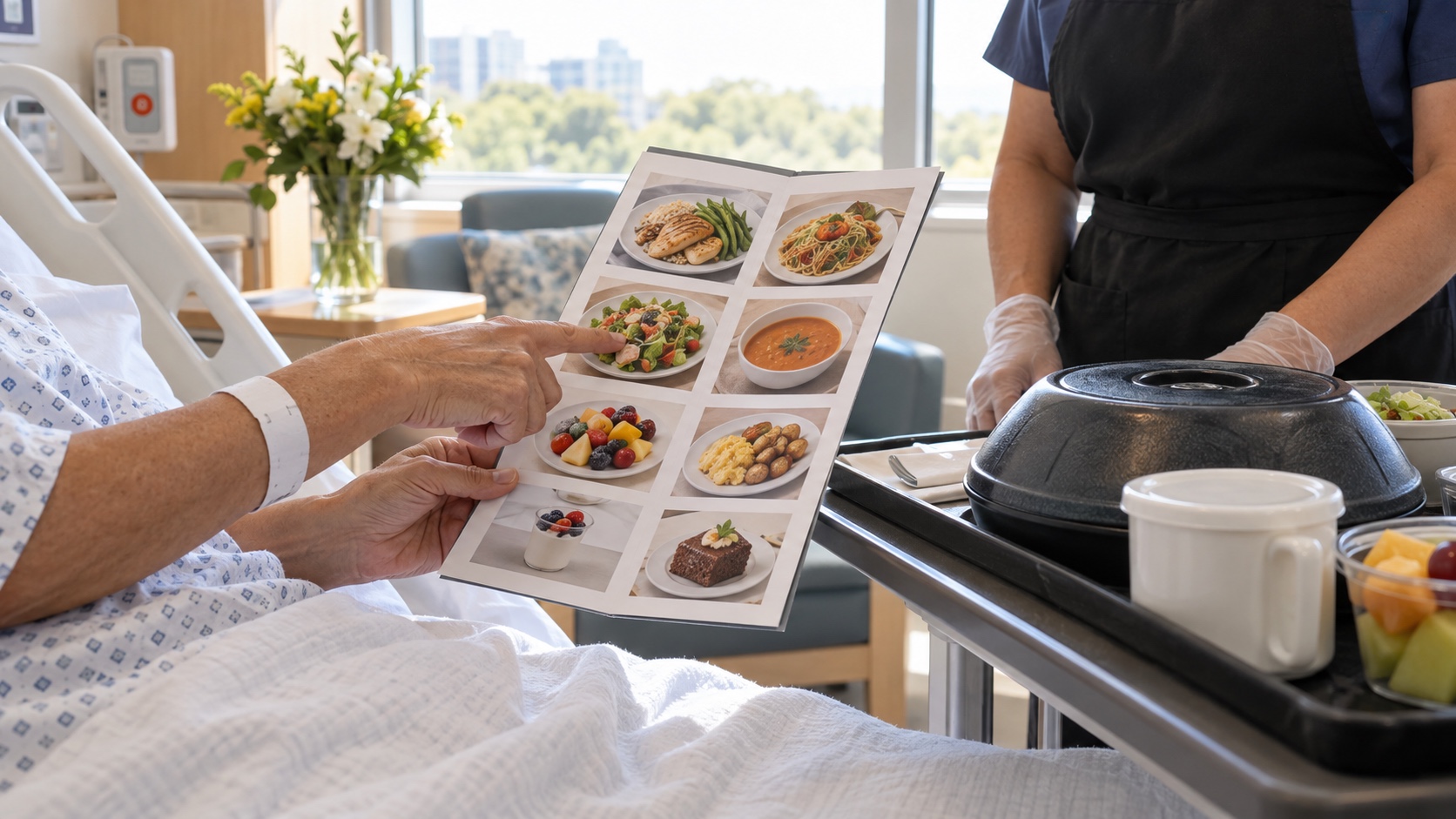
Hospital room service usually means ordering from an approved menu during a broader window instead of accepting one preselected tray at a fixed time. The model can help when tests, treatment, nausea, sleep, or appetite make the standard meal round a poor fit. It also gives patients a more direct role in choosing among meals that meet their diet order.
A 2018 study in the Journal of the Academy of Nutrition and Dietetics compared quality-assurance data around room-service implementation at an Australian hospital group. The authors reported higher measured energy and protein intake, higher satisfaction, lower plate waste, and lower meal cost. Those findings are encouraging, not universal: the analysis was retrospective, involved a specific system, and did not prove that switching service models will produce the same result in every hospital.
7. Digital ordering connected menus, diet orders, and tray checks
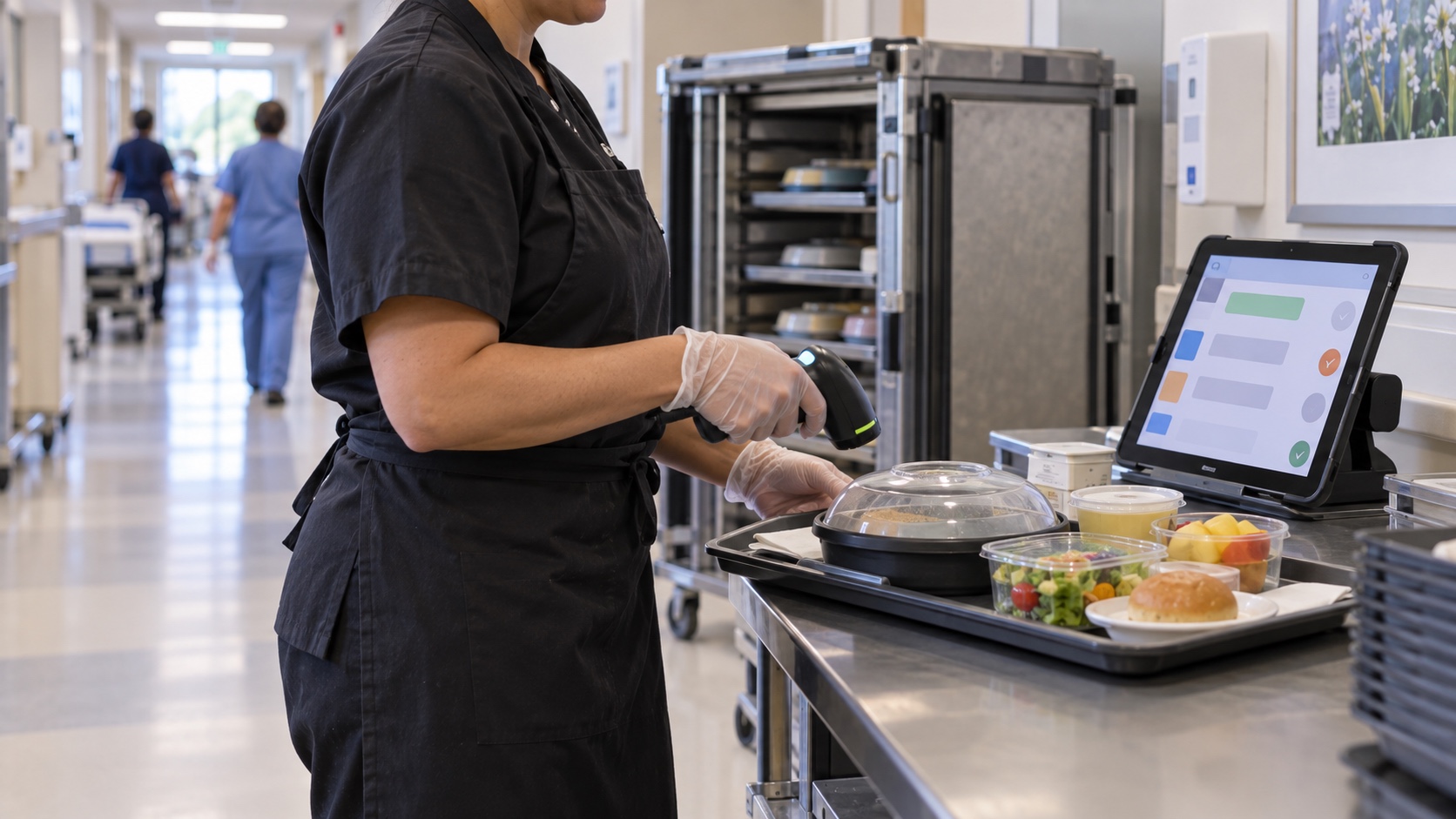
The newest milestone is information flow. Bedside ordering can send a patient's choice to the kitchen, filter the available menu through the current diet order, and give staff another checkpoint before the tray leaves. The Independent Review of NHS Hospital Food discussed electronic ordering linked with patient records and bedside meal ordering as part of a modern service.
This is the useful meaning of a “smart tray” workflow: fewer manual handoffs and clearer checks. It does not mean an algorithm diagnoses nutritional needs, a robot chef knows what a patient wants, or an electronic record cannot be wrong or out of date. Staff still need to confirm changes, protect health data, provide accessible non-digital choices, and catch the ordinary exceptions that software misses.
What seven milestones really changed
Hospital food did not travel in a straight line from bad gruel to gourmet meals. The durable gains are less theatrical: trained dietitians, defined diet orders, safer production, controlled delivery, more choice, and better information at the tray line. A modern meal can still arrive late, go uneaten, or fail to fit a patient's needs. Technology narrows some failure points; it does not remove the need for skilled people and a responsive clinical service.
If you are comparing food systems outside a hospital, the same habit helps: separate a nutritional claim from the portion, ingredients, and delivery context. Our guide to checking dollar-store foods by unit price and package condition applies that evidence-first approach to everyday shopping.
Sources and verification
Historical milestones were checked against the Florence Nightingale Museum, the Academy of Nutrition and Dietetics, the U.S. Army Medical Department history, and Becker Medical Library. Current service and safety descriptions use the British Dietetic Association, FDA Food Code, UK Department of Health and Social Care, the independent NHS hospital-food review, and McCray and colleagues' 2018 room-service study. Sources were reviewed September 21, 2026.