
5 Tips for Loading Your Dishwasher Correctly

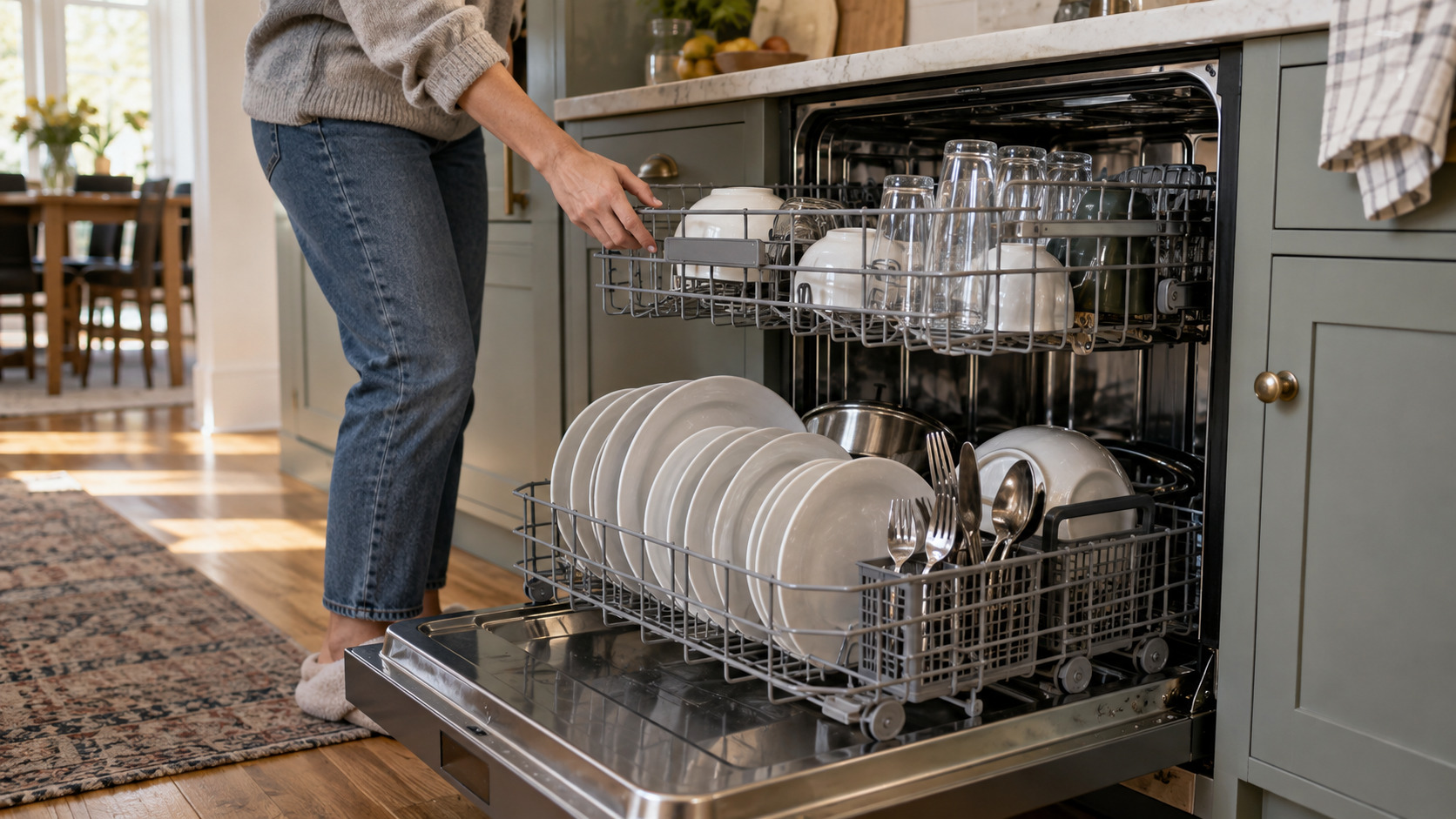
To load a dishwasher correctly, scrape off loose food, put sturdy plates and cookware on the lower rack, place cups and glasses on the upper rack, separate utensils, then spin the spray arms by hand before starting. The goal is simple: every dirty surface should face the spray without another item blocking it.
These five tips are ordered by the way you build and check a load, not by importance. Rack layouts, heating elements, third racks, and approved materials vary, so check the manual for your model when its diagram differs from this general guide.
1. Scrape off food, but skip the sink rinse

Scrape bones, toothpicks, seeds, and large pieces of food into the trash or compost. You do not need to leave a layer of food residue for detergent to “cling to,” and the old claim that rinsing makes soap crack plates is unsupported. The practical reason to skip a routine pre-rinse is that it uses extra water and energy before the dishwasher even starts. ENERGY STAR recommends “scrape, don’t rinse” for modern dishwashers.
There are exceptions. Burned-on, dried-on, or starchy soil may need the treatment described in your manual, and a machine that will sit with dirty dishes for a long time may have a rinse cycle designed for that purpose. Keep non-dishwasher-safe materials out entirely rather than hoping a gentle cycle will protect them.
2. Give the upper and lower racks different jobs
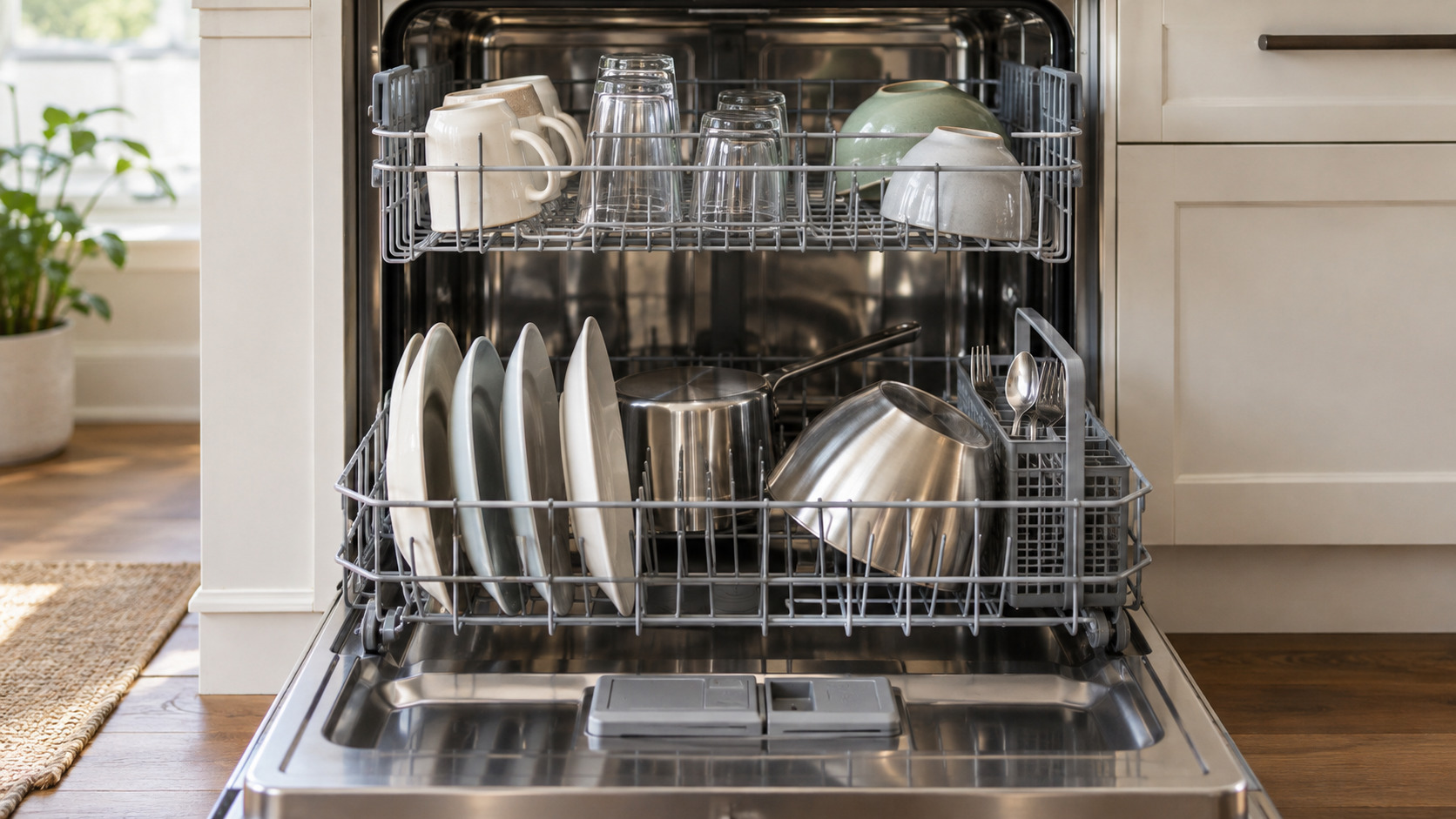
Use the lower rack for sturdy plates, serving dishes, and dishwasher-safe pots and pans. Face the dirty side inward or toward the spray zone, angle bowls so water can drain, and keep tall trays away from the detergent dispenser and any vent identified in the manual. Put cups, mugs, glasses, and smaller bowls on the upper rack with their openings angled down. Glasses sit more securely between tines than balanced over them.
Dishwasher-safe plastic generally belongs on the upper rack when the manual says the lower area is close to a heating element. Lightweight lids need to be secured so they cannot flip over or fall through. A third rack may take flatware, small cups, or cooking tools, but its clearance and spray pattern are model-specific. Whirlpool’s rack-loading guidance shows why placement changes across lower, middle, and third racks.
3. Separate utensils and point sharp edges down
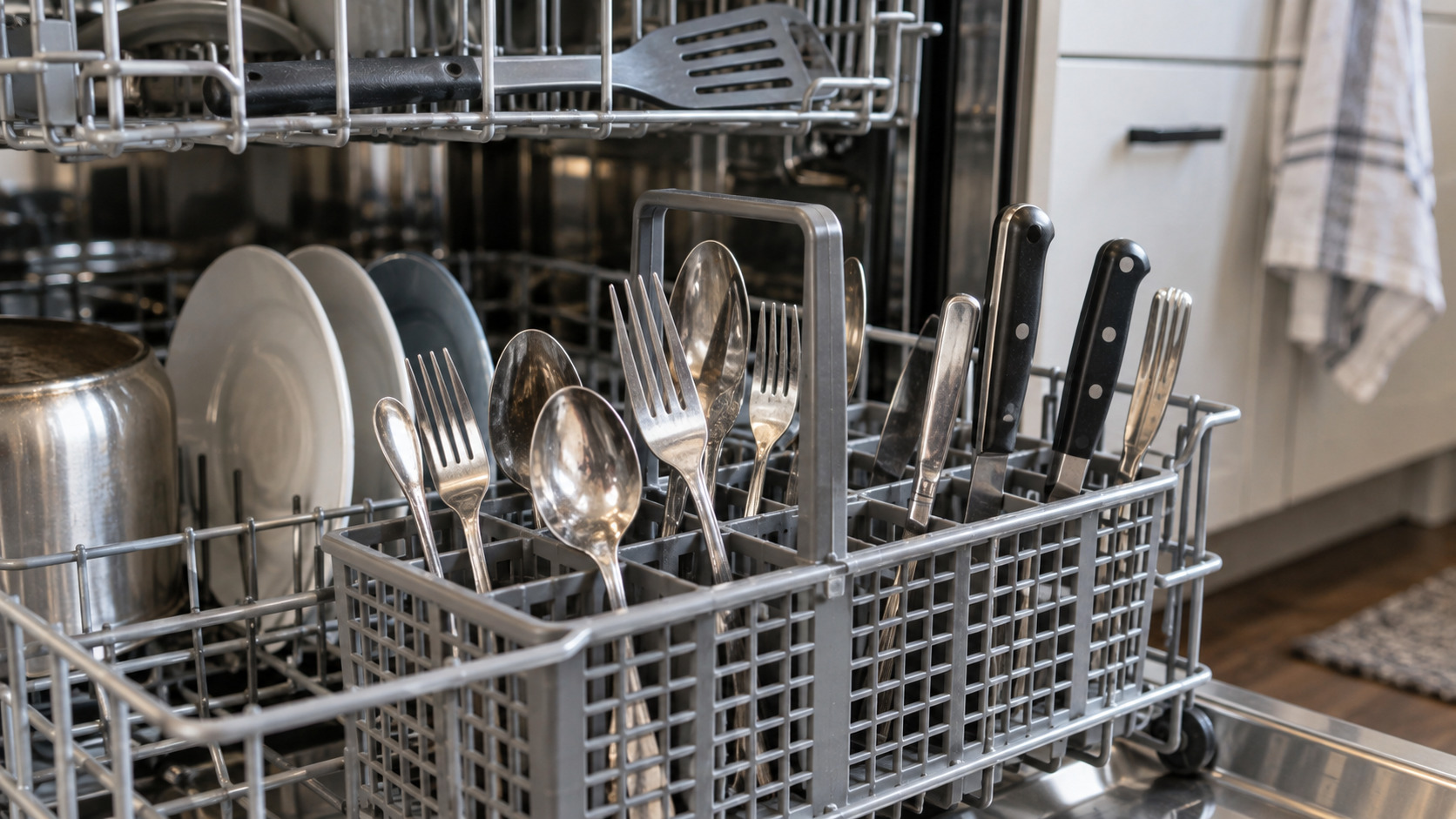
Use the basket slots when they fit your flatware. Otherwise, mix forks and spoons among compartments so matching pieces do not nest into a tight stack that shields food residue from water. Do not pack every opening just because one remains. Long spatulas, whisks, and ladles are usually better laid flat and secured on an upper or third rack, where they cannot drop through and stop a wash arm.
Load sharp knives and skewers with their points and blades down and handles up. That is a safety rule for reaching into the basket, not a promise about every specialty knife: fine cutlery, wood-handled tools, and pieces with glued or delicate finishes may not be dishwasher safe. Bosch’s current quick guide likewise warns that sharp items should point down.
4. Spin the spray arms before you close the door
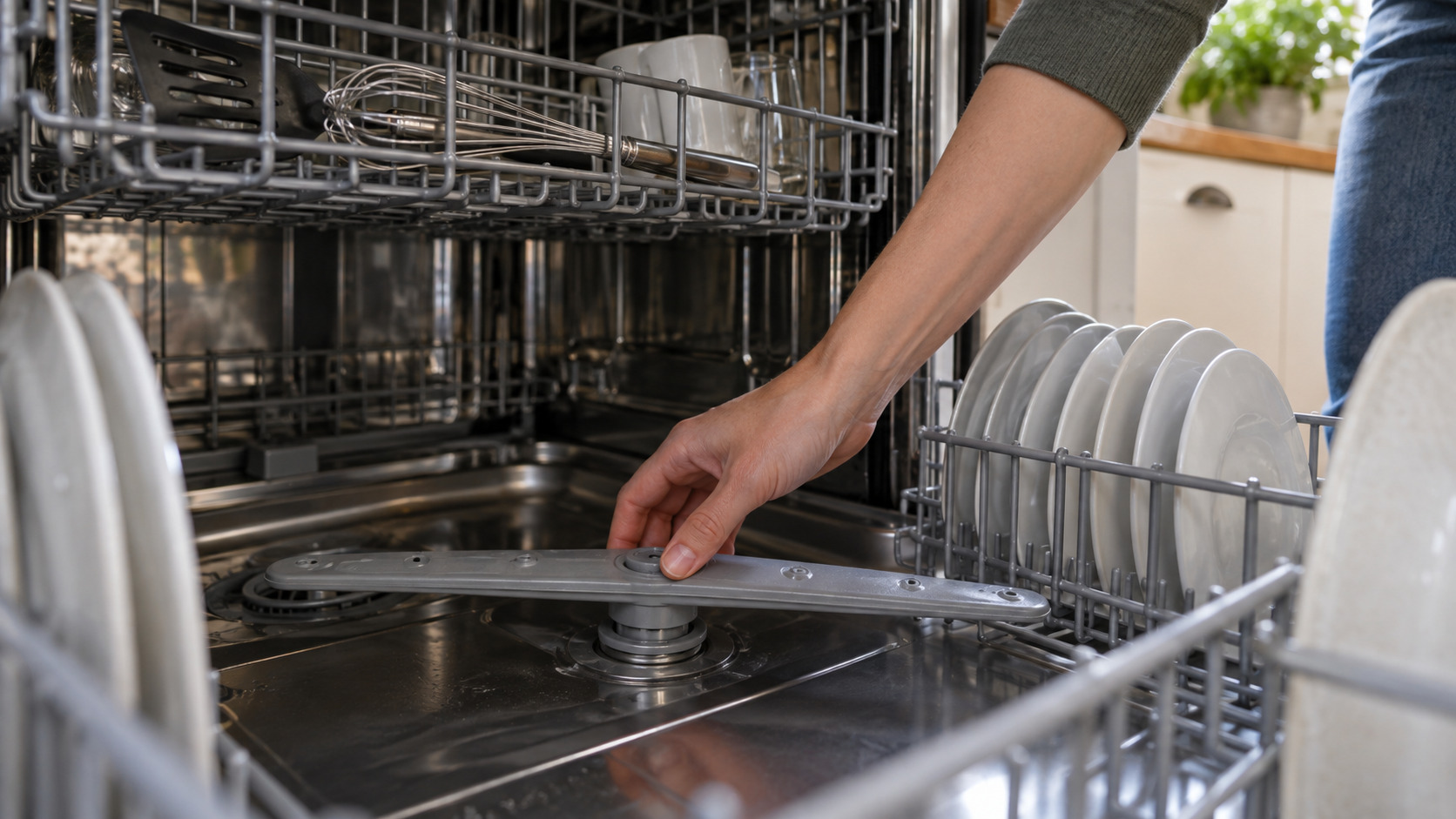
Once the racks are in place, gently rotate every accessible spray arm by hand. It should complete a full turn without striking a plate, pan handle, utensil, or item hanging through the rack. Also confirm that the upper rack is pushed fully into its operating position; some designs connect its water feed at the back of the tub.
Clearance is not the same as maintenance. If the arm turns freely but dishes still emerge dirty, consult the manual before removing a filter or spray arm. Bosch’s dishwasher troubleshooting guidance separately recommends checking loading, blocked arms, the filter, and clogged spray openings. Our appliance repair mistakes guide explains why model-specific instructions matter before taking anything apart.
5. Fill the machine without crowding the water path
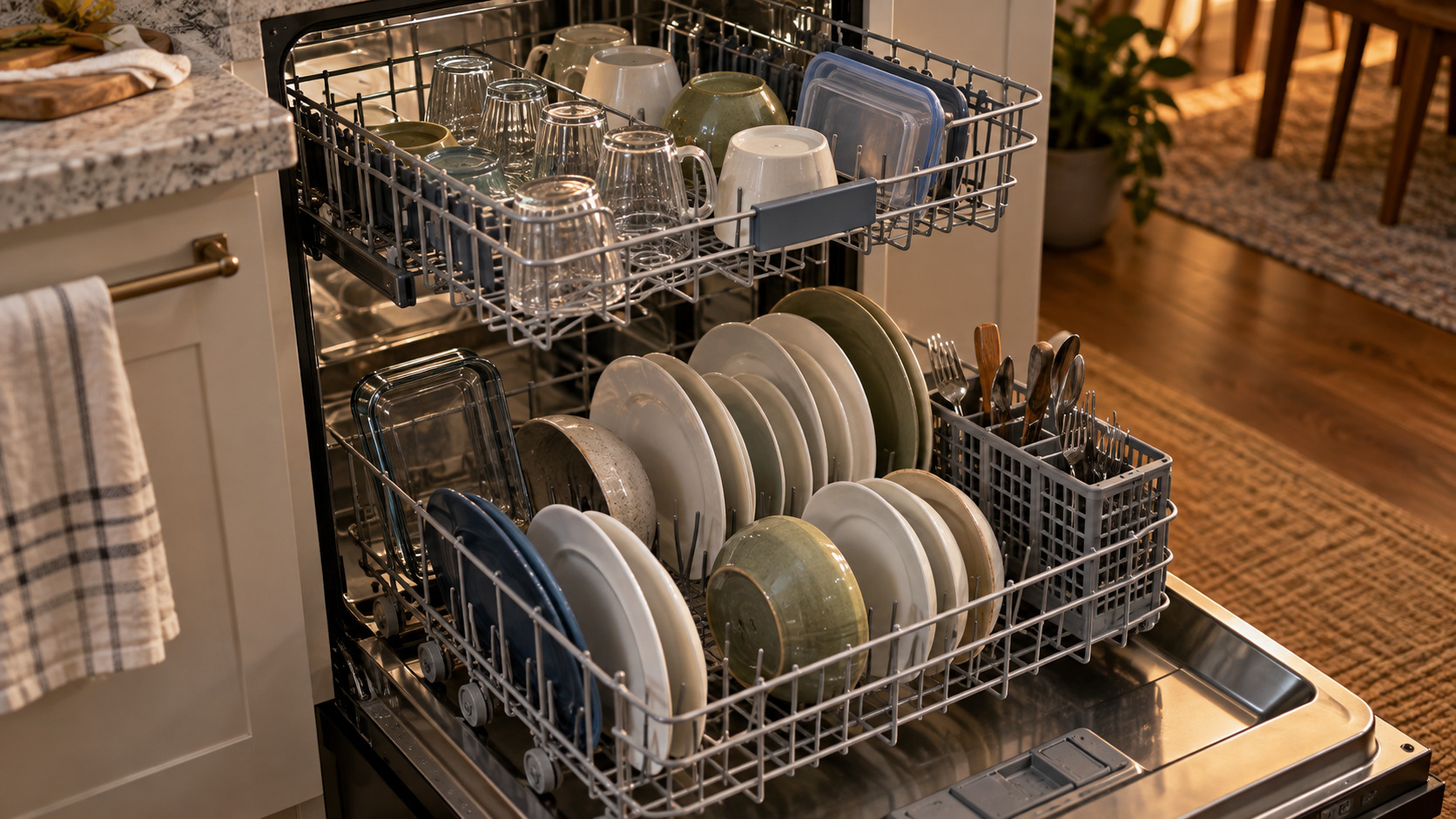
A full load uses the machine’s capacity efficiently, but an overloaded rack blocks spray and creates contact points. Plates should occupy separate tine spaces, bowls should not overlap, glasses should not touch, and the dirty face of one item should not be hidden behind another. If you have to force a rack inward or an item moves when the rack rolls, rearrange it.
The best test is visibility, not a fixed finger-width rule: can you see a path from the spray area to each soiled surface? Can water drain out of every cup and bowl? Are lightweight pieces secure, and can the dispenser open? If the answer is no, move one or two items to the next load. For another everyday-appliance habit, see these laundry detergent facts, including why extra product is not automatically better.
Frequently asked questions
Should dishes face the center of the dishwasher?
Face the soiled surfaces toward the spray zone shown by your rack design. In many machines that means inward and downward, but the loading diagram for your model is the final authority.
Do glasses go over or between the rack tines?
Place glasses between tines, with their openings angled down. Balancing them over tines can make them less stable and may leave contact marks or trapped water.
Should forks point up or down?
Follow the basket design. Mixing forks and spoons helps prevent nesting; sharp knives and skewers should point down so the handles are safer to grab.
How do I know whether the dishwasher is overloaded?
It is overloaded when dishes overlap, touch, block the dispenser or spray arms, hang through a rack, or shield one another’s dirty surfaces. A full rack is fine when water paths remain open.
The 20-second final check
- Loose food is scraped off.
- Dirty surfaces face the spray and containers angle down.
- Utensils are separated and sharp points face down.
- Spray arms turn and the detergent dispenser can open.
- No dish overlaps, rattles against another, or hangs through a rack.
That short check solves the loading mistakes that matter most. If results are still poor, stop rearranging the same load and use the troubleshooting section of the exact owner’s manual; detergent dose, cycle choice, water temperature, filters, and maintenance can produce similar symptoms.
Sources and review date
Reviewed September 21, 2026. Water- and energy-use guidance was checked against ENERGY STAR dishwasher best practices. Rack, flatware, spray-arm, and material guidance was cross-checked with Whirlpool Product Help, Whirlpool’s silverware guide, and a current Bosch use-and-care quick guide. Because dishwasher designs differ, the instructions for your exact model take priority.