14 Outdoor Weekend Projects to Spruce Up Your Home

The most effective outdoor projects make a backyard or front entry easier to use before they add decoration. Start with one bounded job: define a place to sit, organize a hose, improve a route, or give plants the conditions they need. These fourteen outdoor weekend projects range from specialized builds to broadly useful upgrades, so the right choice depends on your house, climate, skill, and appetite for upkeep.
This is an editorial ranking, not a claim that one project fits every home. The ideas are ranked by visible impact, everyday usefulness, weekend feasibility, upkeep, and avoidable risk. “Weekend” describes a manageable scope, not a guarantee: weather, curing time, site conditions, permits, utility marking, and your experience can all extend a job. Structural, electrical, gas, roofing, and major drainage work belong with qualified professionals.
14. Build a Freestanding Tree Bench
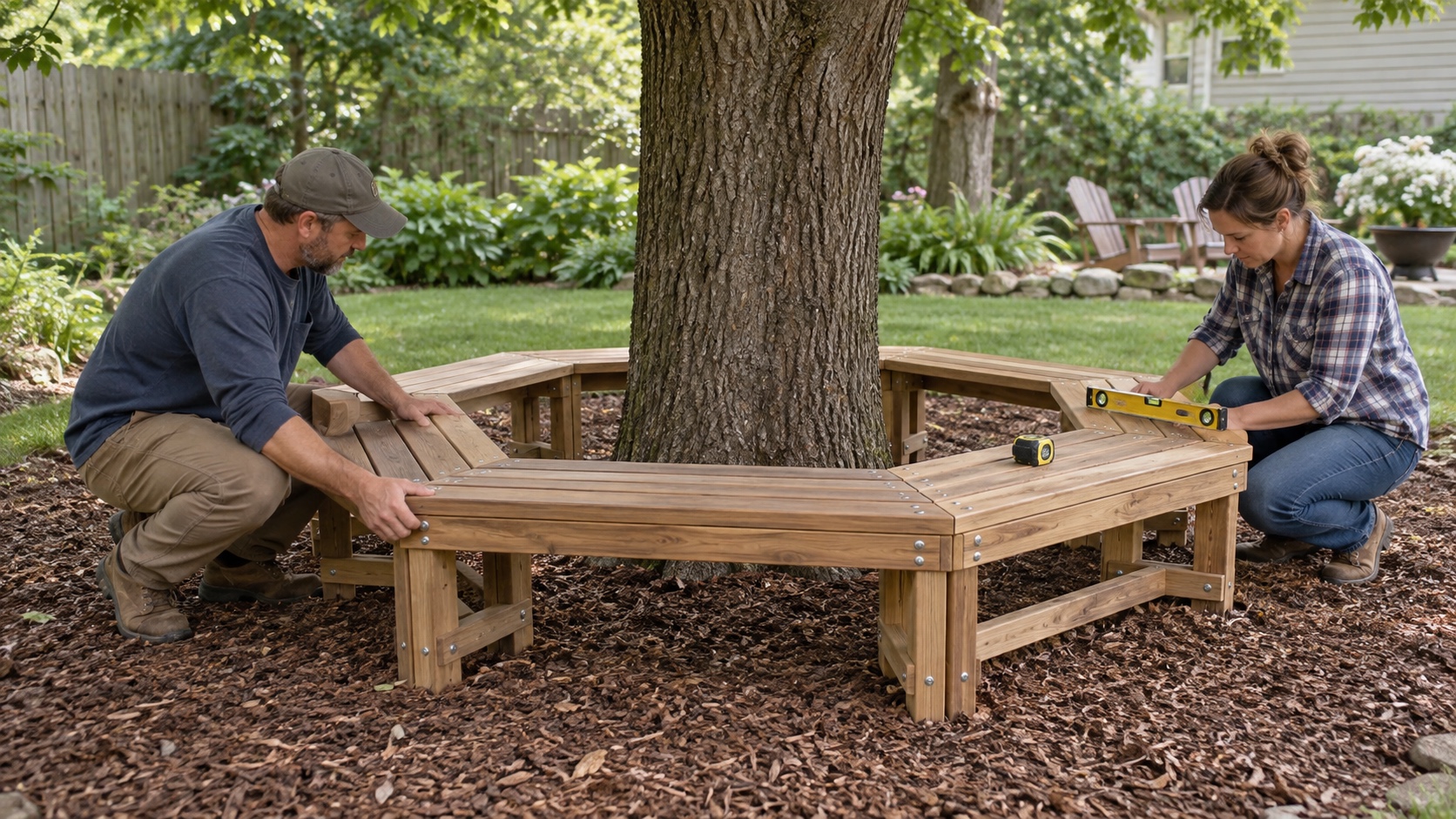
Best for: a healthy, mature shade tree that already anchors a quiet part of the yard. A modular, self-supporting tree bench can turn that shade into a reading spot without driving fasteners into the trunk. Measure the tree at the bench height, leave generous clearance for growth and airflow, and design the sections so they can be moved or enlarged later.
Watch for: roots, grade changes, and false confidence about the tree’s condition. The University of Maryland Extension notes that many important feeder roots lie in the upper six inches of soil and can be damaged by digging, trenching, or construction traffic. Keep the bench on the existing grade, do not cut roots or bury the root flare, and have a qualified arborist assess cavities, large dead limbs, a sudden lean, or other concerns before inviting anyone to sit below. A tree with gold fall color may look perfect for the idea, but appearance is not a structural inspection.
13. Turn a Wagon Into a Mobile Herb Garden
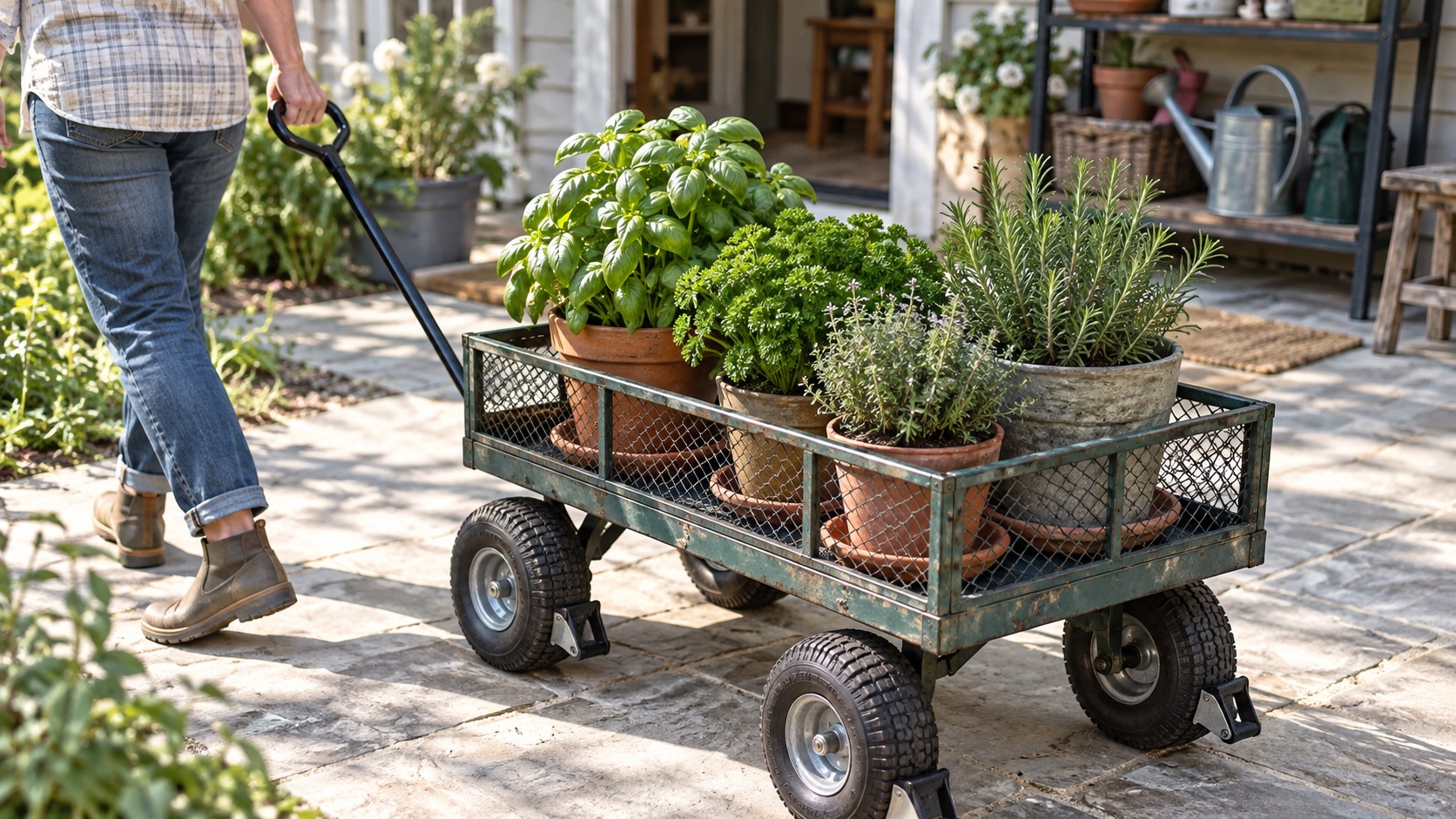
Best for: a patio where sunlight shifts or a renter who wants a movable herb garden. Use the wagon as a stable carrier for individual pots rather than filling an unmodified metal bed with soil. The University of Minnesota Extension says outdoor herb containers need drainage holes and that most culinary herbs perform best with at least six hours of direct sun, although the correct light and watering still depend on the plant and climate.
Watch for: weight, standing water, heat, and rolling. Test the loaded wagon on level ground, use sound wheels and a reliable way to keep it stationary, and choose saucers that do not leave roots waterlogged. Group herbs by similar moisture needs instead of assuming rosemary, basil, parsley, and mint want identical care.
12. Refresh Existing Planters With a Deliberate Palette
Best for: an entry or patio that feels scattered even though it already has usable pots. Clean sound containers, retire cracked ones, and repeat two or three materials or colors rather than buying a matched set. Vary the plant height and pot diameter, then leave enough open space that the arrangement reads as intentional instead of blocking the door.
Watch for: drainage, sun exposure, and surfaces that stain. Match each plant to the actual light at that spot and keep drainage paths clear. If a porch receives too little light for the look you want, weather-rated faux stems can be a decor option; our guide to using and reusing artificial flowers explains the trade-offs rather than pretending they are living plants.
11. Edge and Mulch One Garden Bed
Best for: a front bed that needs a cleaner outline more than it needs new plants. Define one simple curve or straight edge, remove weeds, and cover bare soil with a mulch that suits the plants and local conditions. The EPA says mulch can reduce evaporation, moderate soil temperature, limit weeds, and help prevent erosion.
Watch for: the “mulch volcano.” EPA WaterSense recommends roughly three to four inches for most plants and leaving a few inches between organic mulch and tree trunks or woody stems. Keep mulch below siding and out of drainage paths, and do not use edging as an excuse to sever established roots.
10. Build a Compact Potting Shelf
Best for: anyone who repeatedly carries soil, gloves, and small pots between a garage and the backyard. A narrow freestanding shelf with a durable top creates a clear work surface and one home for hand tools. Size it around the supplies you actually use, add a lip that catches loose material, and keep the heaviest bags low.
Watch for: tipping, trapped moisture, and chemical storage. Anchor only as the manufacturer or local construction rules allow, seal exposed end grain, and keep fertilizers and pest-control products in their original labeled containers away from children, pets, heat, and food-preparation tools.
9. Give the Garden Hose a Real Home
Best for: a high-traffic side yard where a loose hose becomes a trip hazard and an eyesore. Mount a rated hose hanger to an appropriate surface or use a stable freestanding reel, then add a small tray for a nozzle and spare washers. A sweeping loop is easier on the hose than a tight kink.
Watch for: weak cladding, sharp bends, and freeze exposure. Do not fasten a loaded hanger to trim or unknown wall material, and follow the hose, reel, and faucet instructions for draining or winter storage. A leak at the connection is a maintenance problem, not a cue to keep tightening until a plastic fitting cracks.
8. Update House Numbers and the Mailbox
Best for: a front approach that looks tired or is hard to identify from the street. Replace faded numbers with a legible, high-contrast set and refresh a sound mailbox with cleaning, compatible paint, or new hardware. Mock up the spacing with paper first so the final arrangement is level and readable at the normal approach angle.
Watch for: local addressing, postal, HOA, and historic-district requirements. Visibility at night matters more than a trendy typeface. Do not move a curbside mailbox, drill into unknown utilities, or cover a required address position until the relevant local rules are clear.
7. Add Self-Contained Solar Path Lights
Best for: adding a visual edge to an established walkway without installing new line-voltage wiring. Use a few fixtures at decision points—steps, turns, and changes in surface—rather than lining the yard like a runway. Check the manufacturer’s sun-exposure, battery, spacing, and weather-resistance guidance.
Watch for: treating decorative light as safety lighting. Small solar fixtures may dim after cloudy weather and do not replace code-compliant illumination where a stair, entrance, or hazard needs dependable light. If installation requires excavation or a buried cable, contact 811 and use the appropriate qualified trade.
6. Plant a Small Region-Appropriate Garden Pocket
Best for: replacing an awkward patch of unused turf with plants chosen for the actual site. EPA WaterSense recommends considering climate, sun and shade, soil, intended use, and maintenance before selecting plants. Your local Cooperative Extension or native-plant program can narrow the choices more reliably than a national “easy plants” list.
Watch for: mature size, aggressive spread, buried utilities, and irrigation needs during establishment. Start with a small bed and a short plant list. “Native” is regional, not a universal label, and even a well-adapted plant can fail in the wrong moisture or light conditions.
5. Set Up a Rain Barrel for Ornamental Watering
Best for: collecting roof runoff for outdoor use where the roof, gutter, downspout, and local rules are suitable. Put the barrel on a stable, level base, use a screened inlet and controlled overflow, and direct overflow away from the foundation. EPA WaterSense notes that rain barrels or cisterns can supplement outdoor irrigation.
Watch for: local restrictions, mosquito access, child safety, and overflow. The EPA advises checking with the state water-resource agency because rainwater-collection rules vary. Follow local health guidance for how collected water may be used, and never improvise a foundation or downspout change that sends water toward the house.
4. Lay a Short Stepping-Stone Route
Best for: the worn strip between a back door and a frequently used feature such as a grill, shed, or seating area. Walk the route first, place stones at a natural stride, and test stability before committing. A short path with a clear destination improves daily movement more than decorative stones that lead nowhere.
Watch for: utilities, drainage, roots, frost movement, and trip edges. PHMSA says every digging project—including small planting jobs—requires contacting the 811 one-call center before excavation. Keep excavation away from important tree roots, preserve the site’s drainage pattern, and use a professional when the route crosses a steep slope or needs retaining work.
3. Build a Freestanding Trellis Screen
Best for: softening the view of bins, a utility corner, or a plain wall without pretending a screen is a security fence. A freestanding planter-and-trellis unit can add vertical structure and support a site-appropriate vine while remaining separate from a neighbor’s fence or the house envelope.
Watch for: wind load, top weight, invasive vines, and property boundaries. A large screen may need engineered anchoring or a permit, which pushes it beyond a casual weekend build. Do not attach it to shared fencing or conceal equipment that requires airflow, inspection, meter access, or service clearance.
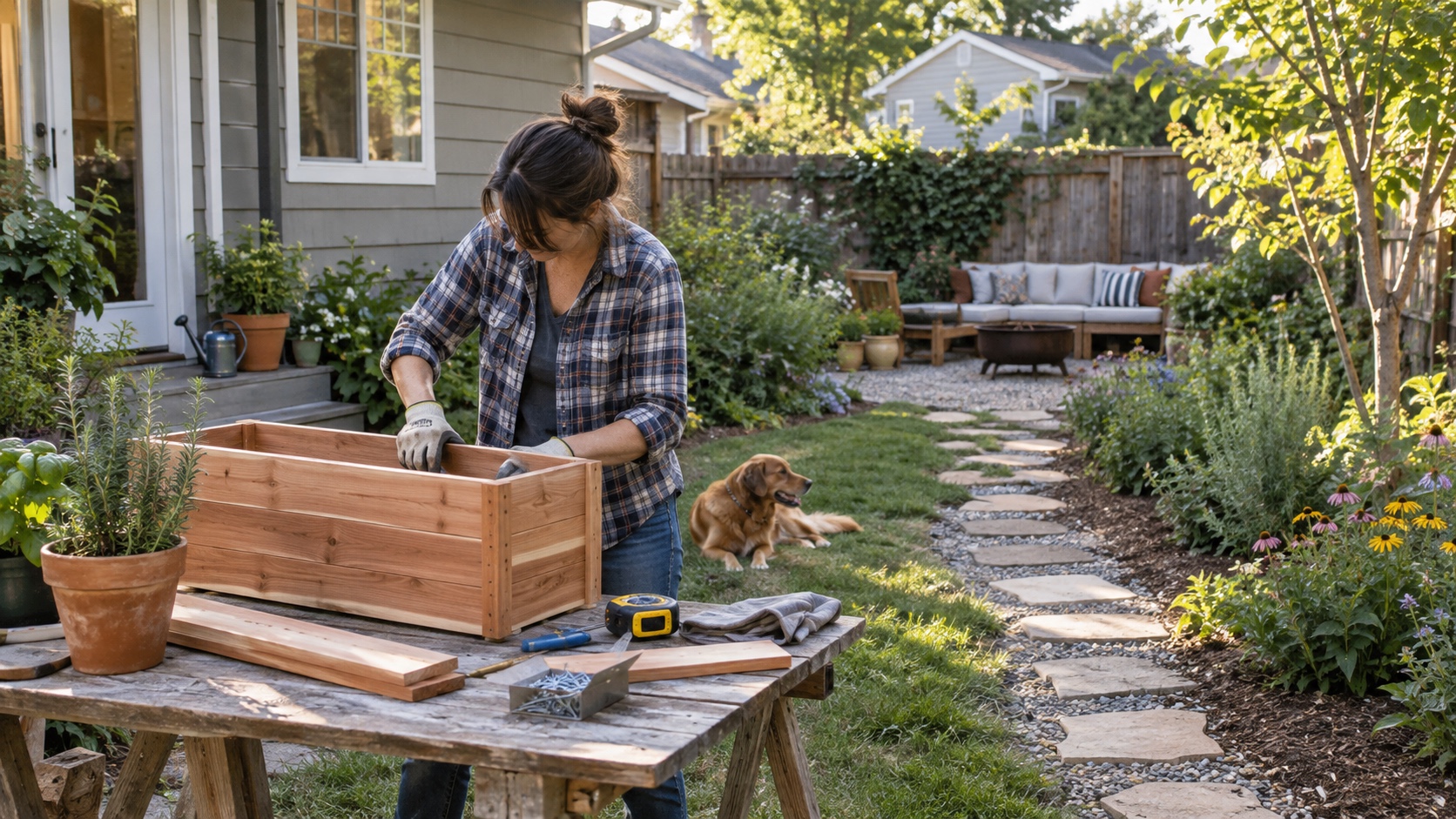
2. Build a Weather-Ready Planter Box
Best for: defining an entry, deck edge, or patio without cutting a new bed into the ground. Choose a size that can be moved or maintained, provide unobstructed drainage, and use materials and fasteners rated for the intended exposure. A simple rectangular box is easier to square, line, and repair than a complicated multi-level design.
Watch for: saturated weight, rot, staining, and contact with vulnerable building materials. Keep the planter off siding and door thresholds, protect the surface below, and avoid blocking a drain or inspection point. On a balcony, roof deck, or elevated structure, confirm load and placement with the property owner or an appropriate professional.
1. Create a Small Conversation Zone
Best for: the widest range of homes because it turns leftover outdoor space into a place people can actually use. Start with two comfortable seats facing each other, a stable surface for a drink, and one element that defines the zone—a washable outdoor rug on a dry hard surface, grouped containers, or a gravel edge where suitable. Use what you own before adding features.
Watch for: blocking doors, paths, utilities, drainage, or emergency access. Test the layout for a week before making anything permanent and observe sun, wind, insects, and runoff at the times you will use it. The best result is not the one with the most decor; it is the place where a friend can sit comfortably without the setup creating a new maintenance problem.
How to Choose Your Weekend Project
Walk around the outside of the home and name the friction first: nowhere to sit, a muddy route, scattered tools, poor plant conditions, or an entry that is hard to read. Then choose the smallest project that solves that problem. Confirm ownership boundaries, HOA or municipal rules, weather, utility marking, product instructions, and the skills the job demands before buying materials.
If the maintenance list continues indoors, keep the same stop-and-check mindset. Our guide to appliance repair mistakes homeowners should avoid explains why model-specific instructions and clear safety limits matter more than a generic DIY shortcut.
Frequently Asked Questions
Which outdoor project gives the biggest change for the least construction?
A small conversation zone usually changes how a yard is used without structural work. Try the furniture layout temporarily, then add only the surface, planters, or lighting the space proves it needs.
Can I build a bench directly against a tree?
Use a freestanding design with generous clearance instead of attaching to the trunk. Avoid excavation and grade changes in the root zone, plan for growth, and ask an arborist to assess a tree with structural concerns.
Do I need to call 811 for a small backyard project?
PHMSA says to contact the one-call center before every digging project, including small planting work. Local timing and excavation rules vary, so submit the request early and follow the instructions for your location.
Sources and Review Date
Reviewed September 22, 2026. Gardening and project-safety claims were checked against the University of Minnesota Extension’s herb-growing guidance, the University of Maryland Extension’s tree-root guidance, the EPA WaterSense pages on water-smart landscaping and rainwater use, and the U.S. Department of Transportation PHMSA Call Before You Dig guidance. Product instructions, property rules, plant suitability, and permit requirements still need to be checked for the specific home and location.