10 Reasons to Give Artificial Flowers on Valentine's Day

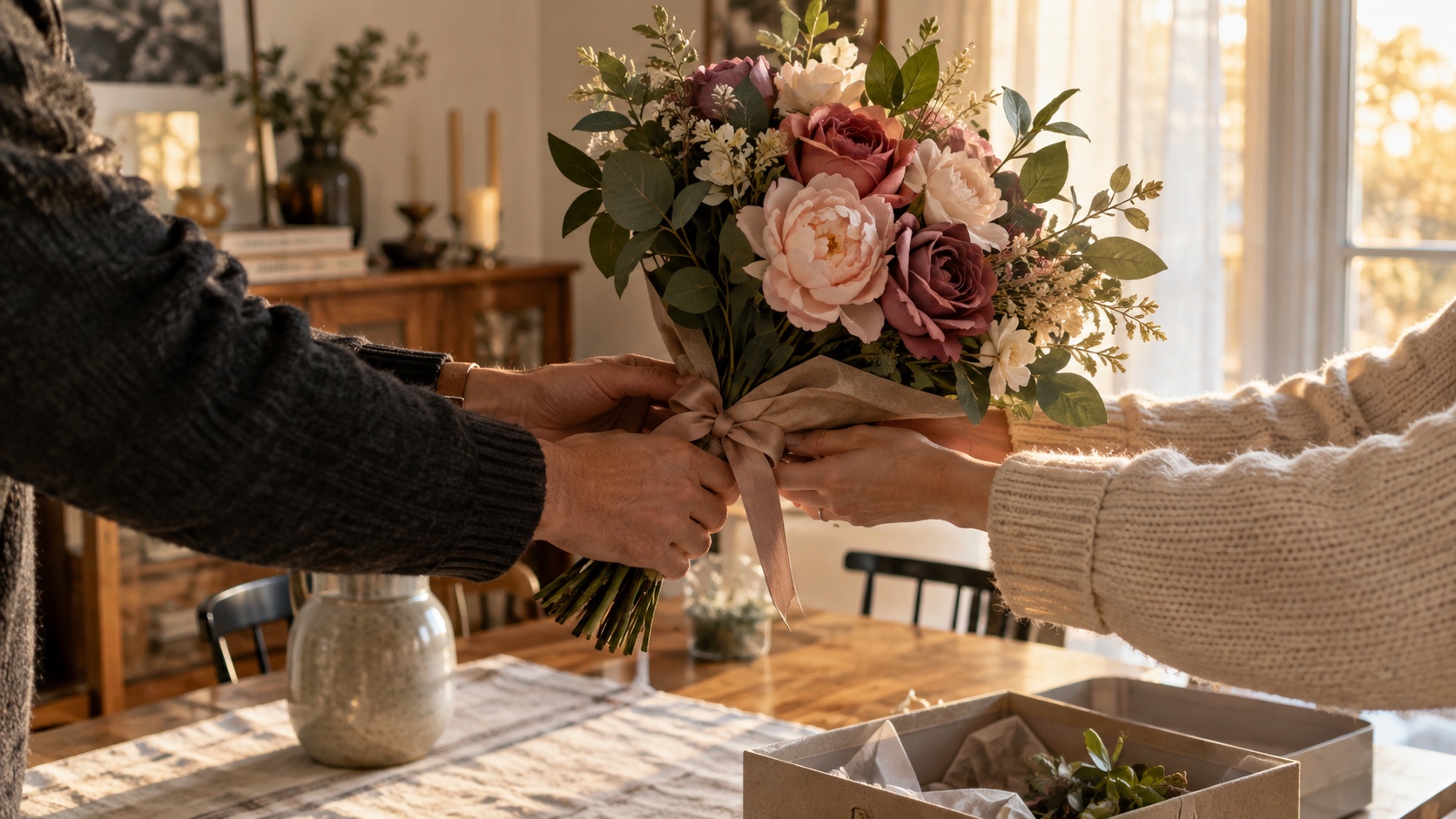
Artificial flowers can be a thoughtful Valentine's Day gift when the recipient values a lasting keepsake, needs a pollen-free bouquet, lives far away, or enjoys changing home decor. They are not automatically cheaper, greener, or more romantic than fresh flowers. The best choice depends on the person receiving them and what will happen to the bouquet after February 14.
The ten reasons below are ranked by how broadly useful each advantage is, then by how much it changes the gift experience. Every item uses the same questions: Who benefits? What makes the artificial bouquet useful? What trade-off could make fresh flowers, a potted plant, or another gift the better choice?
10 Reasons to Give Artificial Flowers on Valentine's Day
1. They Can Become a Lasting Keepsake
Best for: someone who likes to keep meaningful objects. A well-made fabric bouquet does not depend on vase life, so it can remain on a shelf, return each February, or become part of a memory box. The value is emotional rather than botanical: the bouquet marks a particular Valentine's Day long after a fresh arrangement would be composted.
Trade-off: “lasting” is useful only if the recipient wants another object to store and dust. Choose a modest arrangement, include a reusable box, and avoid promising that it will literally last forever. Fresh flowers may be better for a person who loves a beautiful moment but dislikes permanent decor.
2. You Can Match a Favorite Color or Personal Style
Best for: a loved one with a clear color palette, favorite bloom, or decorating style. Artificial stems can combine flowers that do not naturally share a season, and the maker can repeat an exact shade across the bouquet, ribbon, and vase. That makes customization the real advantage—not a generic claim that more options are always better.
Trade-off: exact color can feel impersonal if it is chosen only to match a room. Connect the design to the recipient: a flower from a shared trip, a color they actually wear, or a vase they already use. If you are pairing flowers with jewelry, our guide to choosing earrings offers another practical way to make the gift feel considered rather than random.
3. They Do Not Release Plant Pollen
Best for: a recipient who avoids real bouquets because a known flower or pollen exposure triggers symptoms. The American College of Allergy, Asthma & Immunology explains that pollen can act as an allergen, while its wedding guidance notes that some real flowers are lower-pollen choices than others. An artificial bouquet removes plant pollen from the arrangement itself.
Trade-off: artificial flowers are not “allergy-proof.” They can still collect dust, and scented sprays, adhesives, dyes, or storage conditions may bother a sensitive person. Ask what they avoid, skip added fragrance, and clean older stems before giving them. For a medically significant allergy, follow the recipient's own plan rather than treating decor as health advice.
4. They Need No Water or Daily Flower Care
Best for: frequent travelers, busy households, dorm rooms, offices, or anyone who cannot easily lift and clean a water-filled vase. Fresh cut flowers need clean water, stem care, and a cool location; Penn State Extension's current cut-flower guidance recommends checking water daily and changing it every few days. Artificial stems avoid that routine and cannot spill vase water on a desk.
Trade-off: low maintenance is not zero maintenance. Dust the petals gently, keep the arrangement away from strong heat and direct sun, and follow the maker's cleaning directions. Fresh flowers may still win for someone who enjoys trimming stems and watching a bouquet open.
5. The Bouquet Can Be Prepared Well Before February 14
Best for: planners, long-distance gift givers, and people assembling a handmade arrangement. Because the stems will not wilt before the holiday, you can build the bouquet early, check its balance, pack it, and schedule delivery without depending on a narrow freshness window.
Trade-off: shipping can still crush petals, bend wired stems, or loosen small pieces. Choose a box that prevents movement, protect the flower heads, and give simple reshaping instructions. If reliable delivery matters more than a keepsake, a reputable local florist may offer the simpler experience.
6. They Work Where Water and Wilting Would Be Inconvenient
Best for: a work desk, bookshelf, hospital waiting area, photo setup, or dinner table with limited space. A small artificial arrangement can sit in a lightweight vessel without cloudy water, fallen leaves, or a wet ring. It can also be moved during the day without shortening its display life.
Trade-off: “convenient” should not become “oversized.” Measure the intended spot and keep sight lines open at a shared table. In settings with infection-control, fire-safety, or cleaning rules, ask before bringing any decorative item.
7. One Set of Stems Can Serve More Than One Purpose
Best for: crafty recipients and households that reuse seasonal decorations. Flexible stems can begin as a bouquet, move into a table centerpiece, accent a wreath, or be divided among several small vases. This versatility makes the gift feel active rather than frozen in one presentation.
Trade-off: glued flowers and delicate foam details may not survive repeated bending. Look for secure heads, wrapped wire, and washable or dustable materials. Include removable ties instead of permanent adhesive if rearranging is part of the idea.
8. They Avoid the Specific Plant Hazards of a Fresh Bouquet
Best for: a home where the recipient has already decided not to keep live flowers because of a pet or child. The distinction can matter: the U.S. Food and Drug Administration warns that true lilies and daylilies are extremely dangerous to cats, including their pollen and vase water. An artificial lily does not contain that plant toxin.
Trade-off: an artificial bouquet is not a chew-safe pet toy. Wire, fabric, plastic berries, loose petals, and ribbon can be swallowed or cause injury. Keep it out of reach, omit small detachable parts, and never use the arrangement as a blanket substitute for checking pet safety.
9. Reuse Can Make the Purchase More Practical
Best for: someone who will display, lend, donate, or remake the flowers many times. The EPA's materials-management hierarchy places source reduction and reuse above disposal. A durable bouquet that replaces several one-use decorations can fit that principle.
Trade-off: artificial flowers are not automatically the greener choice. Materials, manufacturing, transport, packaging, cleaning, years of use, and end-of-life options all matter; reviews of cut-flower life-cycle studies also show that results depend heavily on production and system boundaries. Buy fewer stems, avoid a single-use novelty bouquet, and plan a real reuse path instead of relying on a vague “eco-friendly” label.
10. They Can Carry a Small Hidden Message
Best for: a partner, friend, family member, or chosen family member who appreciates a story. A paper note can explain why a particular flower or color was chosen, and a tiny photo sleeve or detachable charm can turn the bouquet into a personal memento without pretending the flower itself has one universal meaning.
Trade-off: avoid assigning symbolic meanings the recipient may not share. A direct, specific message—“this color reminds me of our first apartment”—is warmer than a generic internet list of flower meanings. The note should support the gift, not pressure the recipient to preserve it forever.
How Can You Use Artificial Flowers on Valentine’s Day?
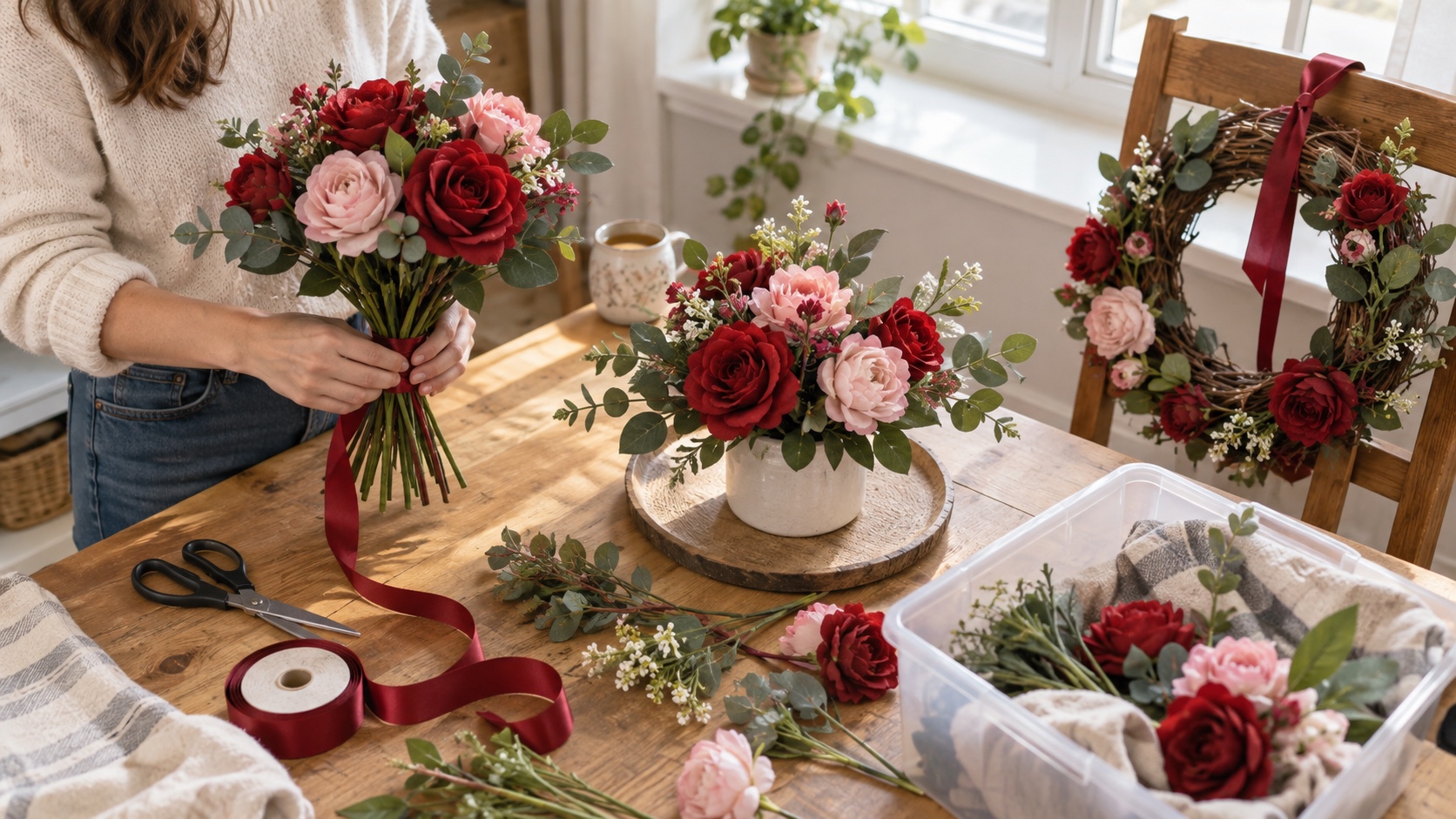
Start with the recipient rather than the format. Hand-tie a compact bouquet for a traditional exchange, place shorter stems in a weighted vase for a dinner centerpiece, attach a few stems to a removable wreath pick, or divide the arrangement into bud vases for a desk and bedside table. Artificial flowers also work in a gift box when the stems are protected and the box remains useful for storage.
The arrangement should make its material honest. Fabric petals, visible wrapped stems, and a simple caption on the card are better than presenting generated or manufactured flowers as fresh. Skip fragrance unless you know the recipient wants it. If you add lights, batteries, wire cutters, or a wall hook, include the correct use and safety information from the manufacturer.
What Can You Do With the Flowers After Valentine’s Day?
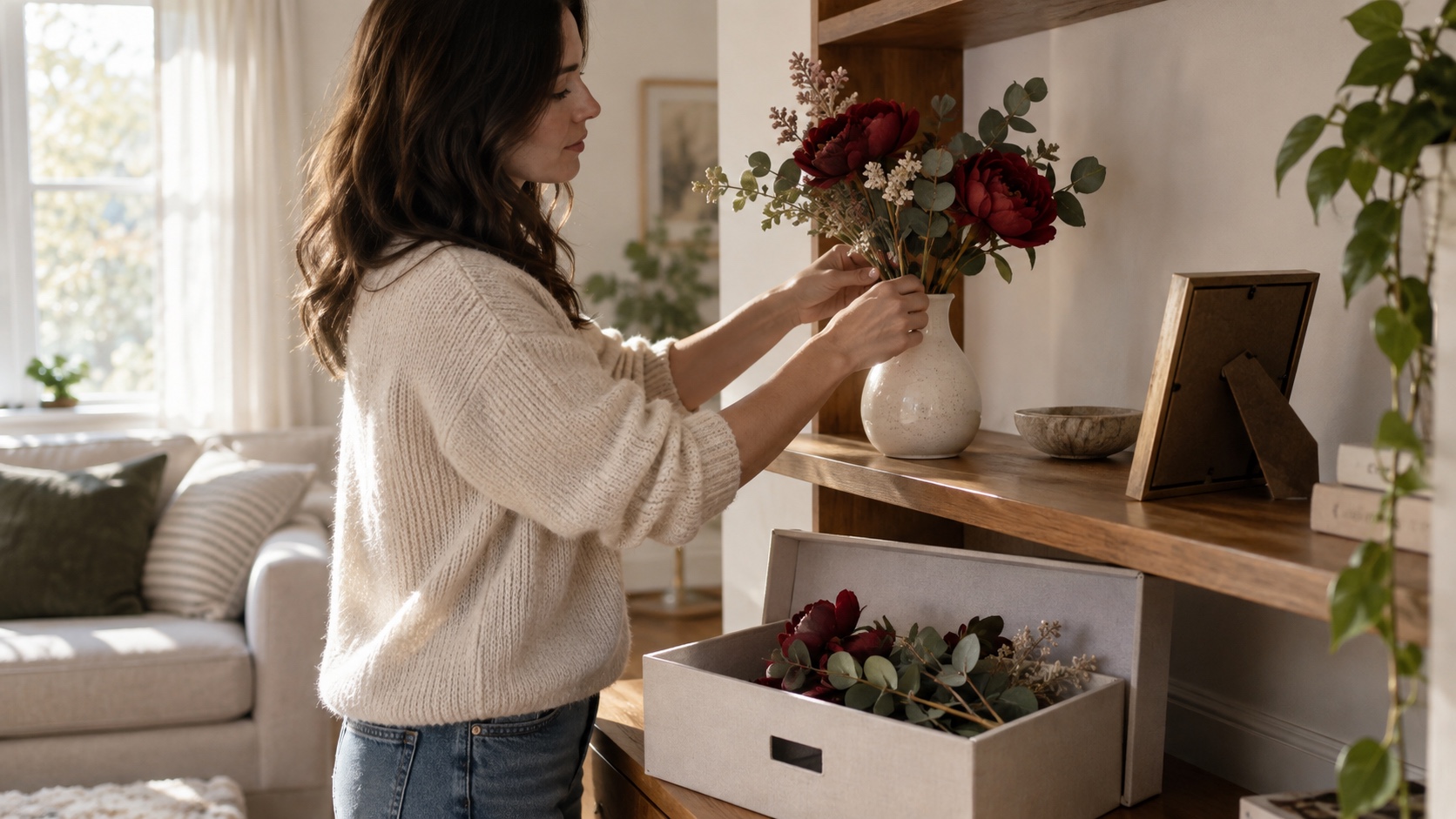
Remove the Valentine ribbon and use the stems as everyday shelf decor, split the bouquet into smaller arrangements, turn a few flexible pieces into a seasonal wreath accent, lend them for a party, donate usable stems to a community craft group, or store them for next year. Clean and dry the flowers first, support the heads in a roomy box, and keep the container away from dampness and strong sunlight.
Before starting a larger decor project, check whether the stems are rated for outdoor exposure; many indoor fabrics and dyes will fade or hold moisture outside. For broader ideas that do not depend on a bouquet, see our outdoor projects for refreshing a home. If no one wants the arrangement, separate recyclable packaging where local rules allow and dispose of mixed-material stems according to local guidance rather than wish-cycling them.
When Fresh Flowers Are the Better Valentine's Gift
Choose fresh flowers when fragrance, seasonality, and the short-lived ritual are the point; when the recipient prefers compostable natural material; or when a trusted local florist can provide a safe, wanted arrangement. A potted plant may suit someone who enjoys ongoing plant care. And sometimes the best bouquet is no bouquet at all: a meal, letter, shared activity, or requested practical gift can carry more meaning than either fresh or artificial stems.
Frequently Asked Questions
Are artificial flowers cheaper than fresh flowers? Sometimes, but not automatically. Compare the complete arrangement, delivery, vase, quality, and expected number of reuses. A premium artificial bouquet can cost more up front, while a modest fresh bouquet can be less expensive.
Are artificial flowers better for allergies? They contain no plant pollen, which can help when pollen is the known trigger. They can still collect dust or contain materials and fragrances that bother some people, so ask the recipient and keep the arrangement clean.
Are artificial flowers environmentally friendly? No universal label answers that. Reuse can reduce waste, but materials, manufacturing, transport, packaging, durability, and disposal all affect the comparison. The most defensible choice is one the recipient will genuinely use for a long time.
How do you make an artificial bouquet feel romantic? Choose colors or flowers with a real connection to the recipient, use a well-proportioned arrangement, and add a specific handwritten note. Personal meaning matters more than making the stems look deceptively fresh.
Sources and Verification Notes
Claims about pollen and allergy triggers were checked against the American College of Allergy, Asthma & Immunology. Fresh-flower care was checked against Penn State Extension guidance updated in January 2026. The cat-and-lily warning comes from the U.S. Food and Drug Administration. Waste and reuse language follows the U.S. Environmental Protection Agency hierarchy. Environmental comparisons remain qualified because the life-cycle impact of either flower type depends on materials, production, transport, use, and disposal; no source reviewed supports a universal claim that artificial flowers are always greener.