
How Often Should You Really Take Your Car In for Service?


Take your car in when its owner's manual or maintenance reminder says service is due, or sooner when a warning light, leak, unusual noise, braking change, tire problem, or other symptom appears. For many modern vehicles, that means an oil-and-inspection visit roughly every 5,000 to 10,000 miles or six to 12 months, but that range is only a planning estimate. The model-specific maintenance schedule is the rule.
This list is ordered by decision priority: start with the schedule that governs the whole vehicle, add regular inspections, then consider individual parts and fluids. Each item replaces an appealing universal rule with a check you can actually defend. Driving conditions matter too. Repeated short trips, towing, dust, extreme temperatures, long idling, and low annual mileage can move work forward even when the odometer has barely changed.
1. Treat the 30-60-90 Service Intervals as checkpoints, not commands

The old 30,000-, 60,000-, and 90,000-mile framework survives because it is easy to remember. It can help you pause and review the vehicle's record, but it is not a universal rule for replacing the same package of parts on every car. A timing belt, spark plugs, coolant, and transmission fluid can have very different schedules by engine, drivetrain, model year, and operating conditions. Some vehicles do not even have a separately serviceable item that another car lists.
Who it helps: owners of used vehicles with incomplete records. At each milestone, compare the odometer and age with the official schedule, then document what was inspected, what was replaced, and what can wait. Decline a generic “major service” bundle until the shop identifies each line item and connects it to the manual, a measured condition, or a diagnosed symptom.
2. Use 6-9-12 Service Intervals for inspection, not automatic replacement
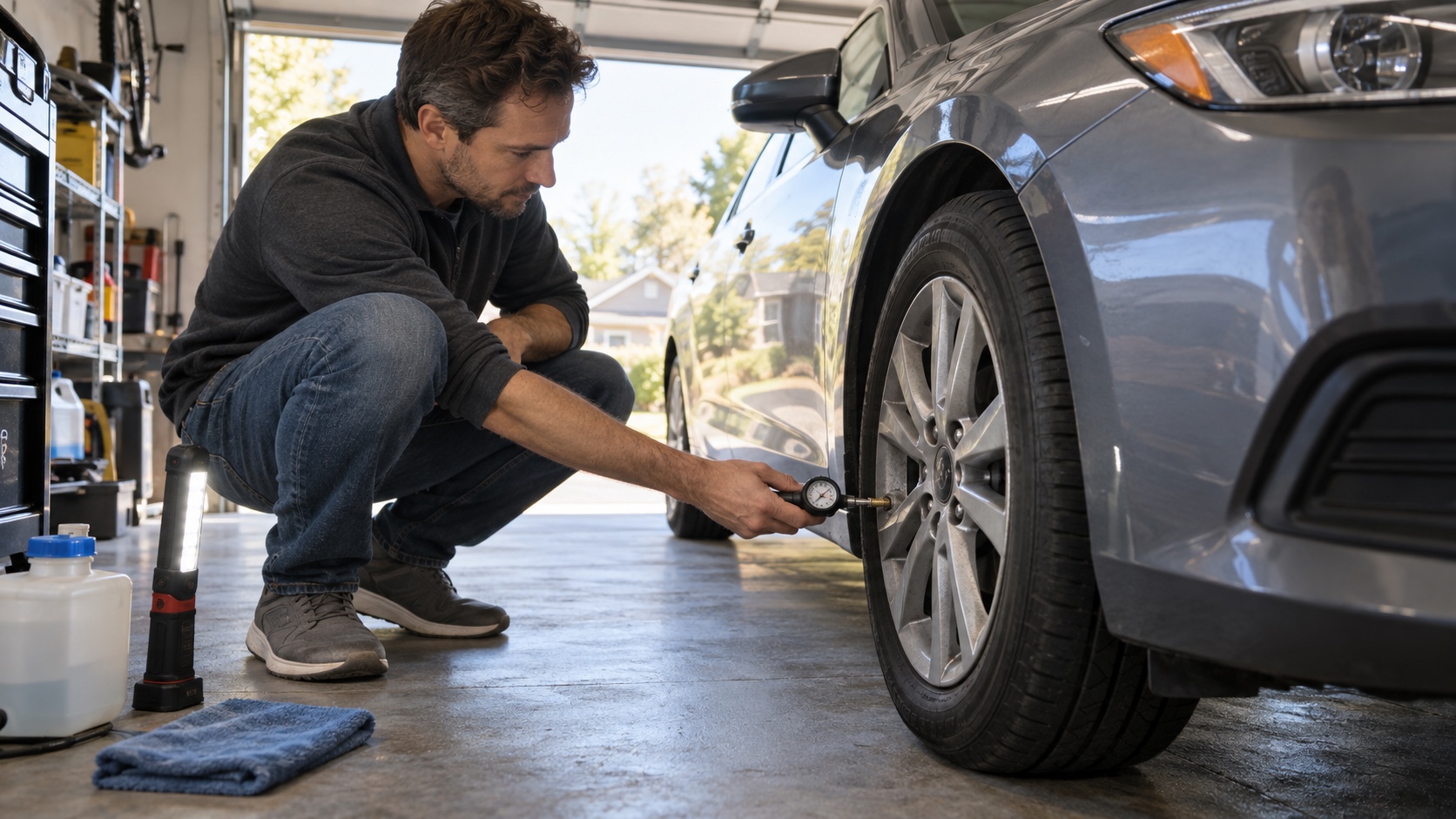
A six-, nine-, or 12-month rhythm works better as an inspection habit than as a parts-buying calendar. Check tire pressure and visible damage, exterior lights, washer operation, wiper condition, fluid levels where owner checks are permitted, and any dashboard message. Record oil life and mileage. The point is to notice change early, not to replace a battery, belt, filter, or fluid merely because a season passed.
Who it helps: low-mileage drivers and households with more than one vehicle. Time still affects rubber, tires, brake fluid, fuel, and a 12-volt battery, while short trips may never warm the powertrain fully. NHTSA recommends checking cold tire pressure at least monthly and using the door-jamb placard or manual—not the maximum printed on the tire—as the pressure target. That is a real recurring check; “replace everything annually” is not.
3. Drive a Seldom-Used Car properly—or follow its storage instructions

Pandemic-era advice turned “drive it once a week” into a familiar slogan, but a weekly lap around the block is not a maintenance specification. If a gasoline vehicle is roadworthy, an occasional continuous drive long enough to reach normal operating temperature is generally more useful than brief idling: the charging system has time to support the 12-volt battery, brakes are exercised, and tires move from one resting position. The exact frequency depends on the car, climate, battery condition, trip length, and storage period.
Who it helps: seasonal, collector, second-car, hybrid, and EV owners. For an absence of 30 days or more, skip improvised rituals and read the vehicle-storage section of the manual. Ford's published electrified-vehicle guidance, for example, treats the 12-volt and high-voltage batteries separately and offers model-dependent charging or disconnection steps. Do not disconnect a battery, use a maintainer, or choose an EV state of charge by analogy with another model.
4. Change Engine Oil when the car calls for it—not automatically at 3,000 miles
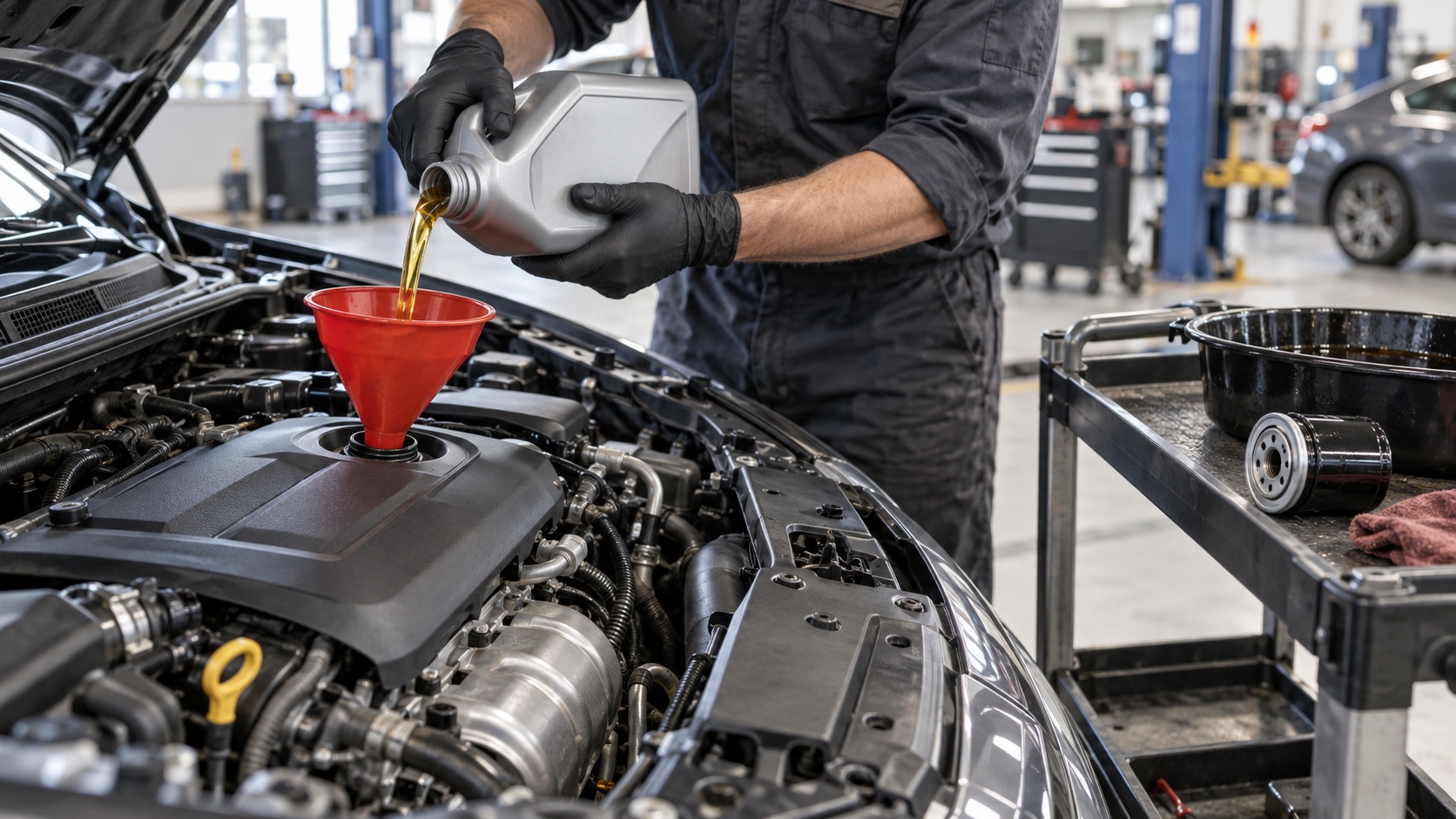
“Every 5,000 to 10,000 miles” is a common modern range, not permission to pick any number within it. Oil type, engine design, an oil-life monitor, calendar time, and severe-use conditions determine the real interval. Honda's Maintenance Minder documentation illustrates the principle: it calls for engine oil when the system indicates and adds a one-year limit if the message has not appeared. Another manufacturer or model can set a different rule.
Who it helps: nearly every gasoline-car owner, especially people moving from an older vehicle to a newer one. Use the viscosity and specification in the manual, replace the filter as directed, keep the receipt and mileage, and check the level between services if the manual provides a procedure. Low oil pressure, a sudden level drop, visible leakage, overheating, or abnormal engine noise is not a reason to wait for the next scheduled service.
5. Inspect the Engine Air Filter; 15,000 miles is a severe-use example
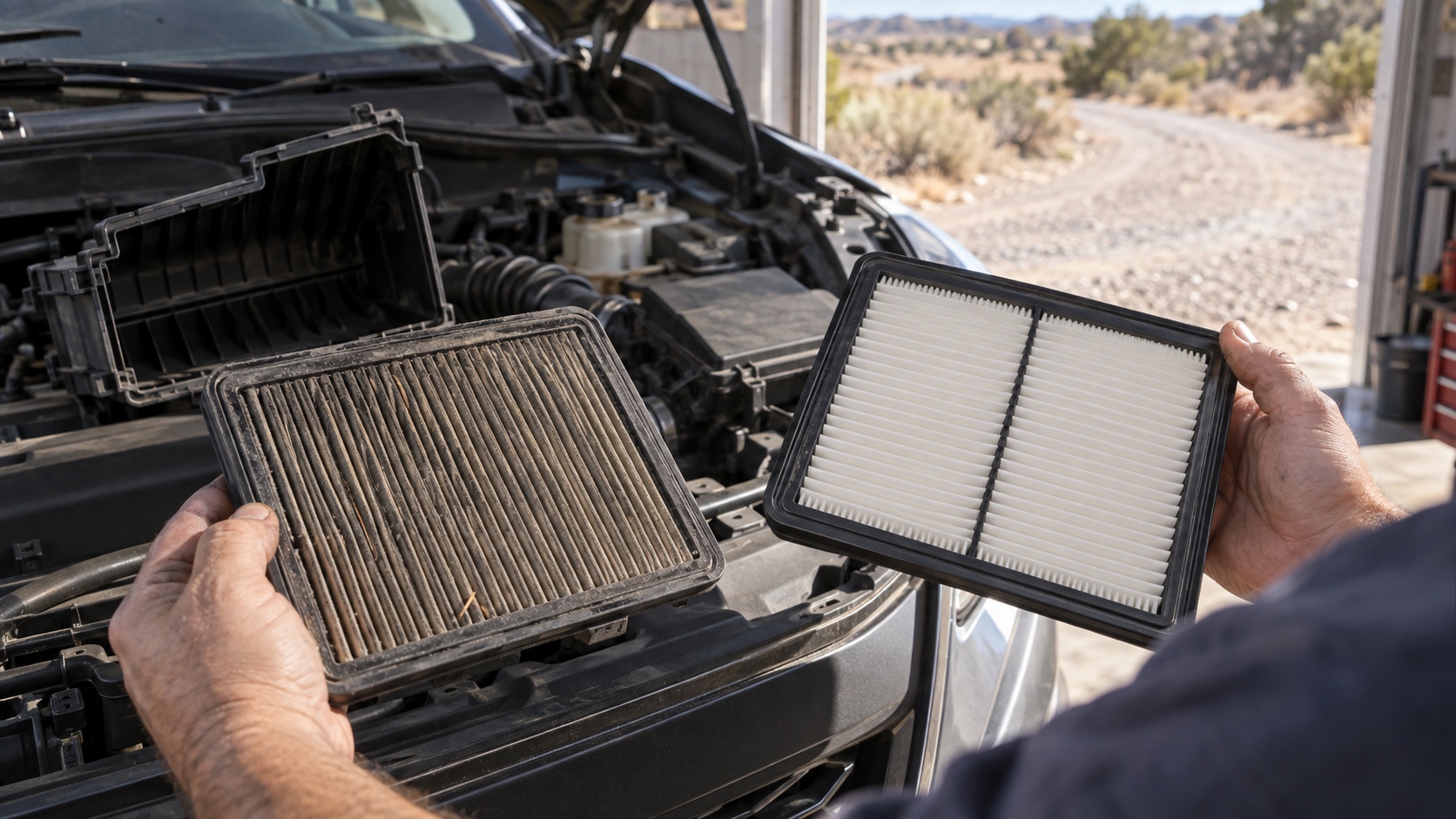
An engine air filter keeps abrasive debris out of the intake, yet “replace every 15,000 miles” is not universal. Some schedules call for inspection first and a longer normal interval. A Honda Passport schedule, for example, specifies replacement under the Maintenance Minder and gives 15,000 miles for dusty conditions. That is evidence for a severe-use exception on that vehicle—not a rule to impose on every car.
Who it helps: drivers on dirt roads, around construction dust, or in unusually dirty environments. A technician can compare condition with the schedule without selling a filter solely because it looks darker than a new one. Make sure the replacement fits and the airbox closes correctly; a poorly seated filter can defeat the purpose. Do not confuse the engine air filter with the cabin filter, which cleans air entering the passenger compartment and may follow a separate schedule.
6. Replace the Fuel Filter only when the model has a service interval
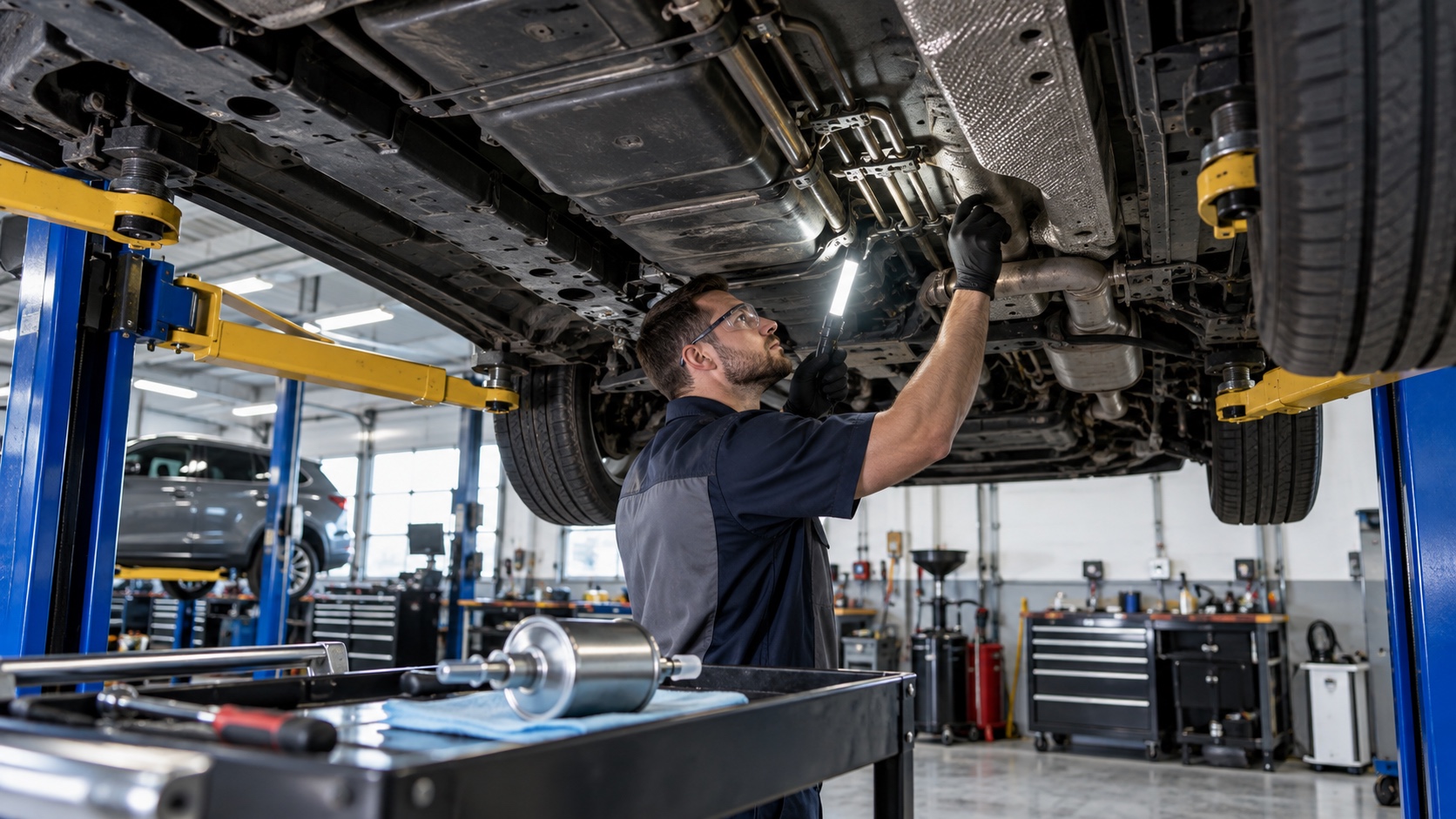
The old “fuel filter every 30,000 miles” rule does not fit the modern fleet. Some vehicles list a replaceable inline filter with a defined interval; others integrate filtration into an in-tank module and do not list routine replacement. Diesel systems can have their own filter, water-separation, and priming procedures. The correct answer has to come from the exact year, engine, fuel system, and maintenance schedule.
Who it helps: owners of diesels and older gasoline vehicles, plus anyone diagnosing fuel-delivery symptoms. Hard starting, loss of power, or poor running can have many causes; replacing a filter by guesswork is not a diagnosis. Because fuel systems can retain pressure and gasoline vapor is hazardous, this is not a sensible generic DIY recommendation. Ask the shop to identify the specified interval or the test result behind the work.
7. Service Fluids by system; “every 30,000 miles” is not universal
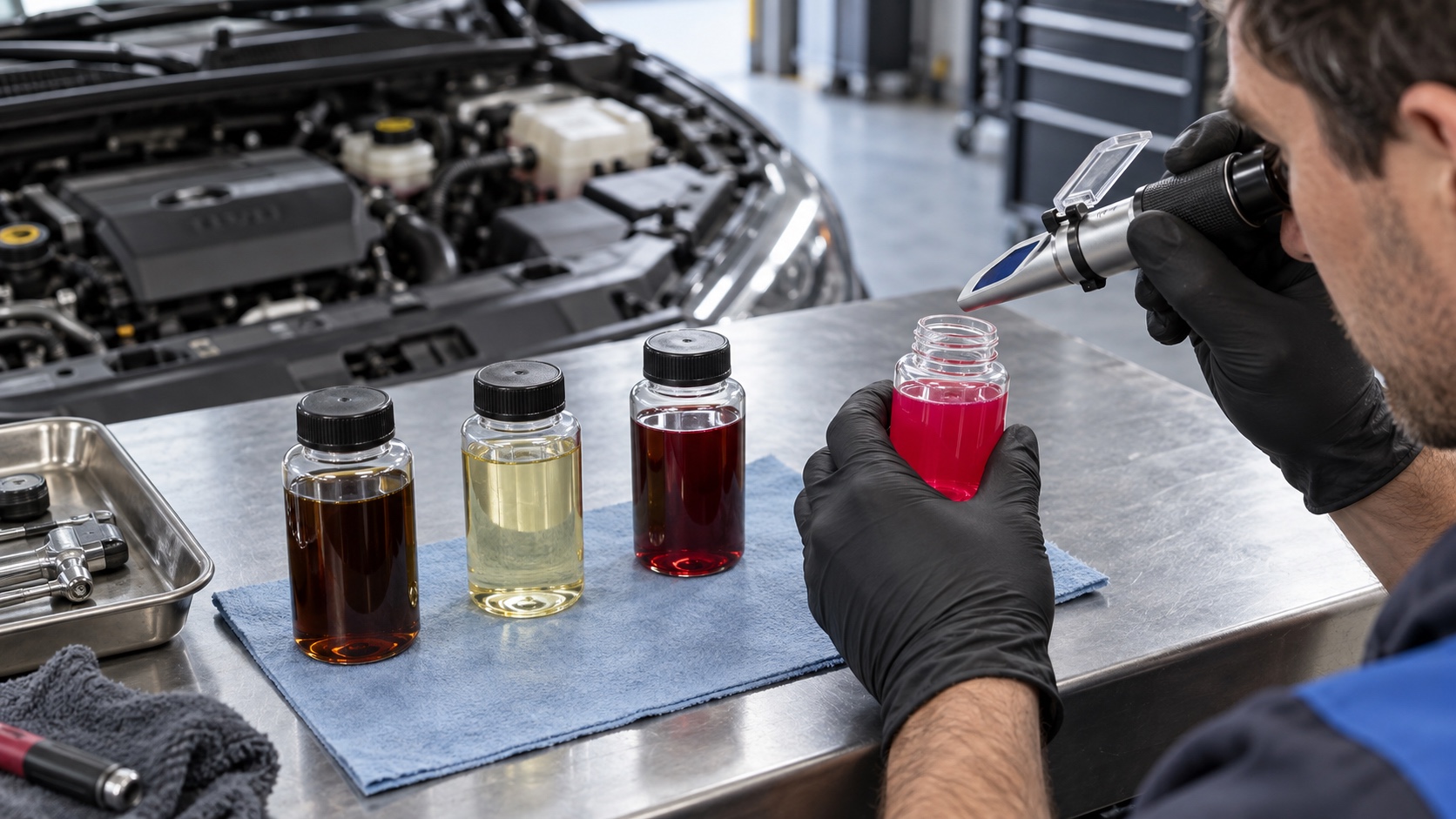
There is no single “fluids” interval. Engine coolant protects against freezing, boiling, and corrosion. Brake fluid transfers hydraulic force and absorbs moisture over time. Automatic-transmission, manual-transmission, transfer-case, and differential fluids lubricate different components. Electric vehicles add model-specific coolants and drive-unit fluids while eliminating engine oil. Treating all of them as one 30,000-mile job can create unnecessary work—or miss work that is due by time.
Who it helps: owners who tow, drive in mountains, make repeated short trips, or bought a car with weak records. Toyota's 2023 Camry Hybrid guide separates routine inspections from replacements and calls for some transmission-fluid work only under listed special operating conditions. Honda examples set a time fallback for brake fluid and separate Minder codes for transmission fluid and coolant. Use the exact approved fluid; “universal” fluid claims deserve a specification check.
8. Change Spark Plugs at the engine's specified interval
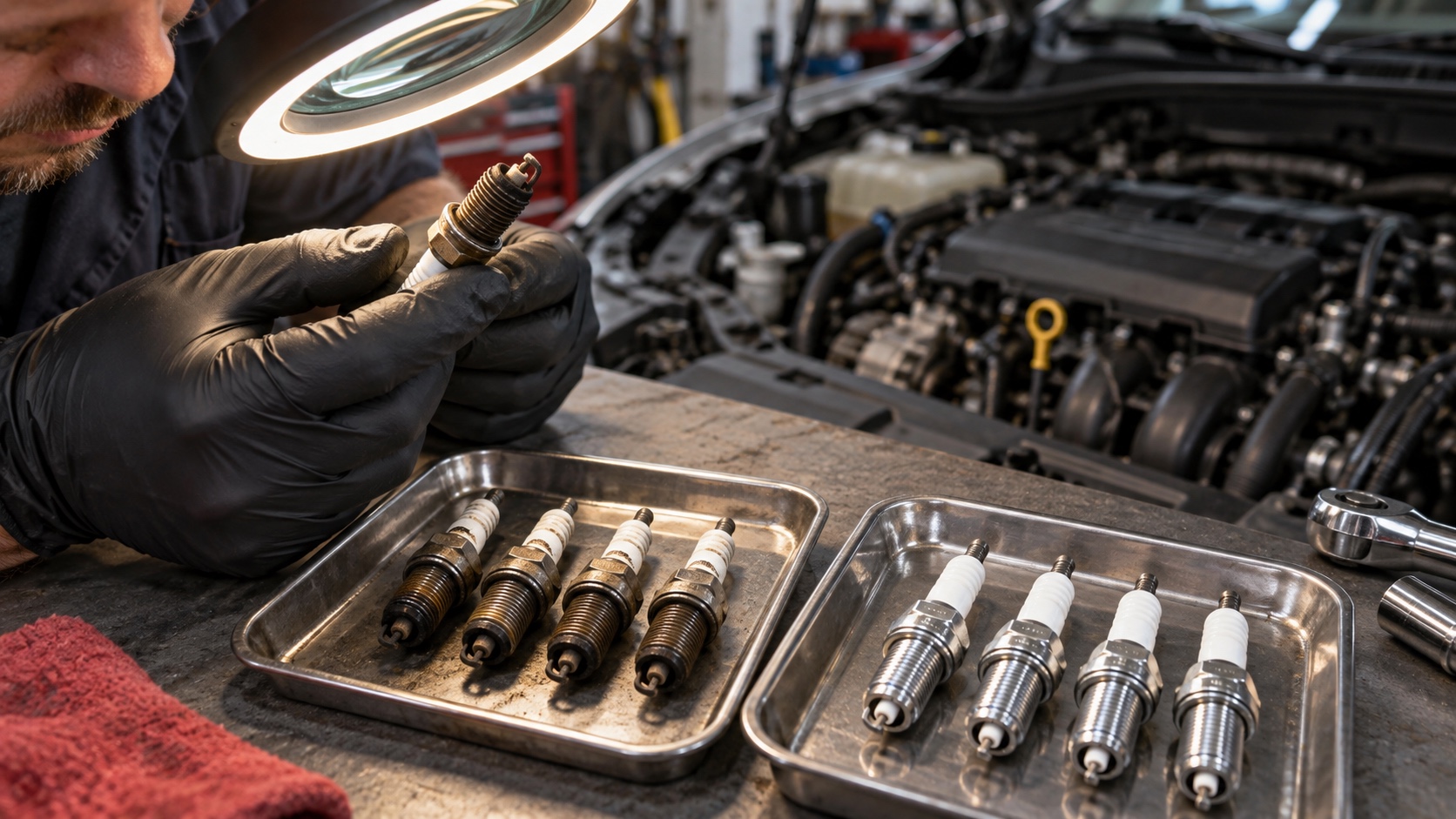
A fixed 40,000-mile spark-plug rule is too blunt. The schedule can be shorter for some conventional plugs and far longer for long-life iridium designs. The correct plug part number, gap policy, installation torque, and interval also depend on the engine. Toyota's maintenance data for current models may specify an iridium-tipped plug and warn against adjusting its gap, while its model-specific maintenance guide identifies when replacement is due.
Who it helps: gasoline and non-plug-in hybrid owners; battery-electric vehicles do not have spark plugs. Do not wait out a misfire because the scheduled interval is distant. A flashing check-engine light can indicate a catalyst-damaging misfire and calls for prompt attention. Conversely, changing good long-life plugs early offers little value unless diagnosis, severe-use guidance, or the schedule supports it.
9. Inspect Brakes by condition, not at 50-60,000 miles
Brake pads do not have one reliable lifespan. Vehicle mass, traffic, terrain, towing, corrosion, driving style, regenerative braking, pad material, and rotor condition all matter. A mileage estimate can help you budget, but inspection decides. A service should report remaining friction material, rotor condition, leaks, hose condition, and whether wear is even across the axle—not merely announce that the odometer crossed a round number.
Who it helps: everyone, because brakes are safety-critical. Seek prompt inspection for grinding, a changed pedal, pulling, vibration, a brake warning, fluid leakage, or noticeably longer stopping distance. A high-pitched wear indicator may be an early warning, but silence does not prove healthy brakes. If you are comparing used vehicles, our dependable cars and SUVs guide explains why model-level reputation never replaces inspection of the specific car.
10. Test the 12-Volt Battery instead of replacing it blindly at five years
Three to five years is a common service-life range for a conventional 12-volt car battery, but age alone cannot name its failure date. Heat, vibration, battery design, charging behavior, accessory loads, and long periods of inactivity change the outcome. Interstate Batteries recommends regular testing once a battery is about three years old; a proper conductance or load test provides more evidence than voltage alone.
Who it helps: drivers approaching a battery's typical age range, especially before extreme weather or a long trip. Record the installation date, inspect for secure mounting and corrosion, and test the charging system when symptoms warrant it. Slow cranking, repeated jump-starts, electrical warnings, or a swollen or leaking case needs attention now. Hybrids and EVs also use a 12-volt system, but their procedures and high-voltage batteries are different; follow the model's instructions.
A maintenance plan you can use
Build one page of records with the VIN, current mileage, annual mileage, oil specification, tire size and placard pressure, last completed services, open symptoms, and the next items listed in the official schedule. Check for safety recalls separately; recall repairs are not routine maintenance. NHTSA's TireWise guidance also explains monthly pressure and damage checks, tire age, and why the door placard controls inflation.
When shopping, include future service in the purchase decision. Our cars that give more for the money guide treats value as more than sticker price, while the used-car inspection checklist shows how records and independent inspection reduce uncertainty. The useful rule is simple: maintain the vehicle you actually own, under the conditions you actually drive, using evidence that applies to it.
Sources and verification
Maintenance principles and examples were checked on September 22, 2026 against official Honda Maintenance Minder documentation, the Toyota Owners manual library and a Toyota model maintenance guide, Ford's vehicle-storage guidance, NHTSA TireWise, and Interstate Batteries' current battery FAQ. Manufacturer examples illustrate why schedules differ; they are not substitute instructions for another vehicle. Recheck the manual, maintenance portal, recall status, and fluid specifications for your exact VIN and model year.