
Avoid These 10 Mistakes on Your First RV Road Trip

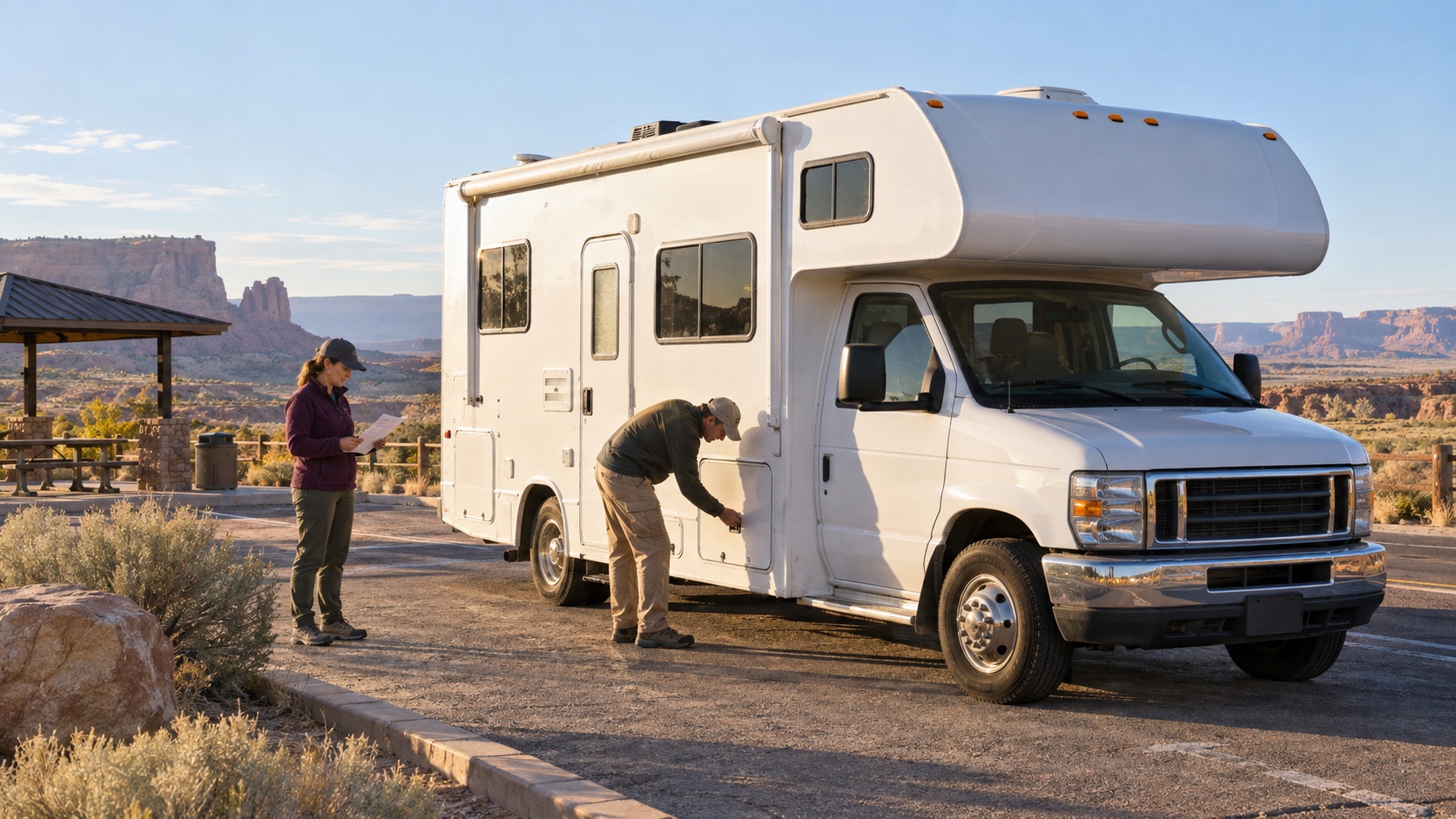
Your first RV road trip gets easier when you treat the vehicle as both transportation and a small moving system. Know its dimensions and weight limits, plan routes and stops that fit it, secure everything before departure, and stop when the driver is tired. The most expensive-looking mistake is not always the most important one; a missed latch, unsuitable campsite, or sleepy driver can change the whole day.
This countdown is ranked by combined safety risk, potential trip disruption, and how difficult the mistake is to correct once the RV is moving. It is an editorial order, not a crash-frequency study, and the result changes with the rig, route, weather, and driver. “Newbie” appears in older RV advice as a label for the driver; here it simply means someone still building a repeatable routine. Experienced RVers use checklists for the same reason pilots do: memory is not a substitute for a verified departure state.
10. Not Accounting for Your RV’s Size
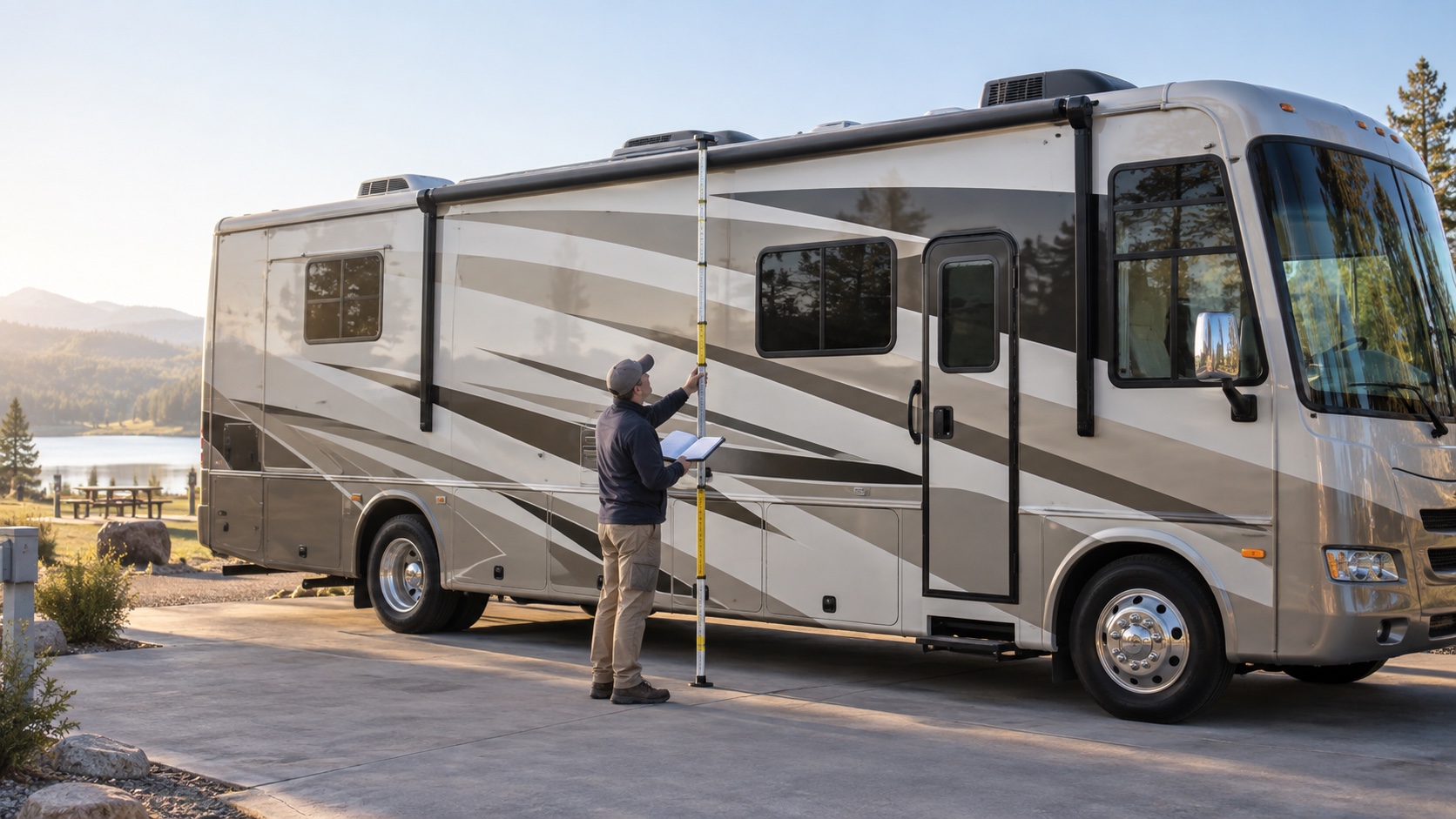
Why it matters: height, length, width, wheelbase, rear overhang, and weight affect where an RV can travel, turn, fuel, park, and camp. A route that works for a sedan may include a low bridge, weight-restricted road, tight switchback, narrow fuel island, or parking pad that does not fit. The Federal Highway Administration’s route-planning guidance for large vehicles emphasizes knowing height, length, width, weight, overhangs, bridge clearances, restrictions, turn difficulties, and safe stopping places.
Better move: record the rig’s travel-ready measurements where the driver can check them without guessing. Include fixed roof equipment and the complete vehicle-plus-trailer combination. Verify each planned route with current state transportation information and posted signs; an RV navigation tool can help, but it does not overrule a closure or clearance sign. Book a site by the campground’s definition of length. A Recreation.gov listing may count the tow vehicle, trailer, and hitch together, and warns that equipment that differs from the reservation may not fit.
9. Relying on a Live Map Alone
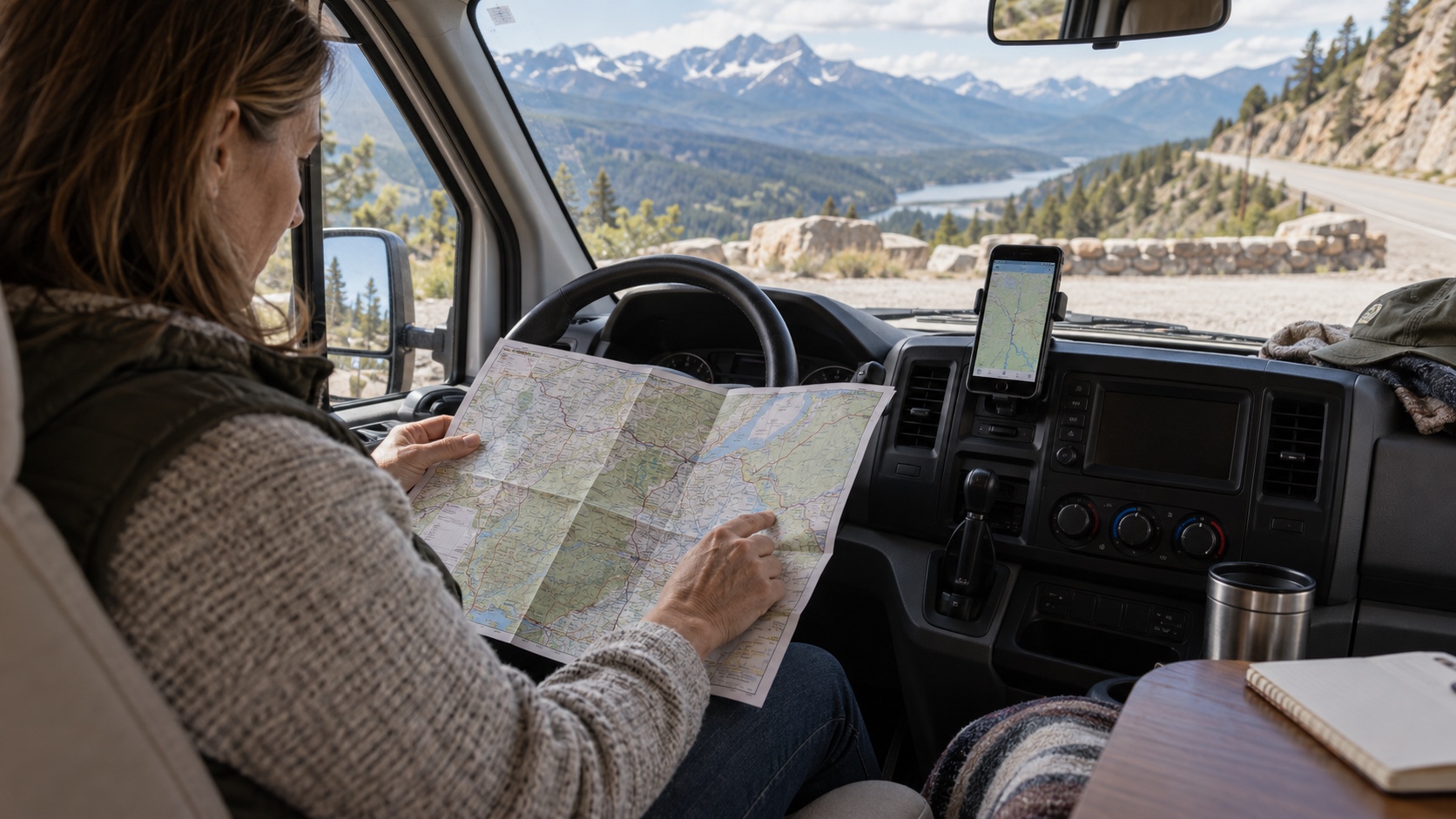
Why it matters: cellular coverage can disappear in mountain, desert, forest, and park areas. A general-purpose map may also optimize for speed instead of the RV’s dimensions. Losing the route becomes more serious when the next safe place to turn around is miles away.
Better move: download the route and destination area before leaving, carry a paper overview, and save the campground’s address, gate instructions, phone number, and check-in window. Mark fuel and rest stops that can handle the rig. The driver should never solve a map problem while moving; pull into a suitable safe area and reassess. Treat navigation as layers: planned route, offline backup, current road authority notices, and physical signs.
8. Leaving the Route and Campsite to Chance
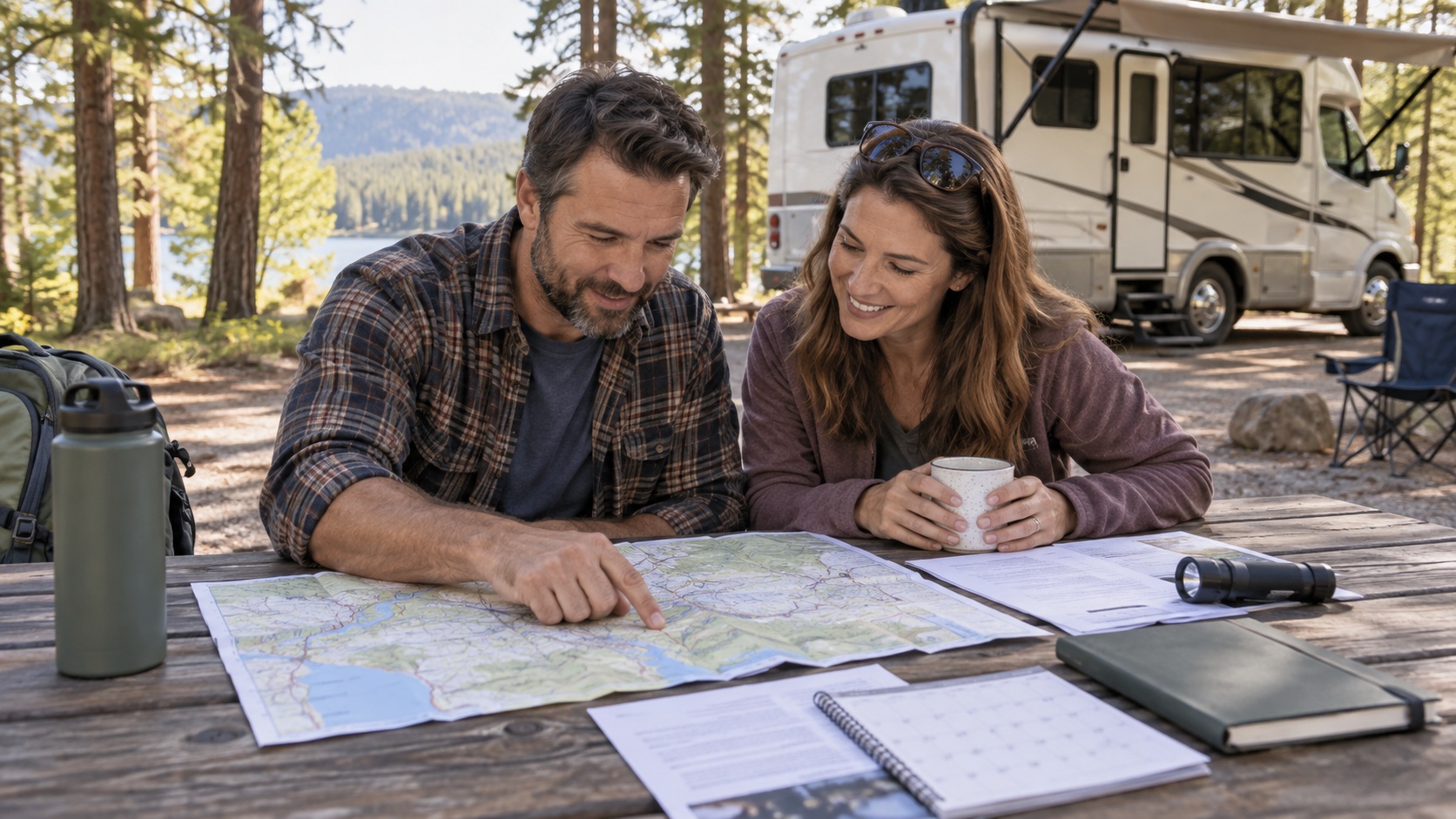
Why it matters: “We’ll find something” can fail when campgrounds require reservations, limit RV length, close seasonally, prohibit hookups, or use a check-in process that ends before arrival. Weather, construction, elevation, fire restrictions, and fuel availability can also change an otherwise reasonable plan.
Better move: confirm the reservation, equipment limits, utilities, dump and water options, cancellation terms, gate hours, and the final approach. Check the forecast and official road conditions again before departure. Build slack into the schedule rather than turning every delay into pressure to drive faster or later. If the trip needs inspiration after the constraints are settled, our guide to ten meaningful adventure destinations shows how to compare the experience, access, and trade-offs instead of choosing by a photograph alone.
7. Overpacking or Missing the Essentials
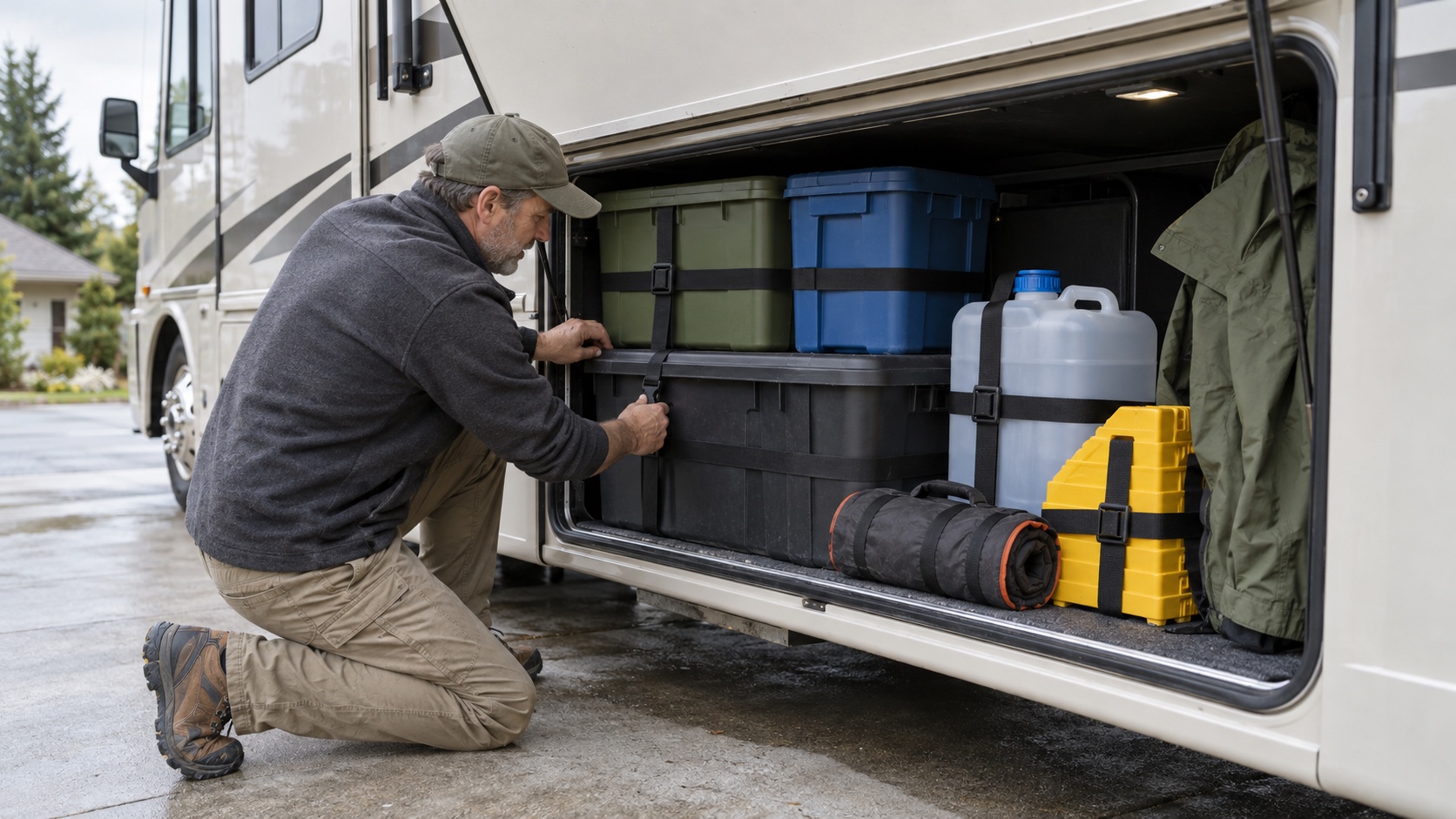
Why it matters: an RV’s available storage volume is not the same as its legal or safe cargo capacity. Water, passengers, food, batteries, accessories, and luggage all add weight. NHTSA explains that the manufacturer’s certification label shows the gross vehicle weight rating and that the GVWR must not be exceeded; buyers should also account for water, added equipment, and luggage.
Better move: read the certification and tire-loading labels and the owner’s manuals, then weigh the loaded rig at an appropriate scale when needed. Stay within every applicable vehicle, axle, tire, hitch, and trailer rating—not merely the largest number. Secure heavy items low and against movement. Pack a model-specific departure kit: documents, required medications, water, weather layers, wheel chocks when applicable, tire-pressure gauge, basic tools, flashlight, and the equipment named by the manufacturer. Leave novelty gear at home until the first trip reveals a real need.
6. Skipping a Practice Run
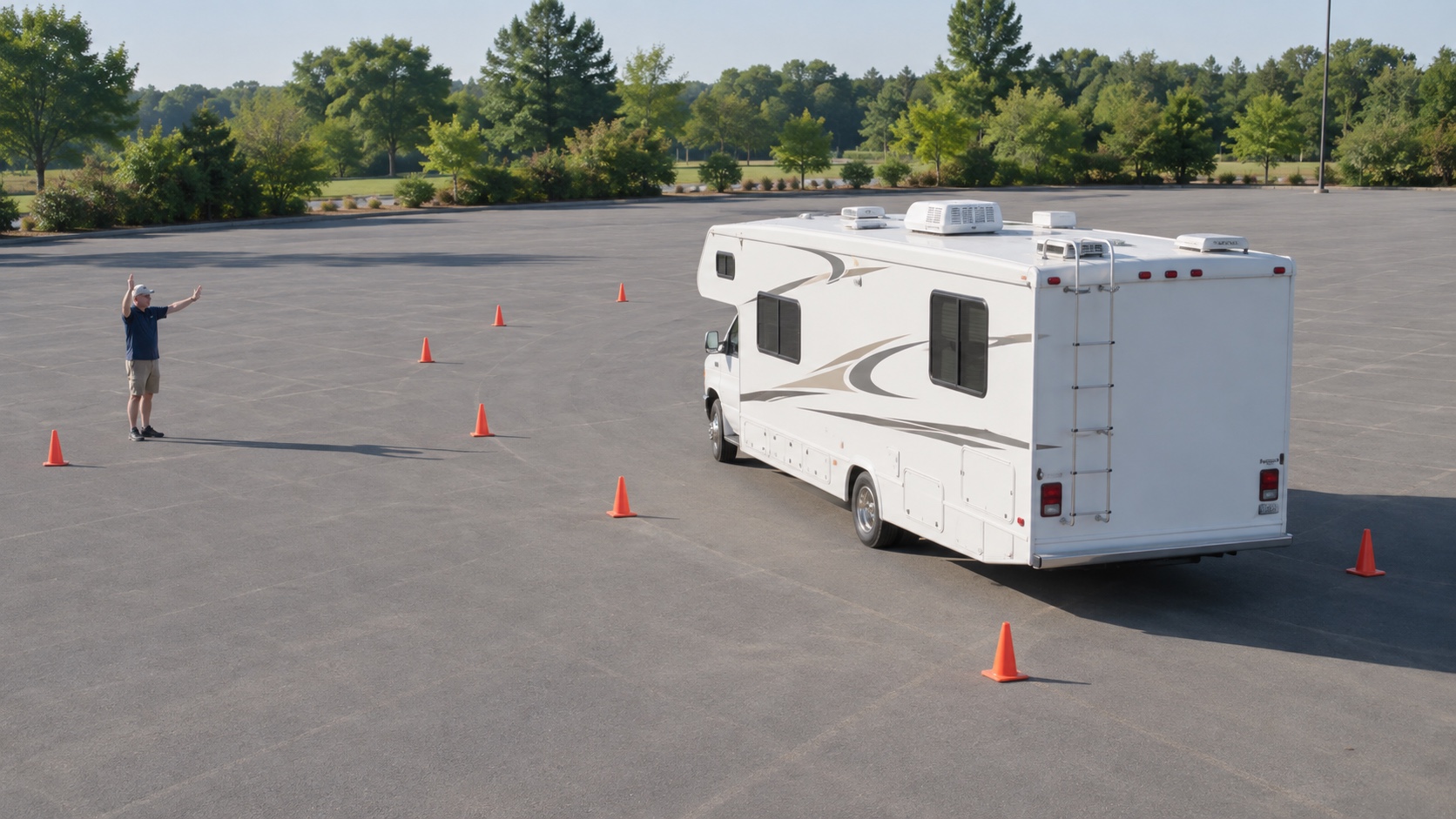
Why it matters: mirrors, braking distance, off-tracking, tail swing, and backing sightlines feel different in a long or articulated vehicle. Reading about them does not create the spatial judgment needed at a narrow campground loop.
Better move: use a legal, empty practice area with permission. Rehearse mirror setup, smooth braking, lane position, wide turns, backing, and communication with a spotter. Agree on simple signals and stop immediately when the spotter disappears from view. Practice the actual tow or motorhome configuration, not a shorter substitute. If the controls, braking system, hitch, or backing procedure are unfamiliar, use instruction from the manufacturer, rental company, dealer, or a qualified RV driving trainer.
5. Leaving Vents, Windows, or Exterior Gear Open
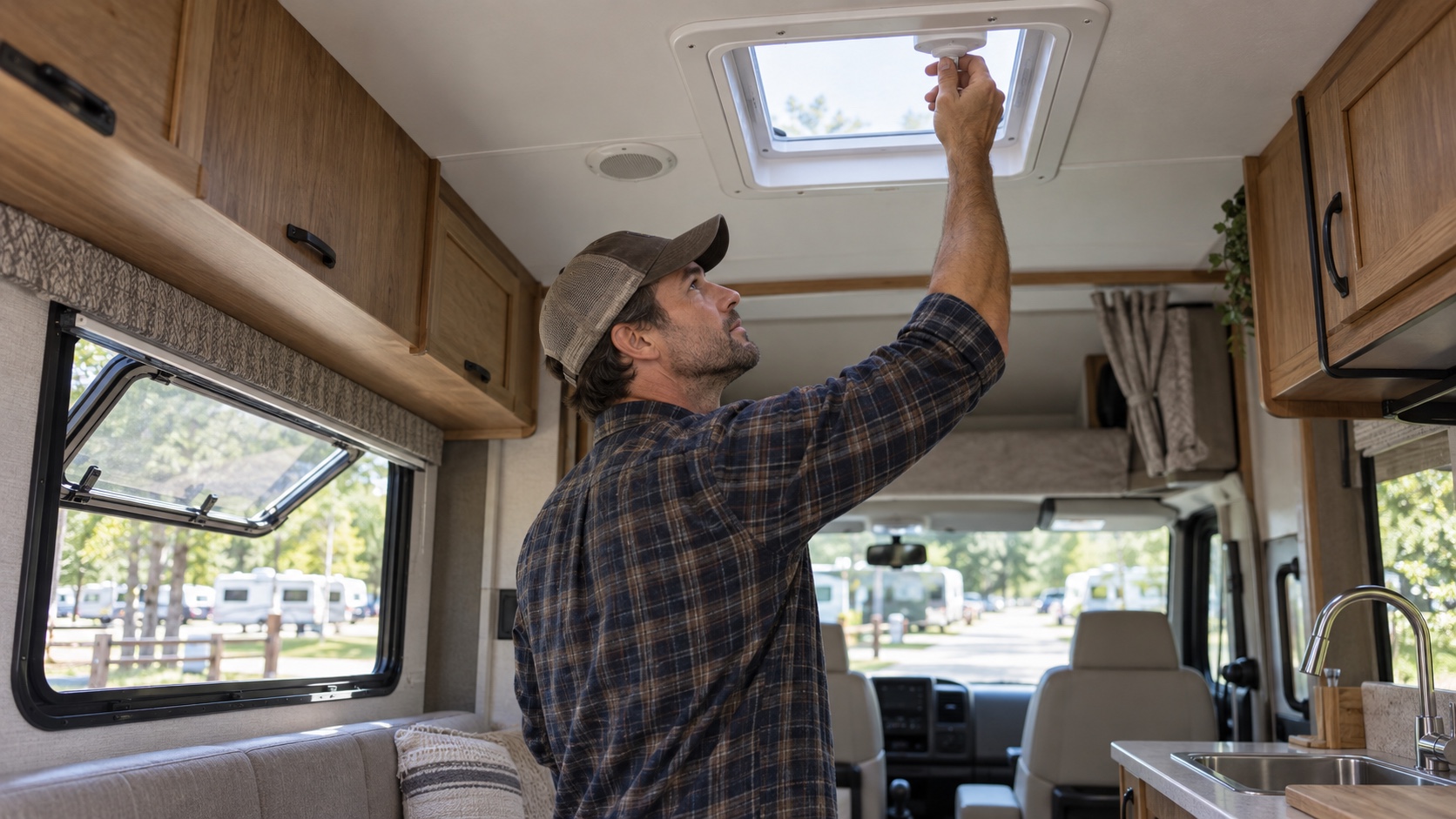
Why it matters: a vent, awning, antenna, step, slide, window, storage door, power cable, hose, or loose interior object can be damaged or create a hazard when the RV moves. The exact list varies by model and installed equipment, which is why a generic memory trick is not enough.
Better move: create a written inside-and-out departure sequence from the RV and component manuals. One person completes it; a second person can verify critical items without interrupting the order. Check the roofline from the ground, close and latch storage, disconnect utilities, secure interior cargo, and do a final 360-degree walk-around. Some vents are designed for particular travel positions, so follow the maker’s instructions instead of applying a blanket “every vent must always be shut” rule.
4. Driving Away With Leveling Jacks Down
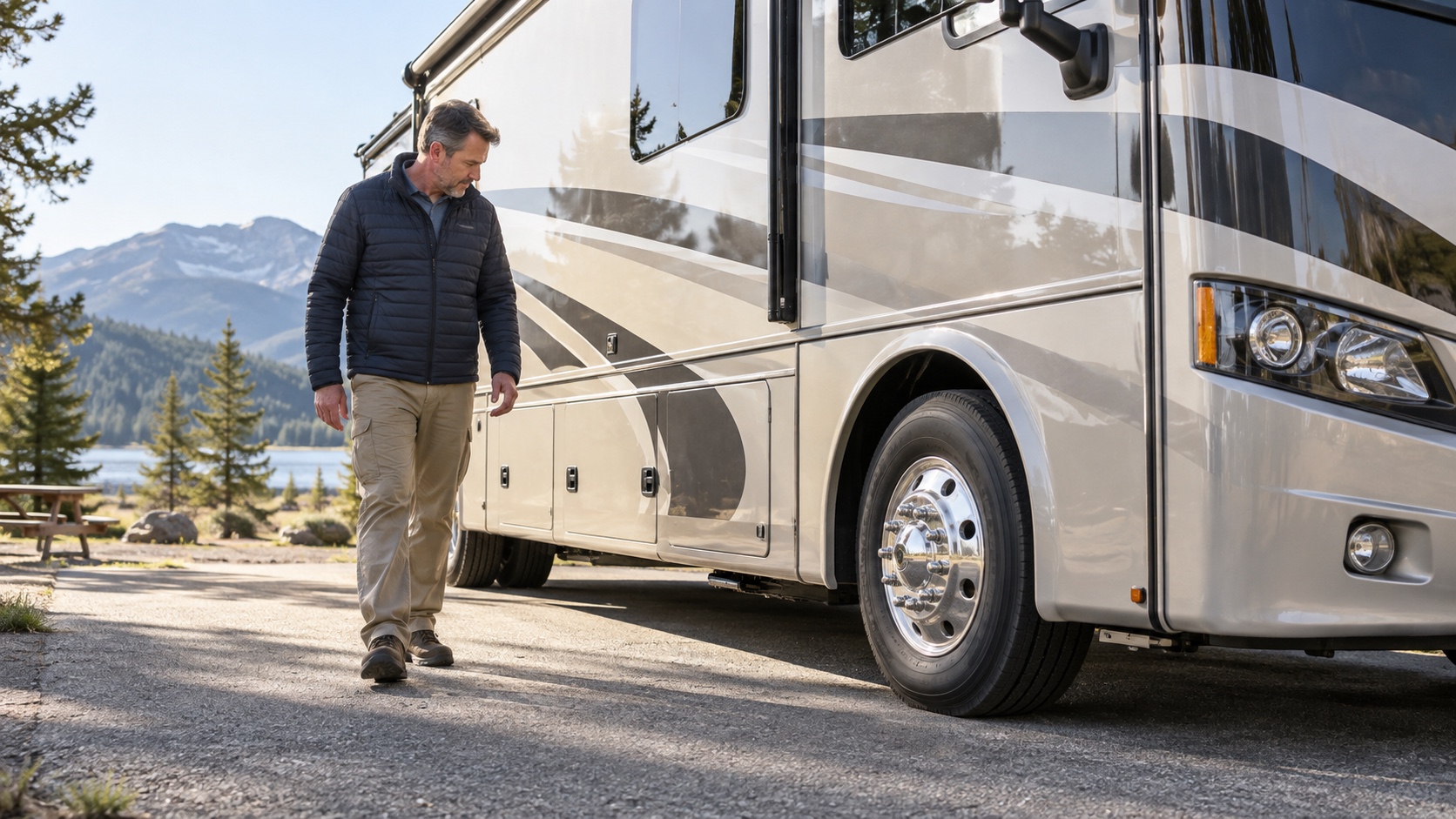
Why it matters: extended leveling equipment is not travel-ready. It can strike the ground or campsite hardware, damage the system, and stop the trip before it begins. Do not assume that an automatic feature eliminates verification.
Better move: use the exact retraction procedure in the installed system’s manual. Lippert’s motorized leveling manual, for example, instructs the operator to retract all jacks and then make a visual inspection around the coach to verify they are fully retracted before travel. Confirm indicator status, then look at every jack or stabilizer from a safe standing position. Never crawl under an unsupported RV to investigate a fault; stop and use the manufacturer’s troubleshooting or qualified service.
3. Pushing On When You Need a Break
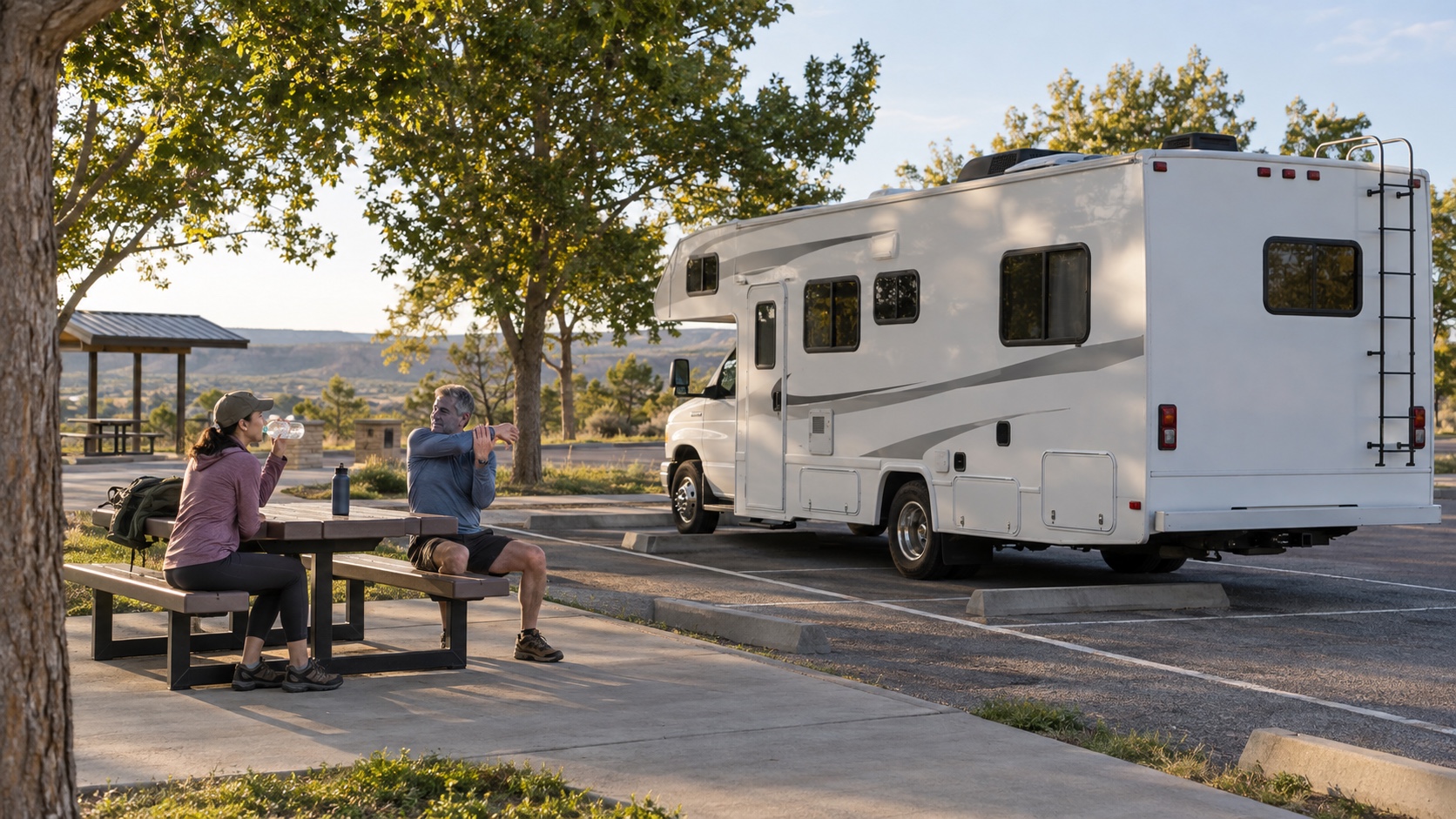
Why it matters: there is no universal daily mileage number that makes a driver safe. Sleep, time of day, medication, road conditions, traffic, weather, and the demands of the rig all matter. NHTSA says adequate sleep is the only true protection against drowsy-driving risk and advises drivers to avoid peak sleepiness periods when possible.
Better move: begin rested, plan realistic breaks, share driving only with a qualified and insured driver, and stop at a safe place as soon as drowsiness appears. NHTSA’s short-term guidance says coffee alone is not enough; for a sleepy driver, it describes coffee followed by a short 20-minute nap at a safe, lighted rest stop as a temporary intervention. It is not a way to extend a trip indefinitely. Change the plan, arrive later, or stop for the night.
2. Arriving After Dark on Your First Night
Why it matters: darkness hides branches, pedestals, picnic tables, uneven pads, one-way signs, and the edge of the parking surface. Fatigue after a long drive makes a new backing task harder. Late arrival can also conflict with gate, generator, or quiet-hour rules.
Better move: choose a first-day distance that leaves a daylight margin, confirm the arrival procedure, and call the campground when delay is unavoidable. On arrival, stop before entering the site, walk the pad with a flashlight if necessary, identify overhead and ground hazards, and use a spotter. If the site cannot be entered safely, do not force it. Ask staff for another option or use a legal overnight alternative. For a slower non-driving day after arrival, these small outdoor project ideas are a useful reminder that good plans match the site, tools, and risk rather than a fixed clock.
1. Treating Campground Rules as Suggestions
Why it matters: campground rules manage fire, wildlife, sanitation, noise, traffic, pets, generators, parking, and limited shared space. They also vary. Joshua Tree National Park, for example, publishes campground-specific RV length limits, food-storage requirements, pet rules, quiet hours, and generator windows. A rule remembered from another park may be wrong here.
Better move: read the current reservation details and posted rules before setting up. Keep food and scented items as the location requires, use designated wastewater and dump facilities, observe speed and one-way signs, leash and supervise pets where required, respect quiet and generator hours, and keep equipment inside the assigned footprint. Ask the host or ranger when wording is unclear. The importance is practical, not ceremonial: following local rules protects wildlife, neighbors, the site, and your ability to stay.
Frequently Asked Questions
Should I use an RV-specific GPS?
It can be a useful layer when it accepts the rig’s dimensions, but no device guarantees a suitable route. Verify settings, current closures and restrictions, and every posted clearance or weight sign; carry an offline backup.
How far should a first-time RVer drive in one day?
There is no safe universal mileage cap. Plan around the rested driver, daylight, road and weather conditions, the rig, and suitable stops. If drowsiness appears, stop safely regardless of the planned distance.
What belongs on an RV pre-departure checklist?
Build it from the motorhome or trailer manual and every installed component manual. Typical categories include utilities disconnected, openings and exterior equipment secured, cargo restrained, tires and lights checked, hitch or tow connections verified, jacks retracted, and a final walk-around completed.
Sources and Review Date
Reviewed September 22, 2026. Vehicle size and route-planning claims were checked against the Federal Highway Administration’s large-vehicle route-planning guidance. Cargo-capacity and GVWR guidance comes from NHTSA’s vehicle certification FAQ. Break and drowsiness guidance comes from NHTSA’s road-trip safety advice and drowsy-driving page. Campsite-fit examples come from Recreation.gov’s Wawona listing; campground conduct examples come from the National Park Service’s Joshua Tree regulations. Leveling-jack procedure is model-specific; the example above comes from a Lippert owner’s manual. Always follow the current manuals, road authorities, reservation terms, and posted rules for the actual rig and location.