10 Surprising Facts About Where Your Shirt Came From

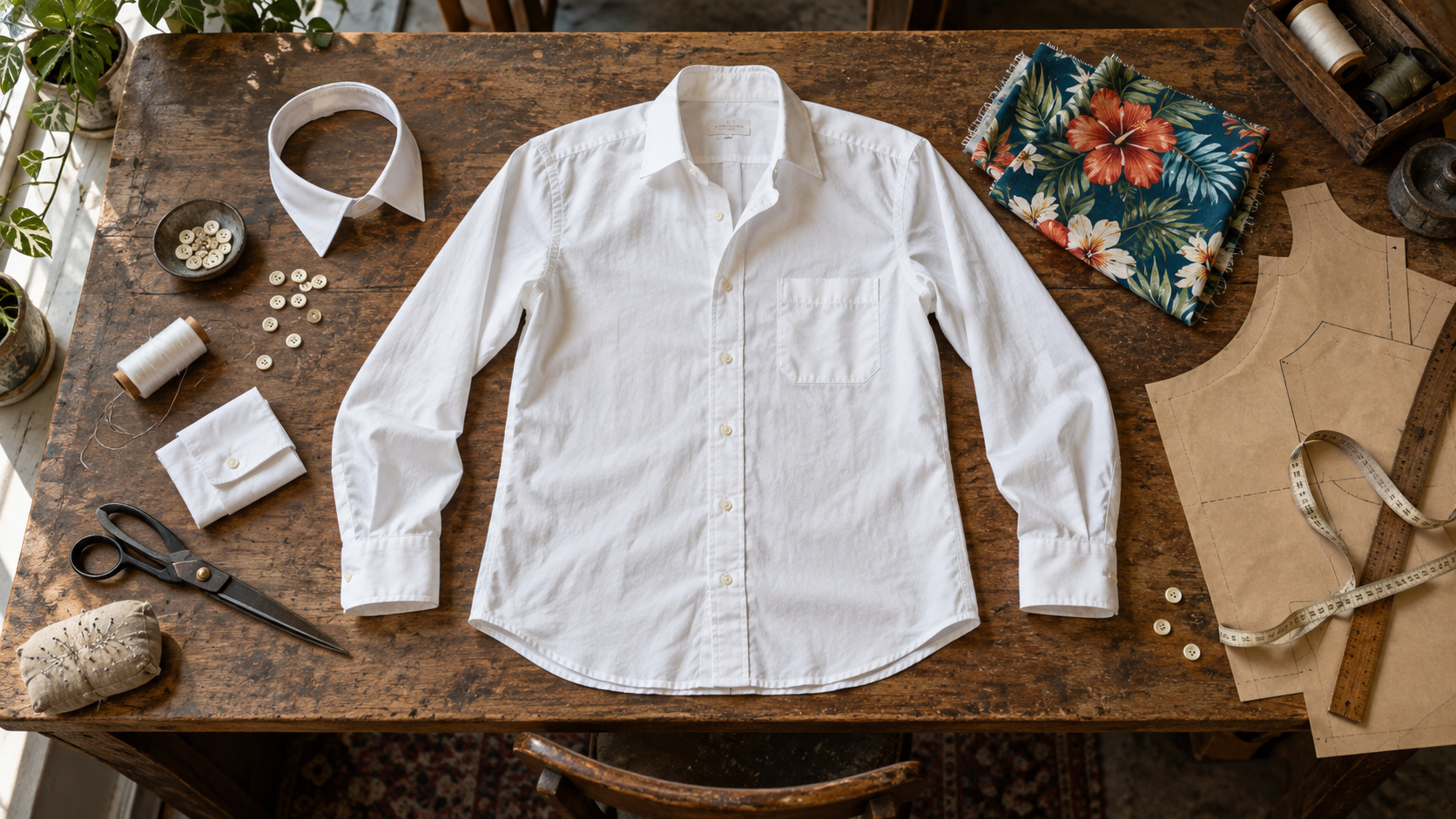
The modern shirt is not the product of one king, army, or inventor. It developed piece by piece: an underlayer became visible, pull-over construction gave way to a full front opening, workwear added practical storage, and regional styles such as the aloha shirt turned a basic garment into a cultural signal.
This list is ranked by the strength of the historical evidence, the surprise in the correction, and the feature's everyday relevance. It starts with the details most people see first and ends with two conventions that are often explained too confidently. The claims and source pages were checked September 21, 2026.
1. Collars were visible status markers before they were uniform details
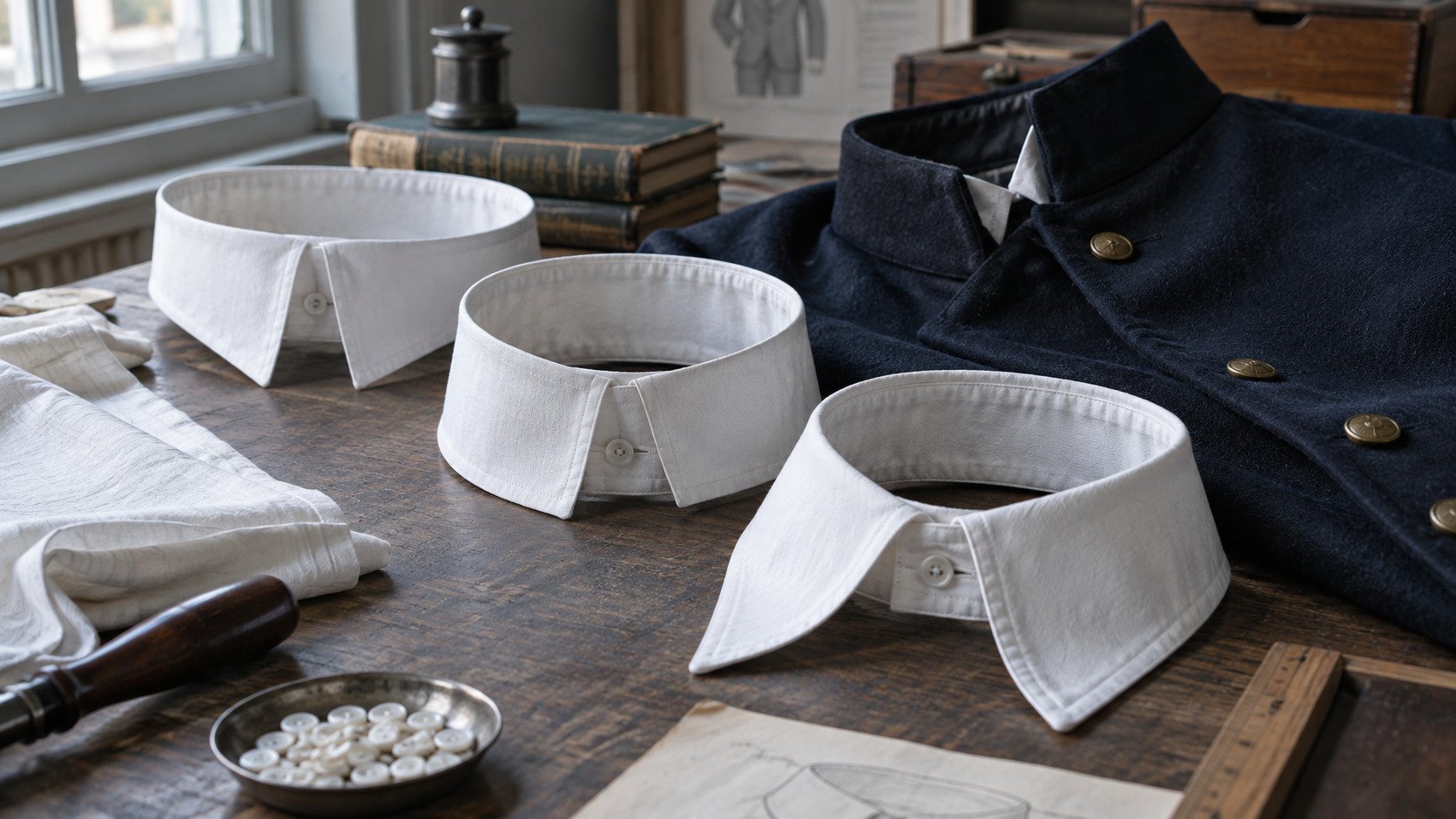
Military uniforms did not invent the shirt collar. The Victoria and Albert Museum's shirt history describes European and American men's shirts as undergarments whose fine linen, neck ruffles, and wrist ruffles displayed cleanliness and wealth. During much of the 1800s, high collars and starched shirt fronts remained among the few shirt parts visible above a waistcoat and coat.
Uniforms did make collars powerful signals. The U.S. Navy's historical uniform surveys show that collar shape, tape, color, and insignia helped distinguish duties and rank. Detachable collars also made sense in a laundry system: a visibly soiled part could be changed without washing the whole shirt. That is a story about status, maintenance, and standardization—not a single military invention.
2. Louis XIV did not invent the buttonhole
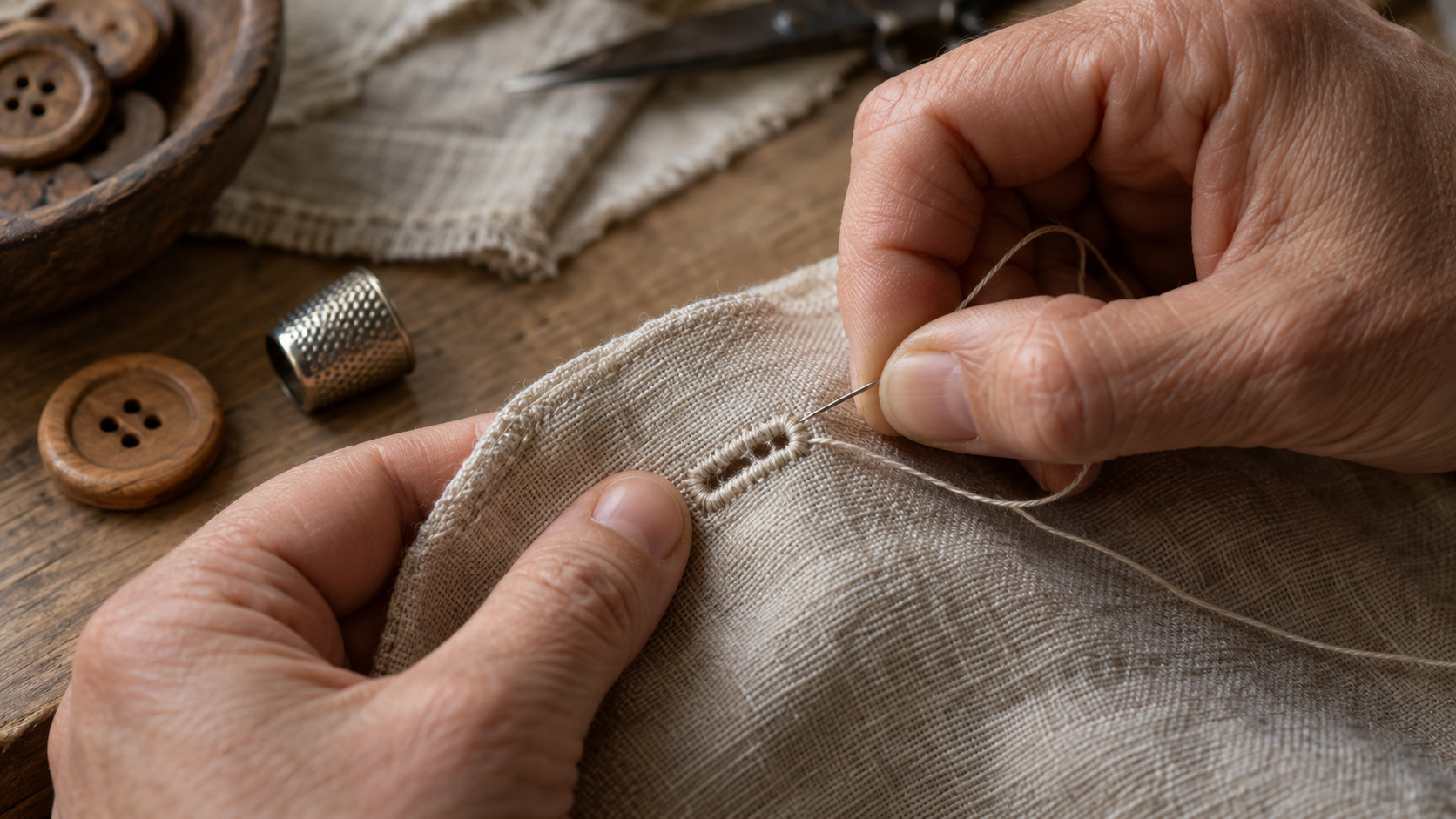
The old article credited Louis XIV with popularizing buttonholes, but no reliable evidence in the cited museum or archival material supports that tidy origin story. Buttons and worked openings appeared in clothing long before his reign, and a royal wardrobe is not the same thing as an invention record.
The better-documented change is the shirt's opening. The V&A notes that shirts before the 1800s commonly used a short, T-shaped opening rather than opening all the way down the front. The Library of Congress preserves an 1870s advertisement for a “New Open-Front Shirt”, marketed as easier to put on than a pull-over formal shirt. Buttonholes mattered because repeated fastening demanded a strong finished slit; the innovation readers can see is the whole front-opening system, not a king's supposed brainstorm.
3. Cuffs began as both an edge and a display surface
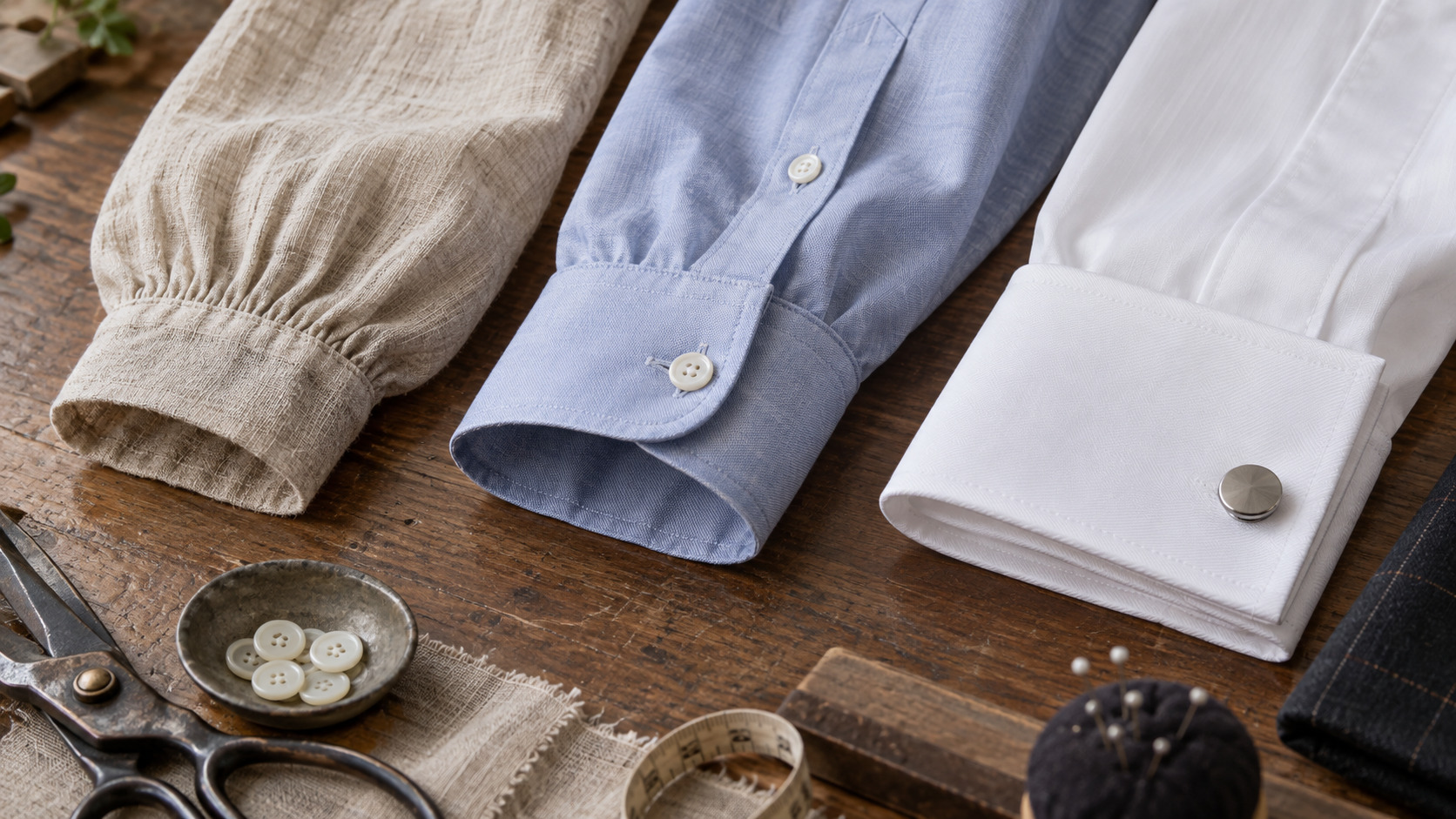
A cuff finishes the end of a sleeve, controls its fullness, and takes wear that would otherwise land on a raw fabric edge. But it was never purely practical. The V&A's surviving shirts and historical overview show ruffles, lace, pleats, studs, and starched cuffs functioning as visible evidence of expense and upkeep while much of the shirt stayed hidden.
That double role survives. A barrel cuff closes with a button and works for everyday wear; a double cuff folds back and needs a separate fastener. Neither is automatically “better.” The useful choice depends on how formal the setting is, whether you want cufflinks, and how much laundering and pressing the fabric can tolerate.
4. The chest pocket has no single 20th-century birthday
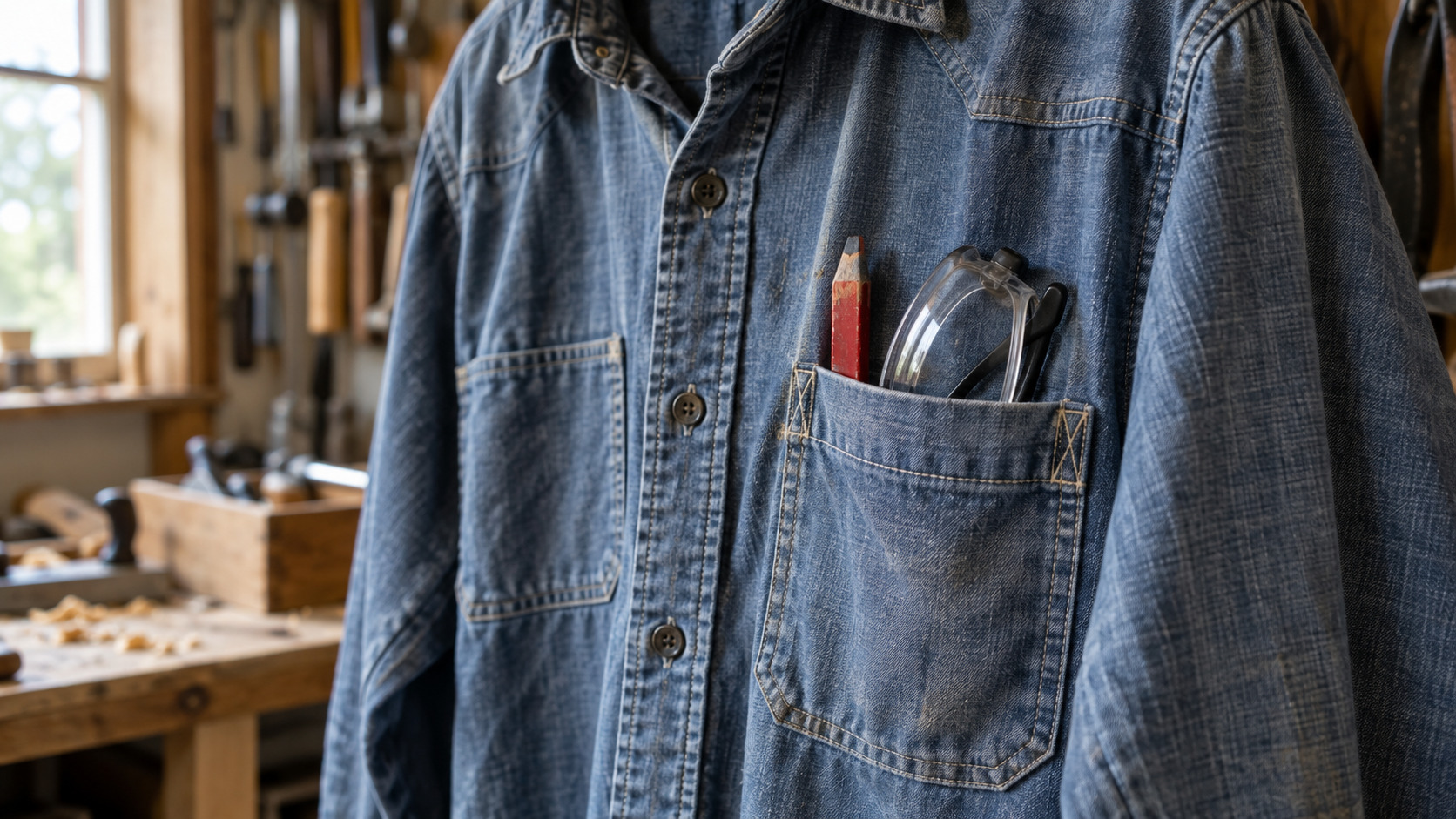
It is tempting to say the shirt pocket appeared in one decade because the claim turns a small detail into a clean milestone. Clothing collections do not support that level of precision. Pockets appeared, disappeared, and changed position according to the garment: a formal dress shirt, military overshirt, Western shirt, and industrial work shirt solve different problems.
Official U.S. Navy histories document blue chambray shirts as part of the World War II dungaree uniform, while museum workwear collections show how readily shirts became tool-carrying layers. A pocket is most useful when it matches the job: a pen slot for workwear, two buttoned pockets for secure storage, or no pocket for an uninterrupted formal front. The defensible fact is variation by use—not that 20th-century leisure suddenly created the need to carry sunglasses.
5. The placket is an opening built to survive repeated use
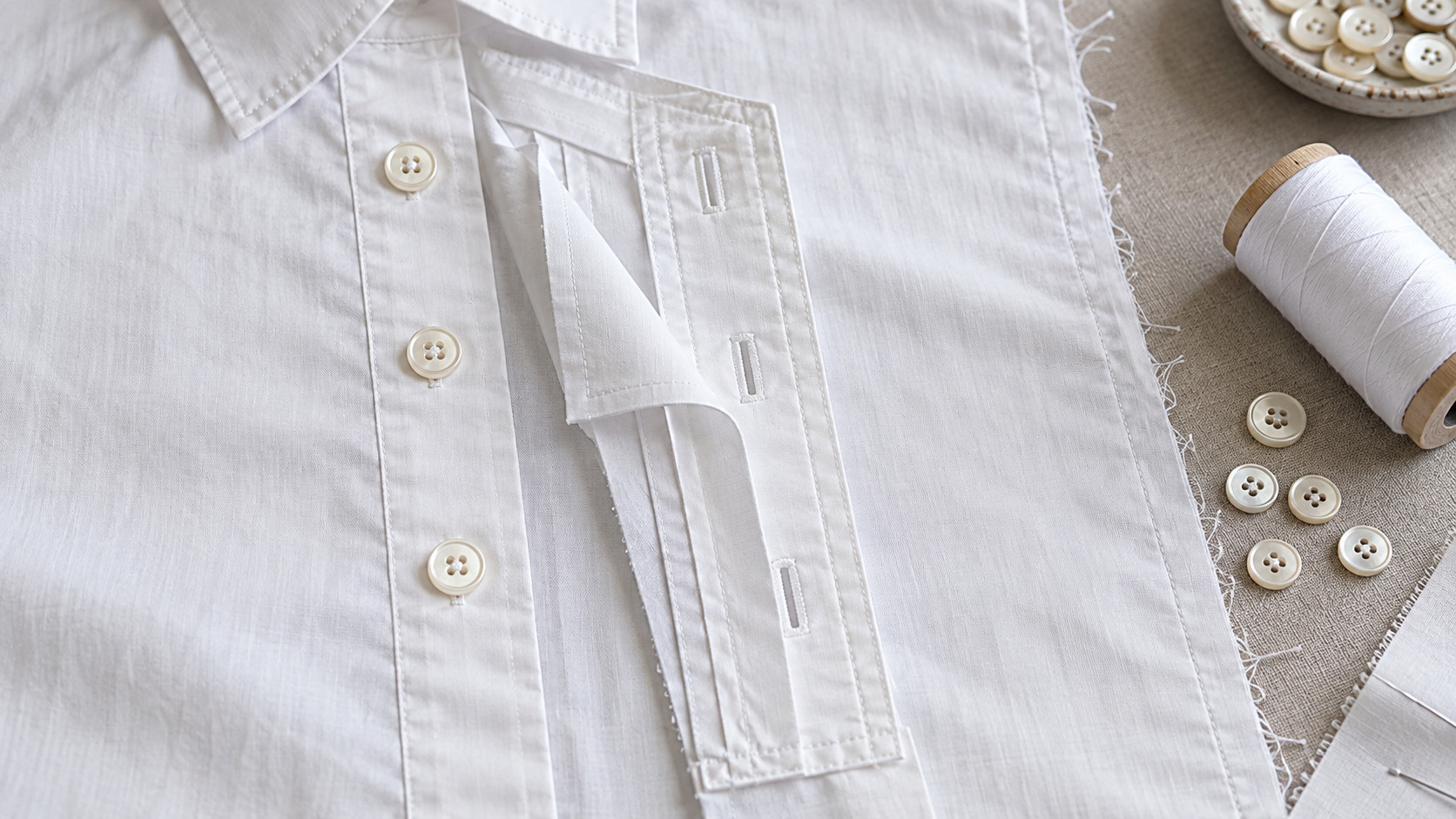
The placket is the finished opening that supports the buttons and buttonholes. Extra layers and stitching stabilize an edge that is pulled every time the shirt is opened, closed, tucked, or washed. Some shirts expose a folded band; others hide the fastening or use a separate sewn-on strip. The exact construction changes, but the structural job stays the same.
This feature also helps date the familiar modern dress shirt. According to the V&A, the center-front buttonhole placket was a 19th-century development. That makes it far more historically meaningful than the old description of a generic “secret reinforcement”: it helped turn the shirt from a pull-over underlayer into the fully opening garment now hanging in most closets.
6. A yoke shapes the shoulders; it does not carry weight like an ox yoke
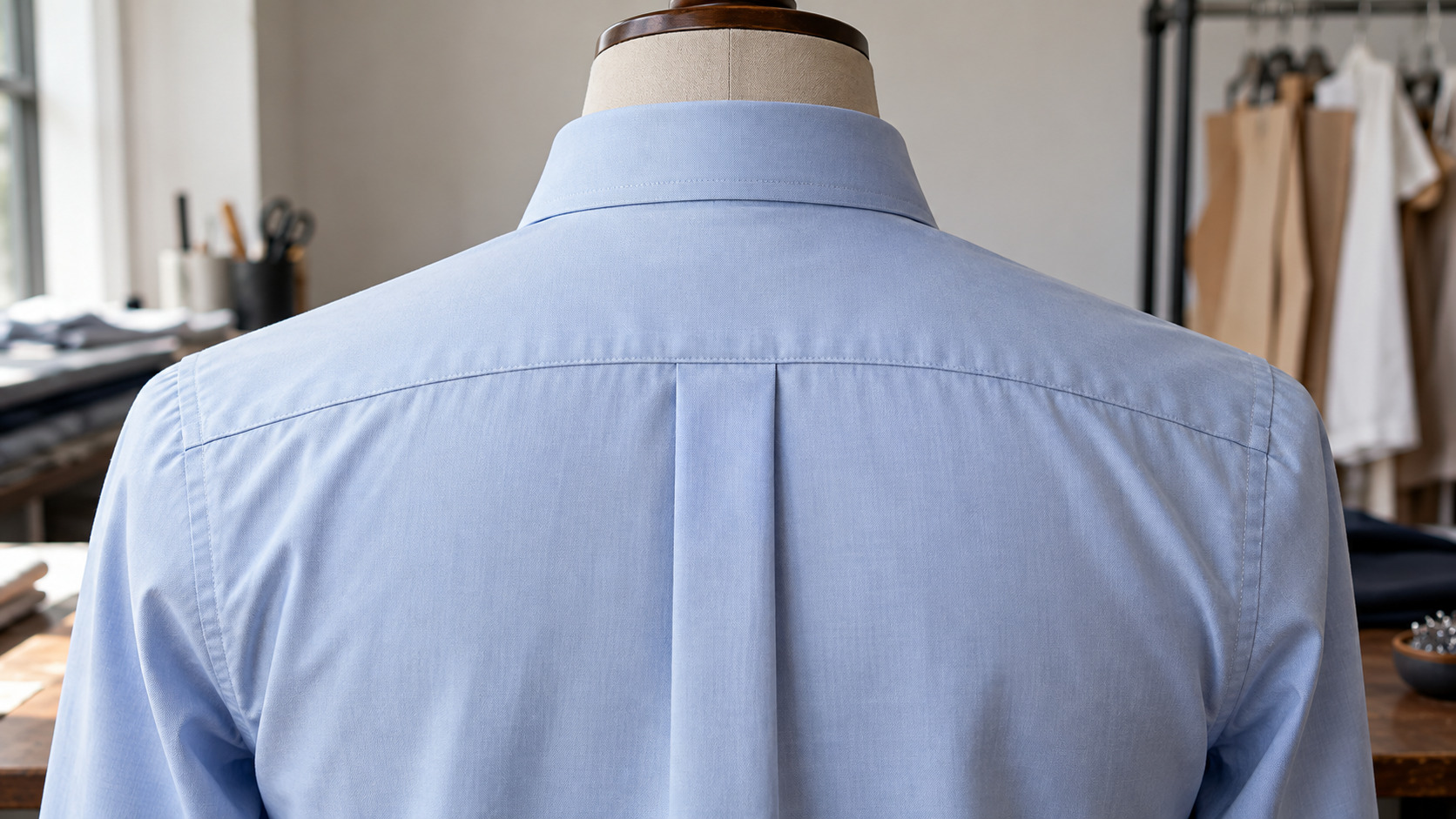
The shirt yoke is a shaped panel across the upper back. It joins the collar, shoulders, sleeves, and lower back while giving the maker a controlled place to add pleats, gathers, or shaping. On better-aligned patterned shirts, it can also reveal the care taken with cutting and seam matching.
The name invites an analogy with the wooden crosspiece used for draft animals, but that does not mean the cloth panel literally distributes the shirt's “weight” across your shoulders. A shirt is too light for that explanation to be useful. Think fit and construction instead: the yoke lets a relatively stable panel sit at the shoulders while the fabric below supplies movement and room.
7. The aloha shirt is a Hawaiʻi story with many textile influences
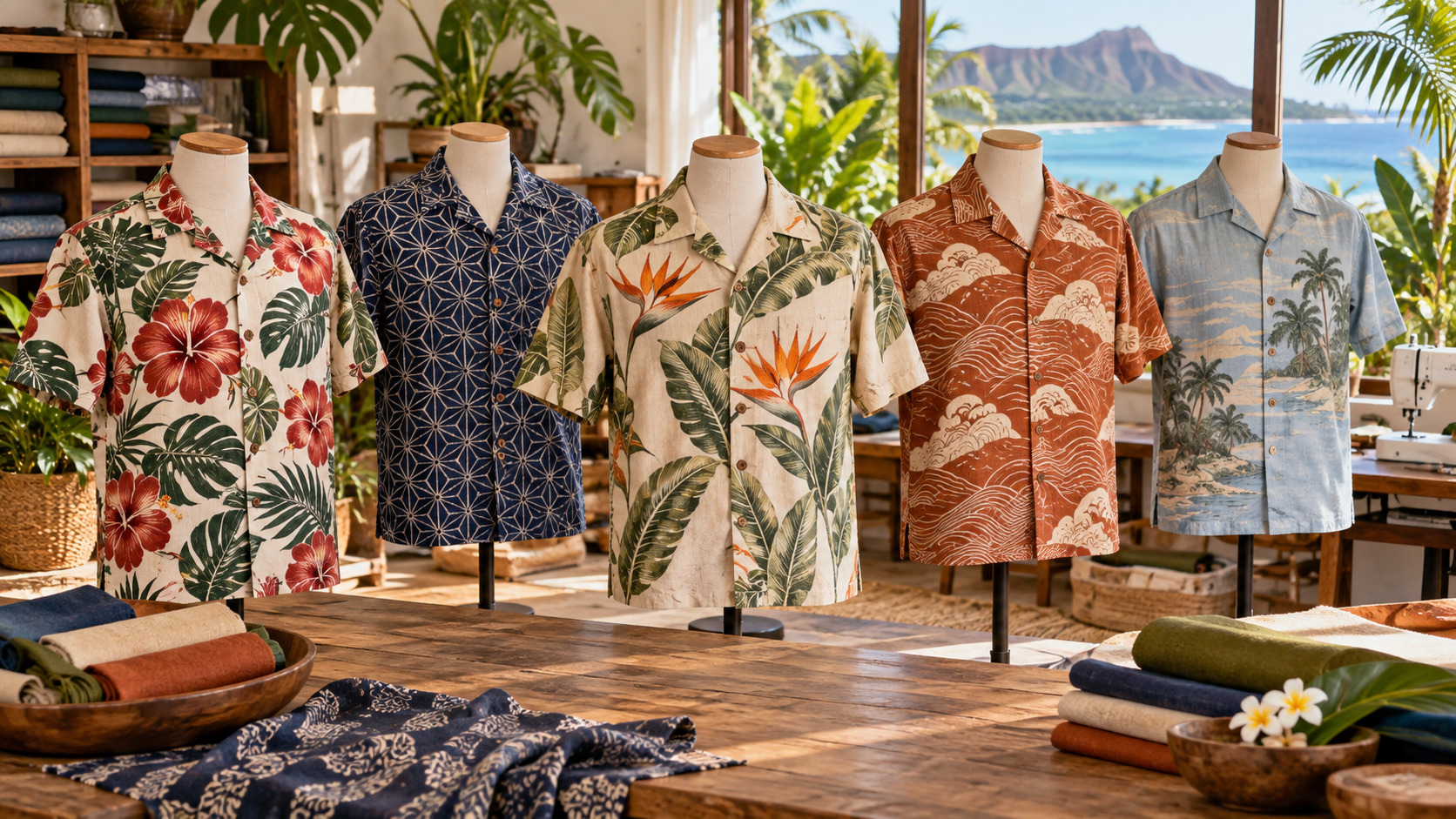
The aloha shirt did not spring from a single plantation uniform. The National Park Service's sport-shirt history places its commercial emergence in 1930s Hawaiʻi, where Chinese and Japanese immigrant-owned tailoring shops used fabrics including Japanese kimono silk. The Honolulu Museum of Art broadens the picture: aloha wear drew from Hawaiian kapa and quilts, Japanese kimono, Chinese garments, and other local and global design references.
Those influences should not be flattened into a story in which one culture simply “invented” another's shirt. The garment grew within Hawaiʻi's multilingual tailoring, tourism, labor, and design economy. The name appeared in 1930s commerce, postwar travel carried the style farther, and Hawaiʻi made aloha wear part of local identity and appropriate business dress—not just a mainland vacation costume.
8. “French cuff” describes a construction better than a proven birthplace

A French cuff is also called a double cuff: the sleeve end is long enough to fold back, and aligned holes are secured with cufflinks rather than an attached button. That physical description is solid. The popular claim that the style began in a particular European court and then became a universal status symbol is much harder to verify.
Historical dress collections do show elaborate cuffs, separate studs, and cufflinks as highly visible parts of formal clothing. They do not provide a simple French origin certificate. Today the double cuff is best understood as an optional formal detail. It can express taste or ceremony, but the wearer does not inherit aristocratic rank by fastening one.
9. The T-shirt moved from underwear to a public outer layer
The T-shirt's early identity was an undergarment. U.S. Navy records and historical uniform material document cotton undershirts as issued and regulated clothing, including instructions for marking them. The evidence supports a military role in standardizing and spreading the practical short-sleeved underlayer; it does not prove that the Navy single-handedly invented the form or its name.
The larger cultural shift came when an underlayer became acceptable on its own. The V&A's history of men's underwear calls the T-shirt a major example of underwear becoming outerwear. Sport, work, wartime imagery, and movies all helped normalize the exposed T-shirt across the 20th century. Hollywood mattered, but Marlon Brando and James Dean amplified a change already underway rather than flipping fashion in one instant.
10. Opposite button sides are real, but the servant story is not settled
Many mass-market men's shirts place buttons on the wearer's right, while many women's shirts place them on the left. No one knows for certain why buttons became divided this way. The familiar explanation says wealthy women were dressed by right-handed servants, while men dressed themselves or reached for weapons. Other theories involve riding sidesaddle, nursing, manufacturing convention, or deliberate gender distinction.
A Smithsonian overview updated in 2024 presents these as competing theories, not a solved case. That uncertainty is the real fact worth remembering. Tradition can survive after its cause is forgotten, and modern brands are free to ignore it. Check the actual garment rather than treating button side as a reliable test of who is “supposed” to wear it.
What these details tell you when buying a shirt
Turn the garment inside out. Look for secure buttonholes, straight placket stitching, a yoke that lies flat, matched seams, and a pocket suited to how you will use it. A dramatic origin story does not improve construction. If you are shopping secondhand, our guide to finding quality clothing at thrift stores gives a practical inspection routine. For more stories about ordinary objects that changed through many small improvements, see these forgotten inventions that changed the world.
Frequently asked questions
Did Louis XIV invent buttonholes?
No credible museum or archival source reviewed for this article attributes the invention to Louis XIV. Buttoned clothing predates him; the well-documented shirt change is the 19th-century spread of a full center-front opening.
Why are men's and women's shirt buttons on opposite sides?
The convention is real, but its origin is unresolved. Servants, weapons, riding, nursing, and manufacturing have all been proposed; none is established as the sole explanation.
Did the U.S. Navy invent the T-shirt?
Navy records document and helped standardize cotton undershirts, but they do not establish a single inventor. The T-shirt's later move from underwear to outerwear involved work, sport, mass production, and popular culture.
Is a French cuff actually French?
The name is common in American English, while “double cuff” directly describes the folded construction. A neat story tying it to one French court is not supported strongly enough to present as fact.
Sources and verification
Shirt construction and the shift from underlayer to visible garment were checked against the Victoria and Albert Museum's brief history of the shirt and history of men's underwear. The open-front shirt advertisement comes from the Library of Congress. Naval uniform and undershirt context comes from the Naval History and Heritage Command. Aloha-shirt evidence comes from the National Park Service and Honolulu Museum of Art. The button-side uncertainty is summarized by Smithsonian magazine. Where those sources did not establish a single inventor or date, this article says so instead of filling the gap with folklore.