
7 Forgotten Inventions That Changed the World

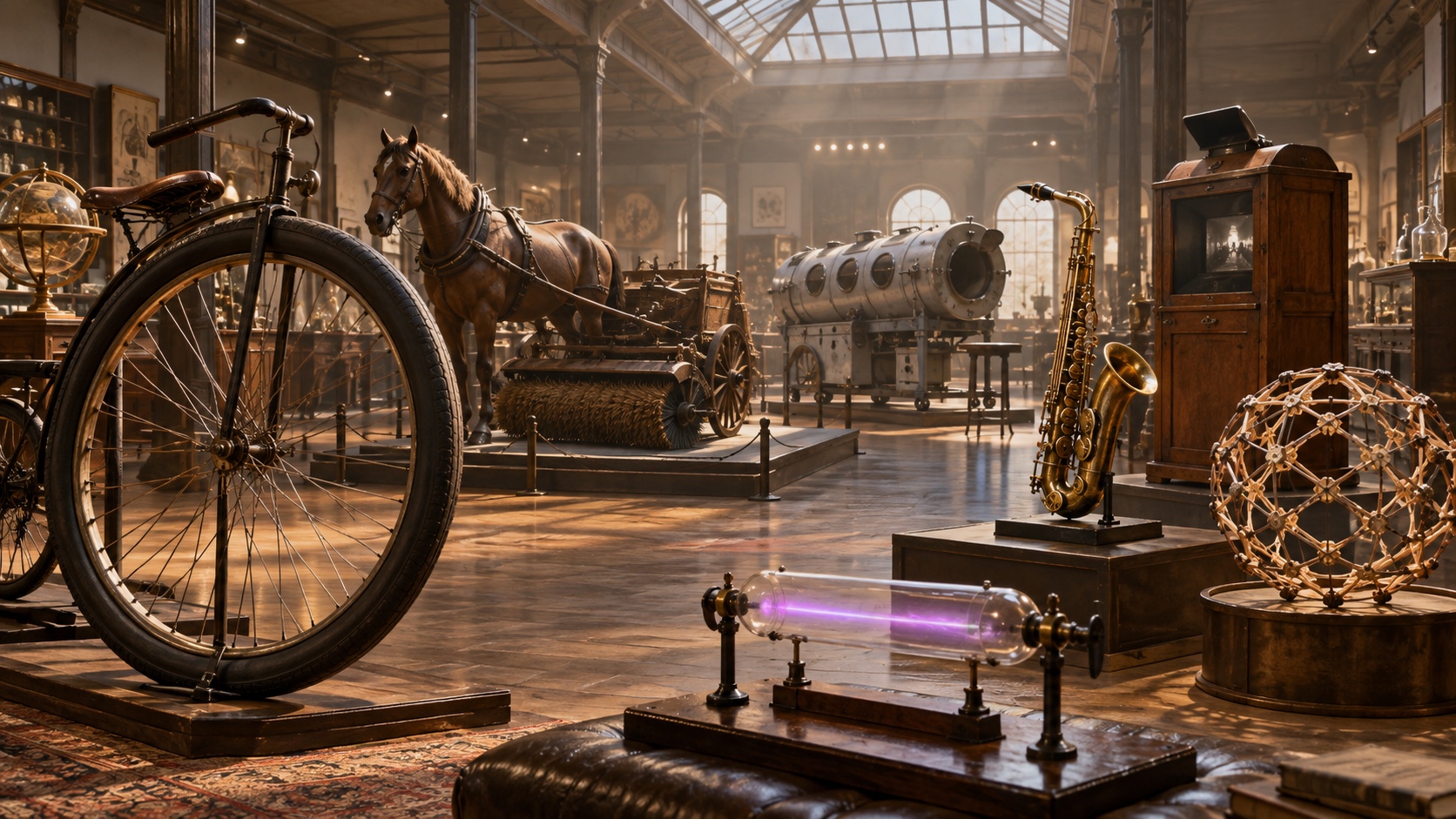
The pneumatic tire takes first place because its basic idea still carries bicycles, cars, buses, and aircraft: compressed air turns a punishing wheel into a practical one. The other entries changed sanitation, medicine, music, physics, movies, and transformable design. Their names may be less familiar than their descendants, but their effects are not.
This is an editorial ranking, not a measurement of which inventor was most important. We ranked by three criteria: influence on modern life, the clarity of the connection between the original device and a technology people still use, and how much public recognition the early device or its maker receives today. A lower position does not mean a weak invention; it means the surviving line of influence is narrower, less direct, or more specialized.
1. Pneumatic Tire: Turning Air Into a Shock Absorber
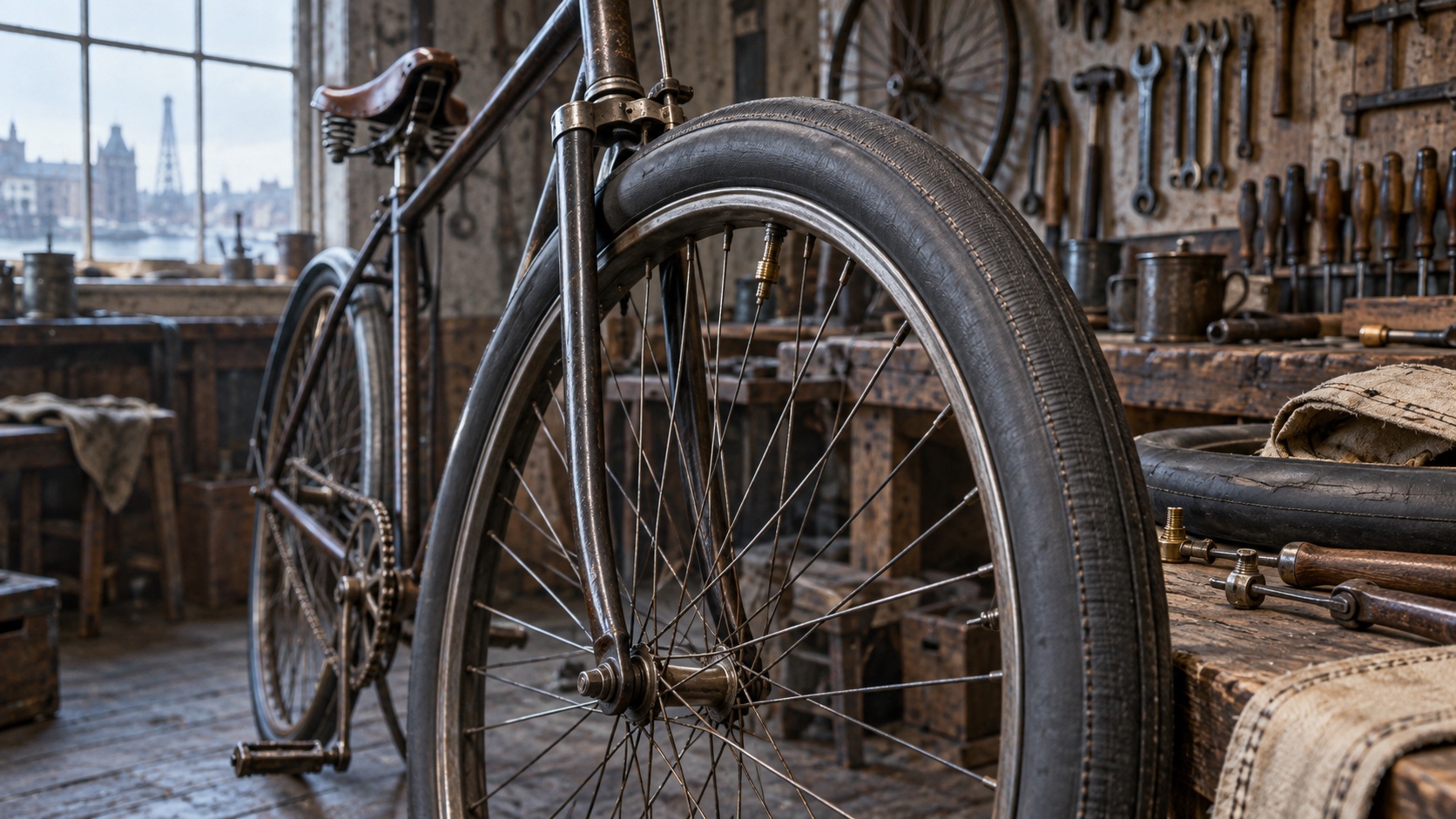
Why it ranks first: a thin cushion of compressed air transformed wheeled travel at a scale the other inventions on this list cannot match. Air's compressibility lets a pneumatic tire deform over a bump and then recover, reducing the shock that reaches the wheel and rider. That physical principle sounds ordinary now because it is built into everyday transport.
John Boyd Dunlop did not invent the first pneumatic tire. Scottish engineer Robert William Thomson patented an air-filled tire decades earlier, in 1845, but it did not become the commercial breakthrough associated with the bicycle boom. Dunlop independently developed a practical cycle tire in Belfast and patented versions of it in Britain and the United States around 1888–1890. The 1890 U.S. patent describes an air-inflated rubber tube strengthened with cloth or canvas and secured to the wheel rim. That is more precise than saying one man simply “invented the tire.”
The timing mattered. The Smithsonian's history of the safety bicycle places Dunlop's pneumatic tire alongside the equal-sized wheels, chain drive, gears, and improved brakes that made cycling safer and more practical in the 1890s. Modern descendants use different compounds, tread designs, cords, and often tubeless construction, but they still depend on a pressurized flexible structure separating wheel from road.
Why it matters now: the tire is easy to overlook precisely because it works beneath almost every road trip. Our fact-checked guide to where shirts came from follows the same pattern: the final product usually has more than one inventor and more than one turning point.
2. Street Sweeper: Making Mechanical Cleaning Continuous
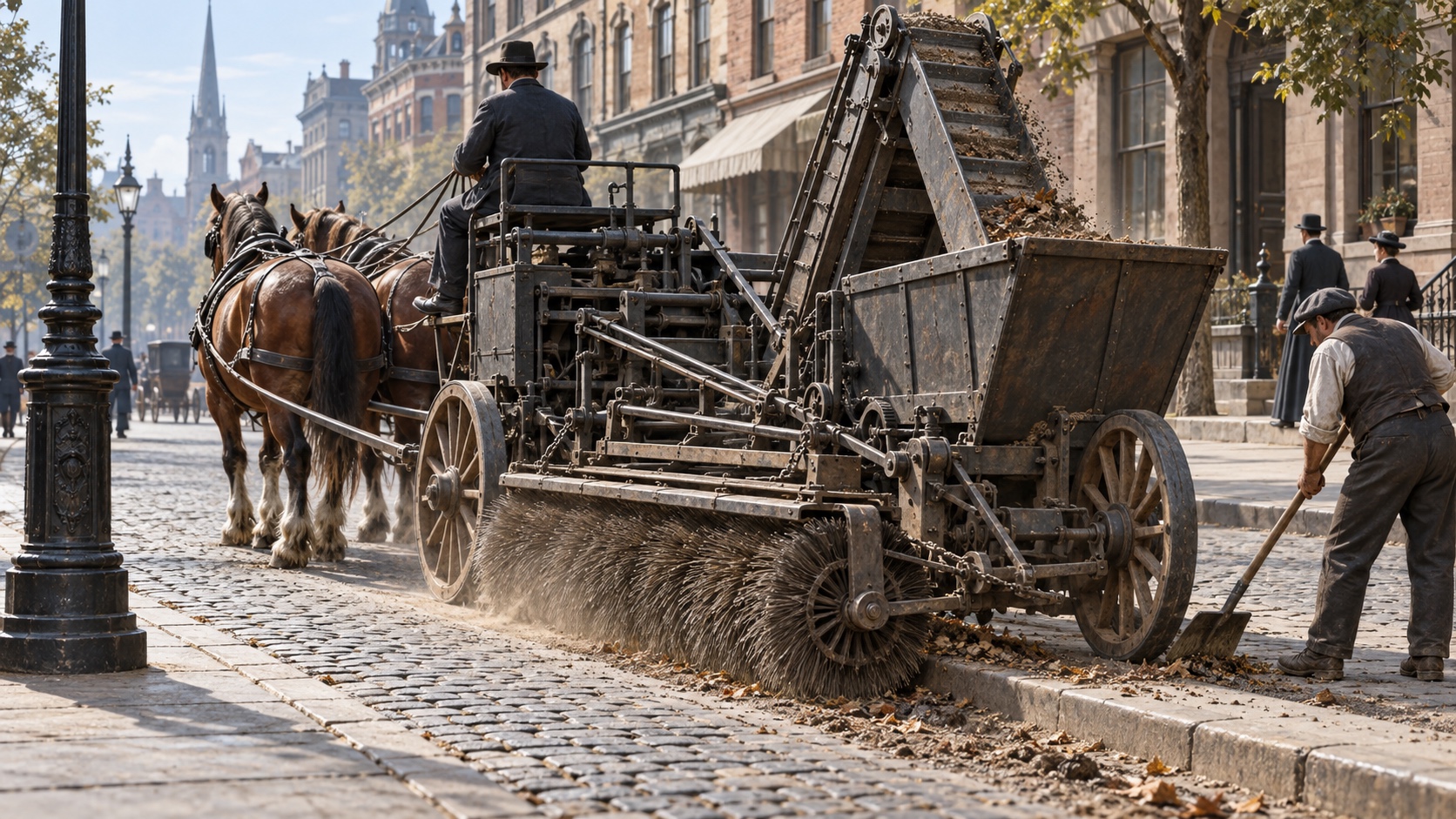
Why it ranks second: mechanical street sweeping made a repetitive municipal job continuous: loosen debris, lift it, and hold it in a receptacle while the vehicle keeps moving. That combination survives in modern sweepers even though engines, vacuum systems, water sprays, filters, and controls have changed the equipment dramatically.
Charles B. Brooks received U.S. Patent No. 556,711 on March 17, 1896, for an improved street sweeper and cleaner. His specification did not claim the first street sweeper. It described an improvement to machines that already used a revolving brush, elevating mechanism, and refuse receptacles. Brooks focused on details including an elevator chain with buckets and holders and a way to raise parts of the sweeping assembly. Invention history is often a chain of practical refinements, not a single cinematic “eureka.”
The inherited article linked the machine directly to healthier populations without demonstrating that one patent caused a public-health change. Cleaner streets can support sanitation, but urban health also depended on sewerage, waste collection, paving, housing, clean water, regulation, and other systems. The defensible achievement here is mechanical and civic: street sweepers allowed cities to collect road dirt more systematically than crews working only with hand brooms.
Why it matters now: look at a current sweeper's rotating curb brush, main brush, conveyor or suction path, and hopper. The power source is different, yet the workflow remains recognizable. Brooks deserves credit for a documented improvement, not a simplified claim that he alone invented clean streets.
3. Iron Lung: Breathing by Changing Pressure Around the Body
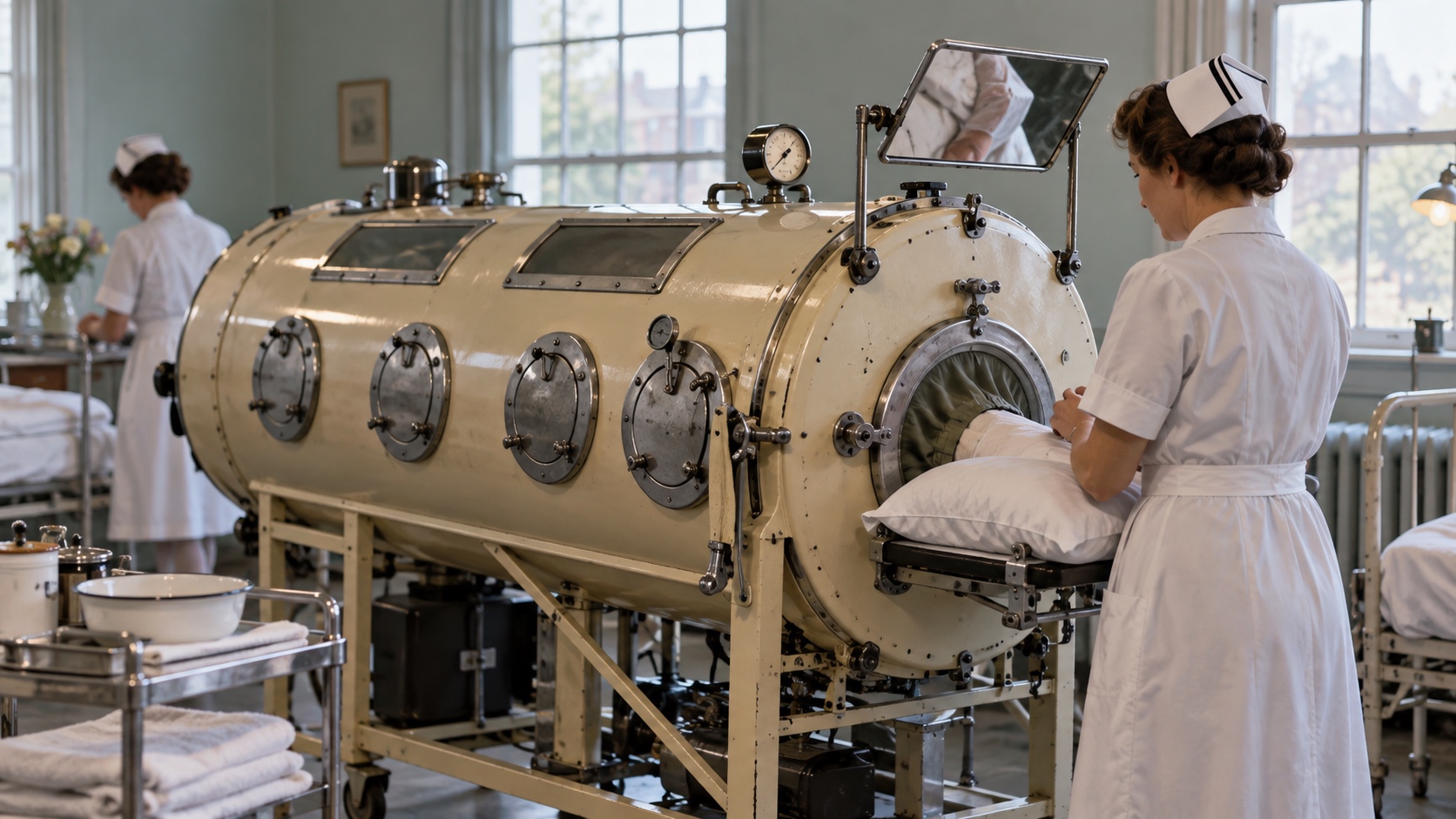
Why it ranks third: the iron lung made respiratory support possible for many people whose breathing muscles were paralyzed by poliomyelitis. It did so without placing a tube in the airway. The patient's body rested inside an airtight chamber while the head remained outside; cycles of lower and higher pressure around the chest helped move air into and out of the lungs.
The American Association for Respiratory Care's museum credits Harvard faculty members Philip Drinker and Louis Agassiz Shaw with developing the first practical negative-pressure “respiration apparatus” in 1928. Later designs, especially John Emerson's, reduced cost and improved usability. The CDC Museum describes an adult iron lung as a roughly six-foot cylindrical ventilator with windows, access ports, gauges, and valves so caregivers could monitor the chamber and reach the patient.
It would be wrong to say the iron lung cured polio. It supported breathing while illness damaged the nerves and muscles required for respiration, and outcomes varied. It would also be wrong to treat it as the direct ancestor of every modern ventilator. Positive-pressure ventilation, which moves air through the airway, follows a different approach and became dominant in acute care. Negative-pressure ventilation remains an important chapter in respiratory medicine rather than a discarded curiosity.
Why it matters now: the iron lung shows that life-saving engineering can come from changing the environment around a body, not only from acting inside it. Its place in polio history also reminds us that supportive technology and disease prevention solve different problems.
4. Saxophone: A Patented Instrument That Found a New Musical Home
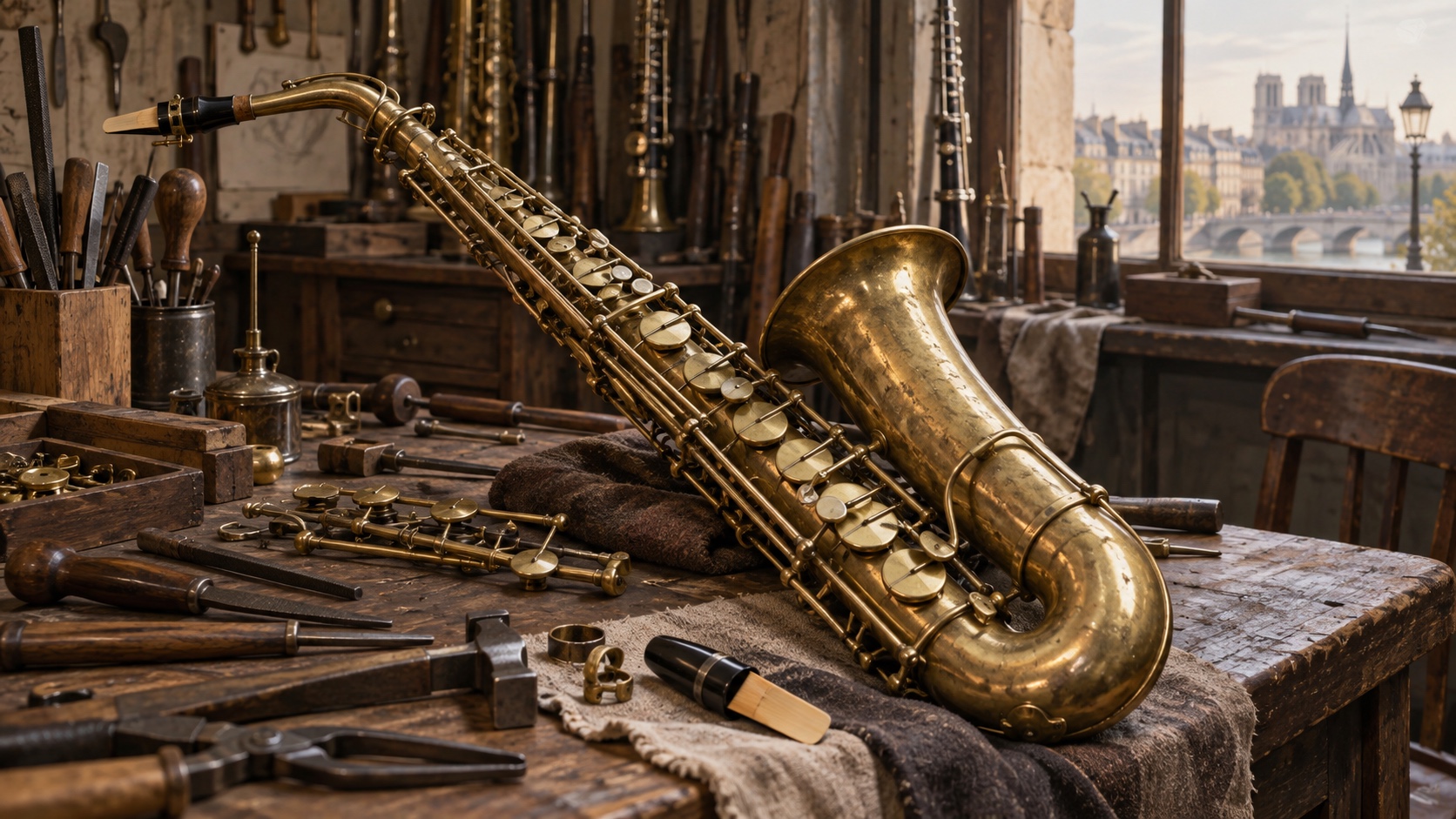
Why it ranks fourth: the saxophone is no longer forgotten, but the problem Adolphe Sax designed it to solve often is. Sax wanted an instrument family with the projection useful to military bands and an expressive, flexible voice between existing orchestral categories. It has a metal body, yet sound begins with a single reed, so organologists classify it as a woodwind.
The French patent record held by the Institut national de la propriété industrielle identifies Sax's March 1846 filing for a system of wind instruments called saxophones. The Metropolitan Museum of Art likewise notes that the instrument was patented in 1846 and conceived for military band and orchestral use. Calling it a “jazz invention” reverses the timeline. Jazz musicians later demonstrated possibilities Sax could not have heard in the 1840s.
Its design combines a conical metal bore, tone holes closed by padded keys, and a clarinet-like reed mouthpiece. Sax conceived a family spanning registers rather than one universal horn. That family design helped ensembles balance related voices, while later performers developed radically different sounds through mouthpieces, reeds, embouchure, articulation, and amplification.
Why it matters now: the saxophone warns against judging an invention only by its intended market. It moved from military and concert ambitions into jazz, rhythm and blues, rock, pop, marching bands, and experimental music. The mechanism endured; culture rewrote the job description.
5. Crookes Tube: A Glass Vessel That Made Invisible Physics Visible
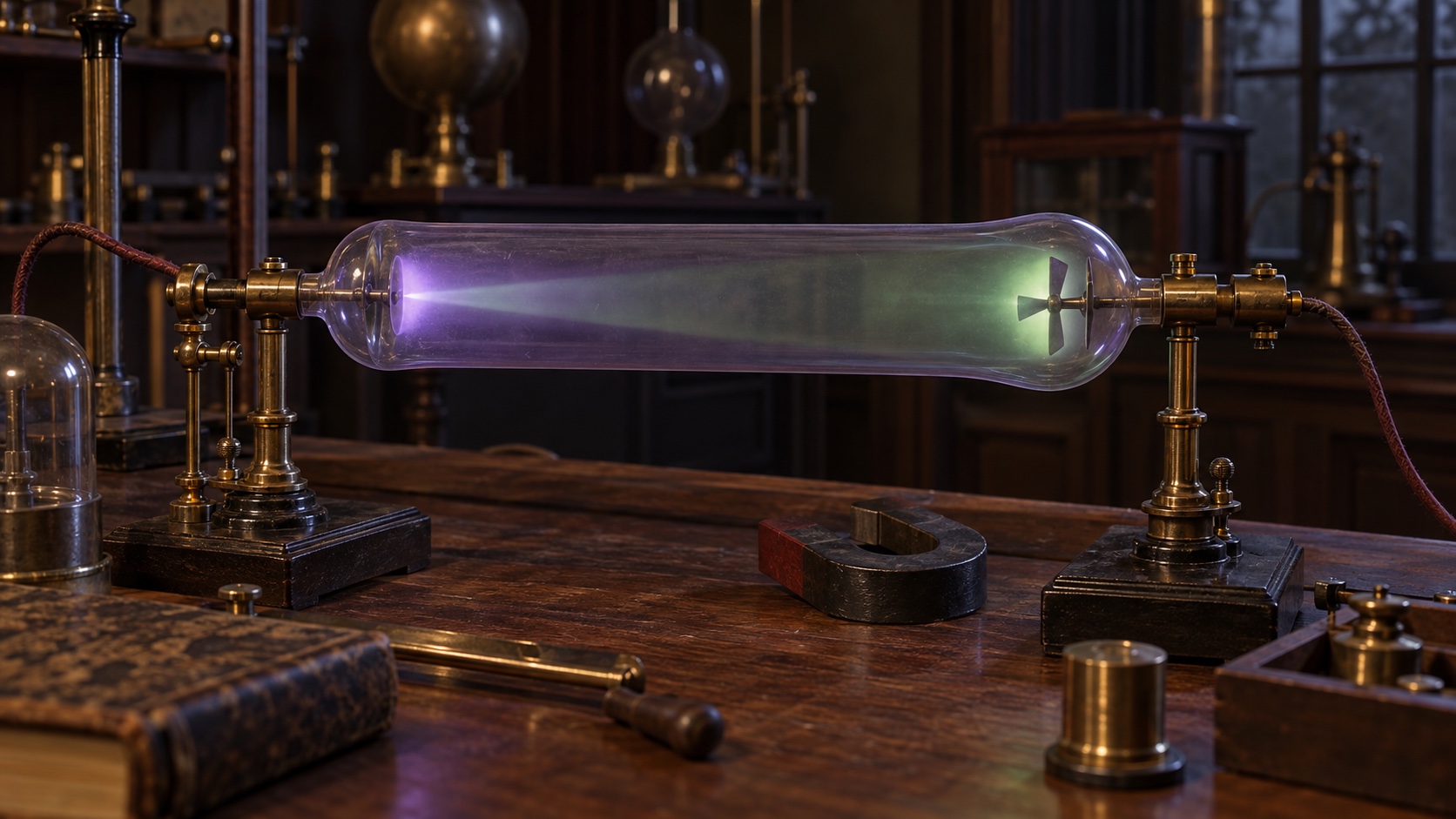
Why it ranks fifth: Crookes tubes were experimental instruments, not consumer products, yet the behaviors they revealed helped open two enormous fields: subatomic physics and medical imaging. A high voltage applied across electrodes in a partially evacuated glass tube produced a beam from the cathode and fluorescence where it struck the glass.
William Crookes refined vacuum discharge tubes in the 1870s, but “the Crookes tube” was a family of forms used to test how cathode rays traveled and responded to objects or magnetic fields. The Science Museum Group catalogs an 1888 tube for demonstrating magnetic effects. In 1897, J. J. Thomson used related cathode-ray apparatus to establish that the rays contained negatively charged particles—later called electrons.
There is also a direct X-ray connection, but the language needs care. Wilhelm Röntgen discovered X-rays in 1895 while working with a shielded Crookes-type cathode tube. The National Museum of Health and Medicine explains that the rays passed through shielding and affected nearby sensitive material. Crookes did not invent medical radiography, and his cold-cathode tubes were later replaced by more controllable designs such as the Coolidge tube.
Why it matters now: discharge tubes supplied experimental evidence and a controllable electron beam. Later cathode-ray tubes used electron beams to create images in televisions and monitors, but they were engineered descendants, not unchanged Crookes tubes. The family resemblance is real; a straight line from one bottle-shaped apparatus to every screen is too neat.
6. Kinetoscope: Motion Pictures Before the Movie Theater
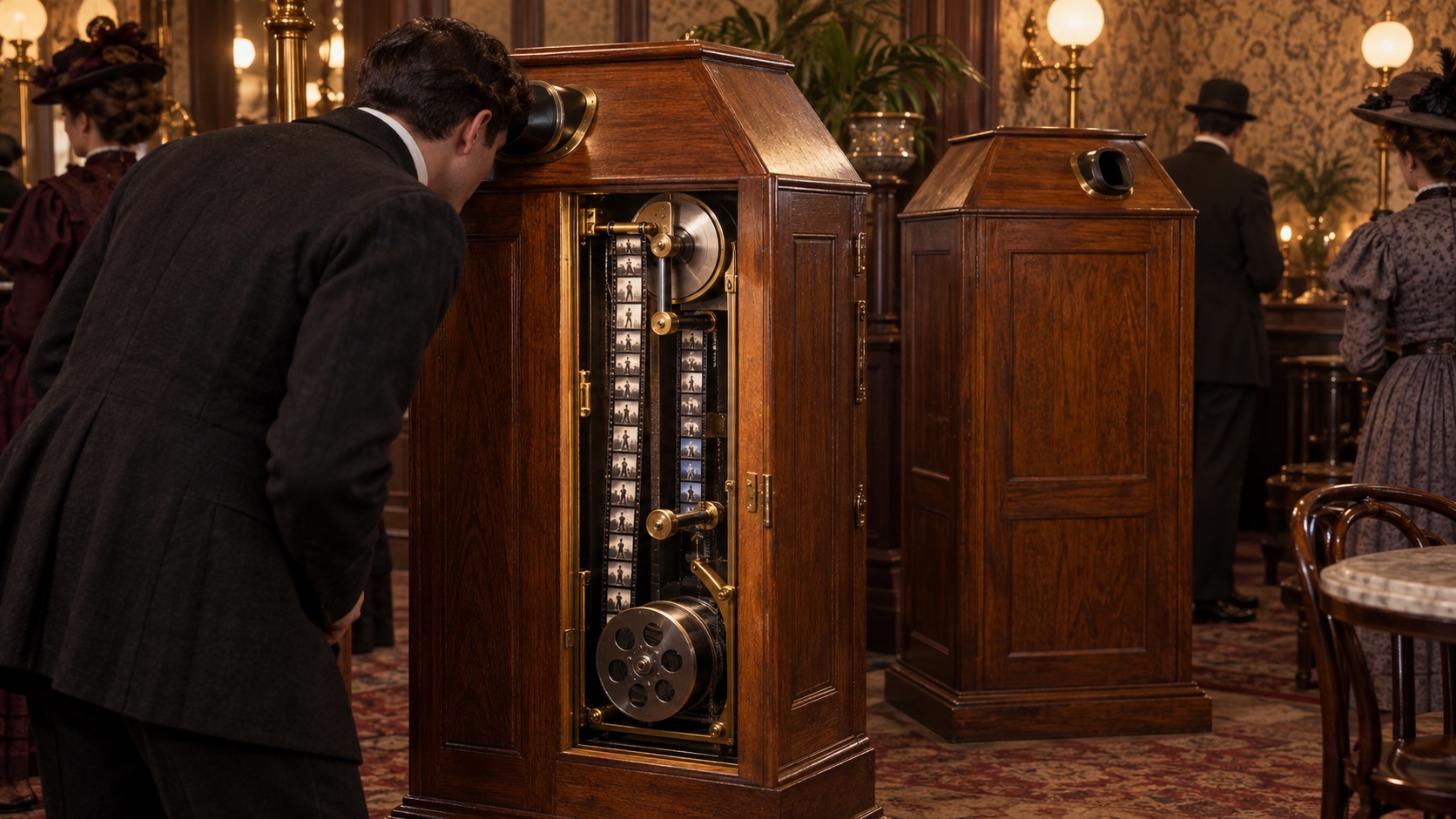
Why it ranks sixth: the Kinetoscope turned motion photography into something a paying customer could watch, one person and one peephole at a time. It was not a theater projector. Inside the upright cabinet, a loop of film traveled through rollers beneath a viewing lens while a shutter and lamp made successive frames appear to move.
The familiar “Edison invented movies” version erases a laboratory and an international field. The Library of Congress describes Edison as initiating the program and assigning William Kennedy Laurie Dickson to develop the device; modern scholars give Dickson major credit for turning the concept into practical machinery. The Thomas A. Edison Papers separates Edison's resources, vision, and electromechanical knowledge from Dickson's photographic expertise.
A prototype was shown in 1891, a public demonstration followed in 1893, and commercial Kinetoscope parlors opened in 1894. The machine established that brief filmed scenes could be manufactured, distributed, and sold as an experience. Projection soon proved better for shared audiences, so the Kinetoscope's individual-viewing model lost the main contest even while the film industry expanded.
Why it matters now: a dead-end product format can still prove the market for a medium. The London rainy-day guide includes the Postal Museum's underground railway—another case where machinery explains the story better than nostalgia alone.
7. Hoberman Sphere: A Toy-Sized Lesson in Transformable Structures
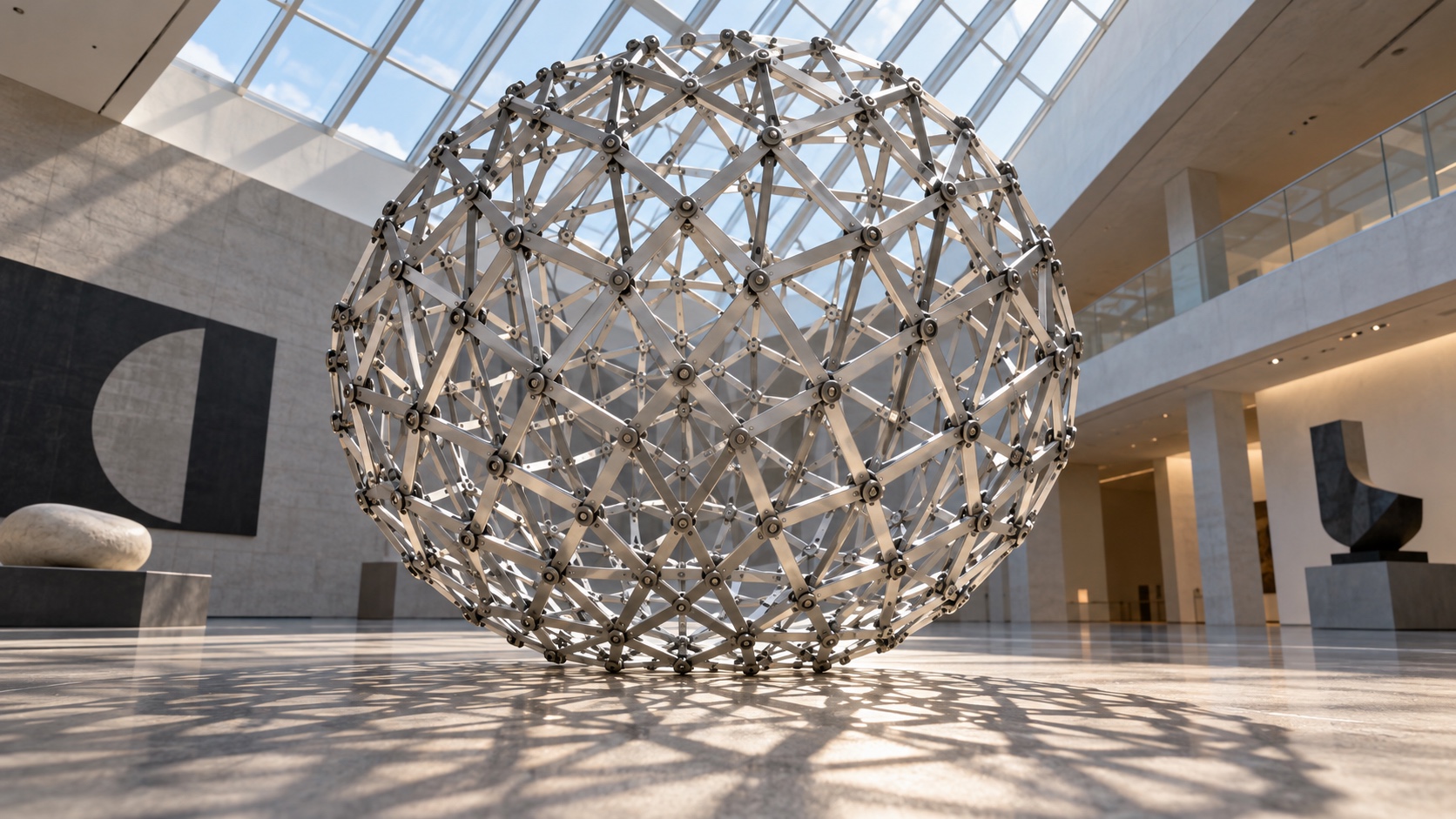
Why it ranks seventh: the Hoberman sphere has the narrowest direct effect on daily life here, but it makes a sophisticated structural idea easy to hold in two hands. Its linked scissor elements expand and contract together while the overall form remains roughly spherical. That coordinated movement is the invention—not simply a ball that folds.
Chuck Hoberman's U.S. Patent No. 4,942,700, issued in 1990, covers a reversibly expandable doubly curved truss structure. A related 1991 patent covers radial expansion and retraction structures. Museum of Modern Art material on Hoberman's work describes a motorized aluminum sphere that expanded from about four and a half feet to eighteen feet and connects the same geometric thinking to portable structures such as exhibition pavilions and emergency shelters.
The popular toy arrived later and made the mechanism widely recognizable. It does not prove that retractable roofs, satellite systems, or medical devices all descended from one toy. Patents and engineering literature do, however, use Hoberman geometry as a reference for deployable targets, frames, and other expanding mechanisms. The safe conclusion is that the sphere became both a product and a clear demonstration of a broader design approach.
Why it matters now: compact transport and large deployed volume are competing requirements in architecture, space systems, and instruments. The Hoberman sphere lets a reader see that engineering trade-off immediately. Its legacy is less universal than the tire's, but unusually easy to understand.
What these inventions have in common
None of the seven emerged from a vacuum. Dunlop followed an earlier pneumatic-tire patent; Brooks improved an existing class of sweeper; Drinker and Shaw's respirator was refined by Emerson; the saxophone found uses beyond Sax's plan; Crookes tubes belonged to a community of electrical experimenters; the Kinetoscope came from a laboratory team and global motion studies; Hoberman converted geometry into coordinated mechanisms and products.
That does not make their inventors less creative. It makes invention more interesting. The devices changed when materials, manufacturing, institutions, performers, patients, cities, and audiences put them to work. “Forgotten” should describe missing context, not a license to replace complicated histories with one heroic name.
Sources and verification
Claims were checked September 21, 2026. Tire history uses Dunlop's U.S. Patent No. 435,995 and the Smithsonian's safety-bicycle collection. Street-sweeper details come from Brooks's U.S. Patent No. 556,711. Iron-lung context comes from the CDC Museum. Saxophone history uses the French INPI patent record and the Metropolitan Museum of Art. Crookes-tube claims use the Science Museum Group and National Museum of Health and Medicine. Kinetoscope attribution uses the Library of Congress and Thomas A. Edison Papers. Hoberman mechanics use U.S. Patents 4,942,700 and 5,024,031.