10 Airbnb Listing Red Flags to Check Before You Book

The biggest Airbnb listing red flags are contradictions you can verify: photos that do not match the description, important questions the host will not answer, undisclosed charges, and any request to move communication or payment off Airbnb. A new listing with no reviews deserves extra checking, but it is not proof of a scam.
This list is ranked by how strongly each signal should change your booking decision. Lower numbers in the countdown are more actionable because they combine a higher potential loss with evidence you can check before paying. One mild signal may call for a question; several serious signals together are a reason to stop and report the listing.
10. The listing has no reviews yet
Why it matters: reviews help you compare what past guests expected with what they received. Airbnb says home reviews come from real reservations, and both guest and host have 14 days after checkout to submit them. A rating appears beside the listing title only after at least three reviews, so an empty review section can simply mean the place is new.
A new listing without reviews is not automatically suspicious. Check the host profile, how long the host has been on Airbnb, the description, location details, cancellation policy, house rules, and every photo. Airbnb requires hosts and booking guests to complete identity verification, but Airbnb says identity verification does not guarantee that someone is who they claim to be. Treat badges as one signal, not a substitute for the listing itself.
9. Essential questions stay unanswered
Why it matters: a missing detail can change whether the stay works at all. Ask specific questions about the type of space, who else will be present, bed setup, stairs, parking, Wi-Fi, noise, check-in, and any amenity you cannot travel without. Airbnb's ground rules for home hosts require the listing and host statements to accurately describe the home, its location, privacy, rooms, amenities, and material restrictions.
Keep the exchange in Airbnb messaging so there is a record. A concise, direct answer is more useful than a promise that everything will be “perfect.” If the host repeatedly avoids a reasonable question, changes the subject, or will not confirm a detail in writing, choose a listing whose terms you can actually evaluate.
8. Recent reviews repeat the same problem
Why it matters: one unhappy review can describe an isolated dispute; a recent pattern is harder to dismiss. Read the full comments instead of relying only on the average. Give more weight to repeated, specific reports about cleanliness, inaccurate rooms, missing amenities, access problems, host cancellations, or undisclosed noise than to differences in taste.
Airbnb's review guide explains that reviews are tied to eligible stays and are not moderated before publication, although policy-violating reviews can be removed. Its rating categories separate accuracy, cleanliness, check-in, communication, location, and value. Compare the dates and host responses: a documented repair or management change can matter, but a defensive reply does not erase a recurring issue.
7. The photos and description contradict each other
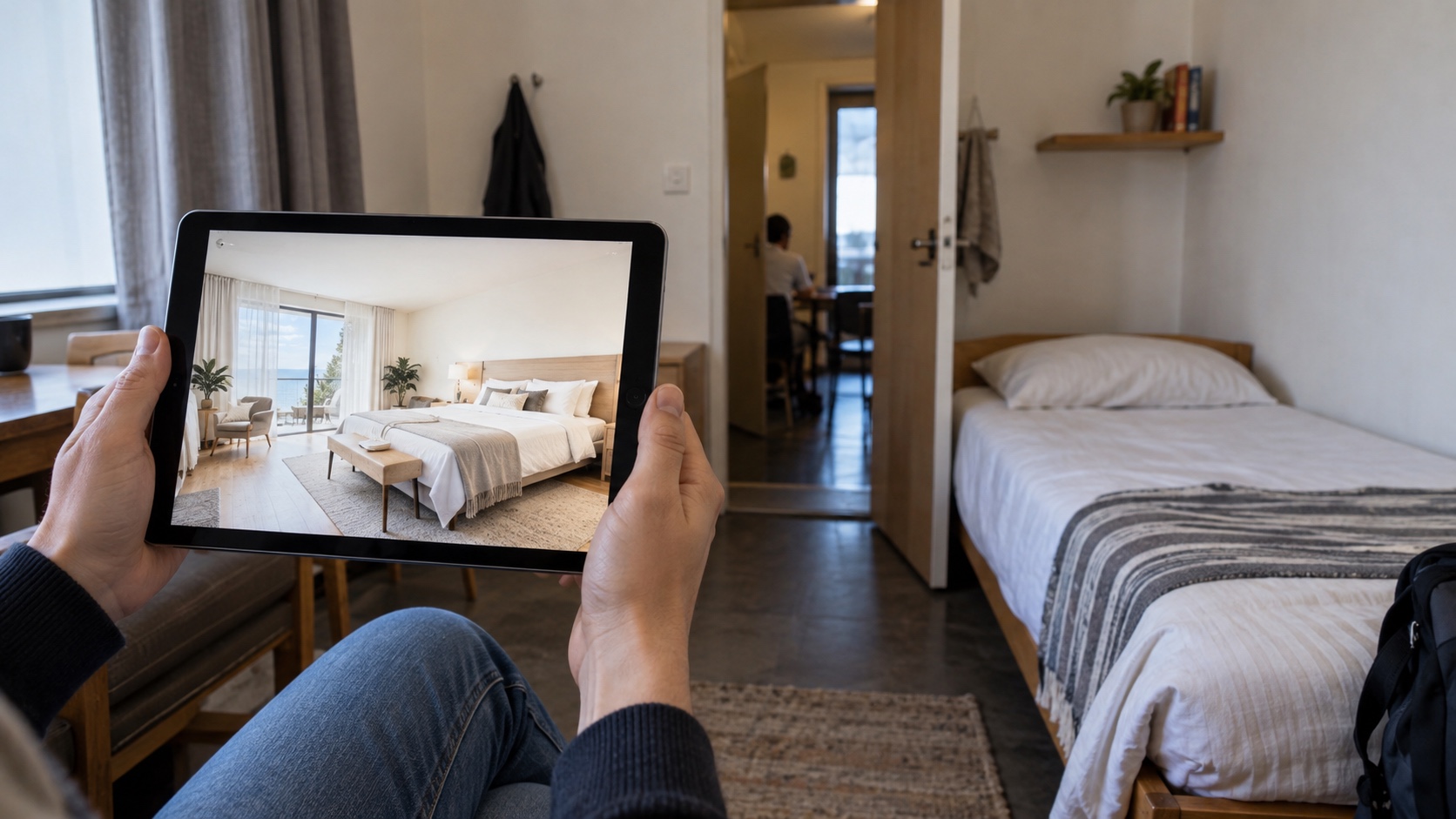
Why it matters: words such as “private,” “entire,” “accessible,” and “waterfront” describe concrete conditions, not a mood. Count the beds and bedrooms, look for every advertised amenity, and check whether wide-angle photos avoid showing entrances, bathrooms, windows, or the view. A gallery made mostly of neighborhood attractions tells you little about the accommodation.
Airbnb says hosts must use photos and descriptions that accurately represent the booked space; digitally hiding damage or adding amenities that are not present violates its listing-accuracy rules. Airbnb's location-verification badge, where available, helps confirm that a property is real and at the stated location, but does not verify every description or amenity. Ask about any contradiction before booking and save the answer in the message thread.
6. The total price makes no sense
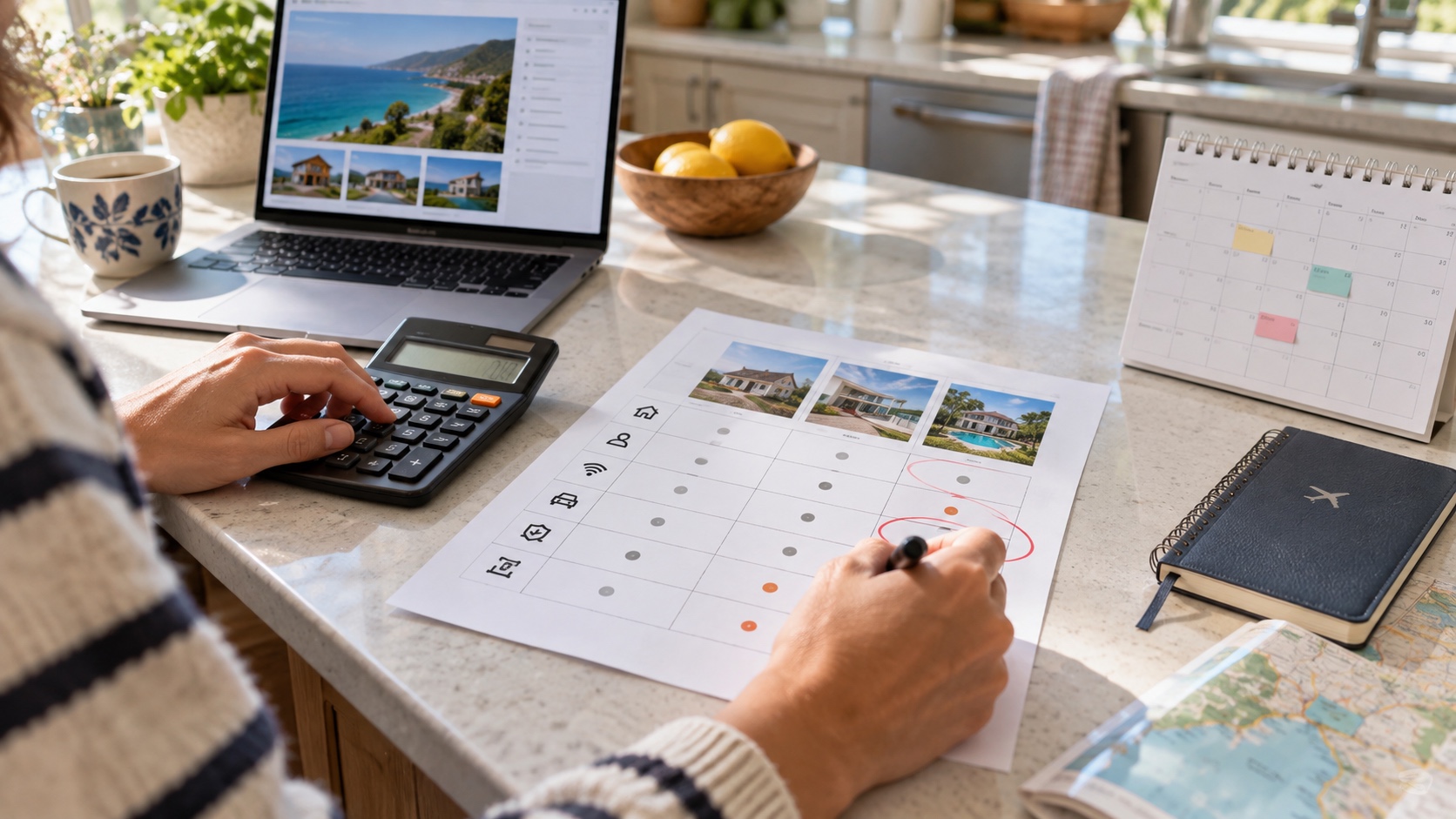
Why it matters: an unusually low price can be legitimate—a new listing, off-season dates, a less convenient location, or fewer amenities—but it deserves a like-for-like comparison. Enter the exact dates and guest count, then compare the total price, cancellation terms, space type, location, rating history, and must-have amenities with several nearby listings. Airbnb's search filters use total price excluding taxes for the price range.
The warning becomes serious when the advertised bargain depends on an undisclosed mandatory charge or a different payment channel. Airbnb says mandatory charges generally belong in the checkout price breakdown, with limited exceptions for disclosed taxes, hotels, and select software-connected hosts. The FTC also warns that a rental priced far below comparable properties can be a scam signal, especially when paired with pressure or irreversible payment.
5. The listing contradicts itself
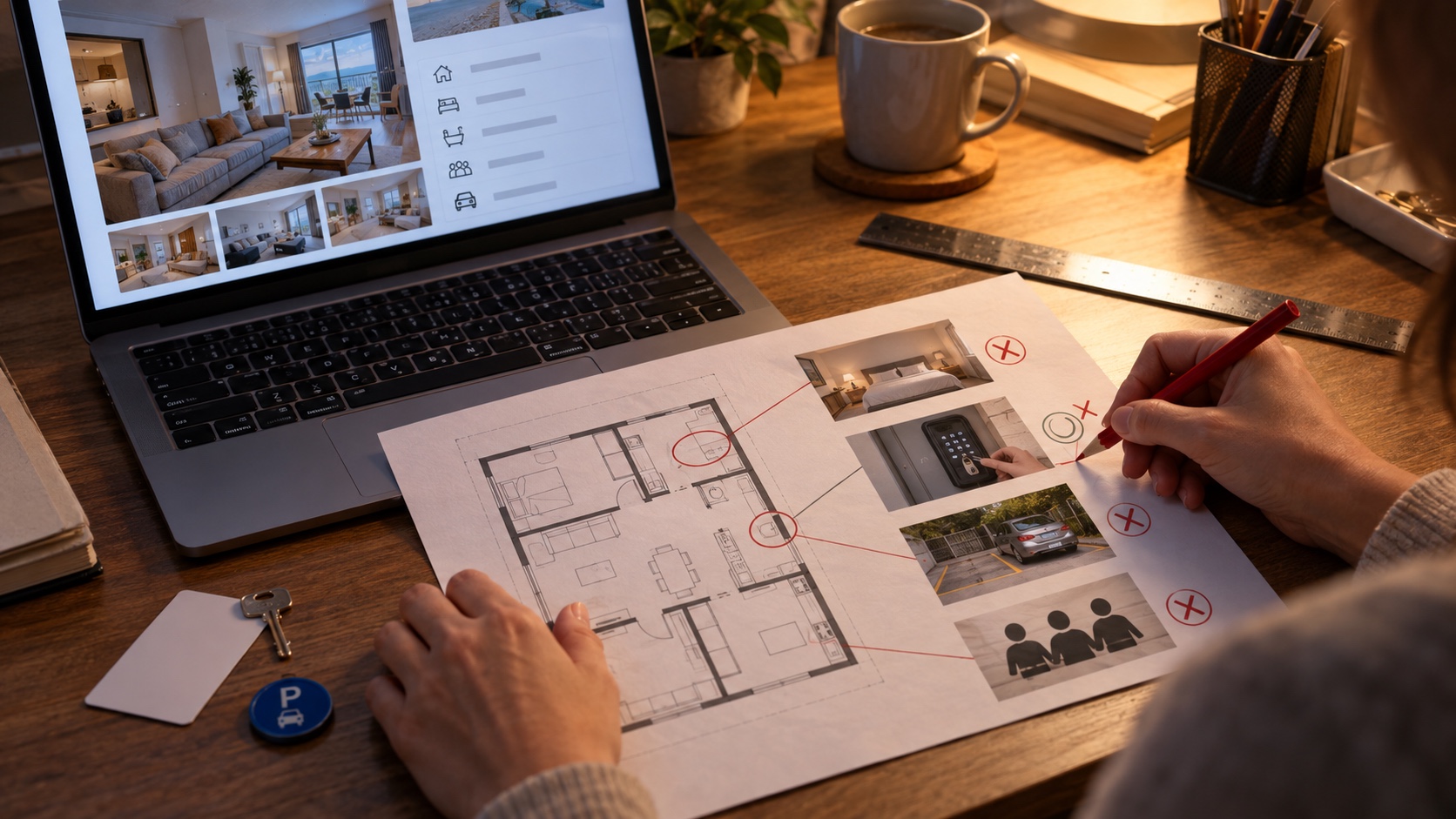
Why it matters: a typo is not evidence of fraud, and imperfect English says nothing about a host's honesty. Focus on contradictions that affect the stay: two bedrooms in one field and one in another, self check-in paired with key pickup, free parking that later requires payment, or house rules that conflict with the advertised guest count.
Send one message listing the discrepancies and ask the host to confirm the correct terms. Stop if the explanation introduces a different property, asks you to ignore the Airbnb page, or sends you to an unfamiliar link. Airbnb invites guests to report listings with misleading photos or content, fake accommodation, scams, or phishing attempts.
4. Local registration is unclear where one is required
Why it matters: short-term-rental rules vary by country, state, province, and city. Some places require a permit or registration number; others do not. Airbnb specifically says the absence of a registration number is not proof of noncompliance because not every city requires one, and a listing may also be marked pending or exempt.
If the destination has a public short-term-rental portal, use the responsible government page—not a number pasted into a message—to understand what must be displayed and whether the listing can be checked. Do not assume a registration field is an invitation to contact the host elsewhere: Airbnb's guest guidance on license fields warns that contact details placed there can be an attempt to move a booking off-platform. This is general due diligence, not legal advice.
3. You have not compared it with a realistic shortlist
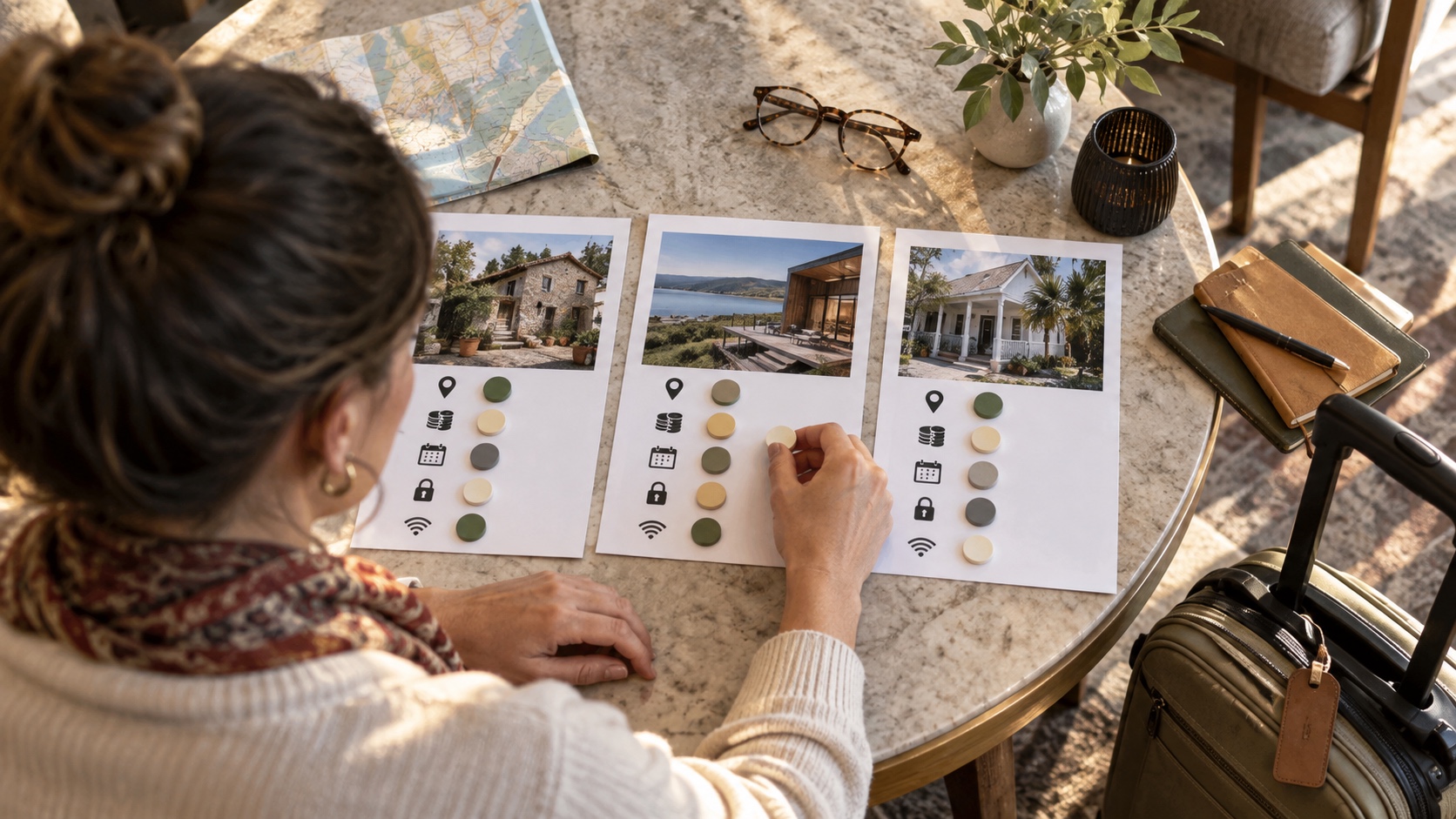
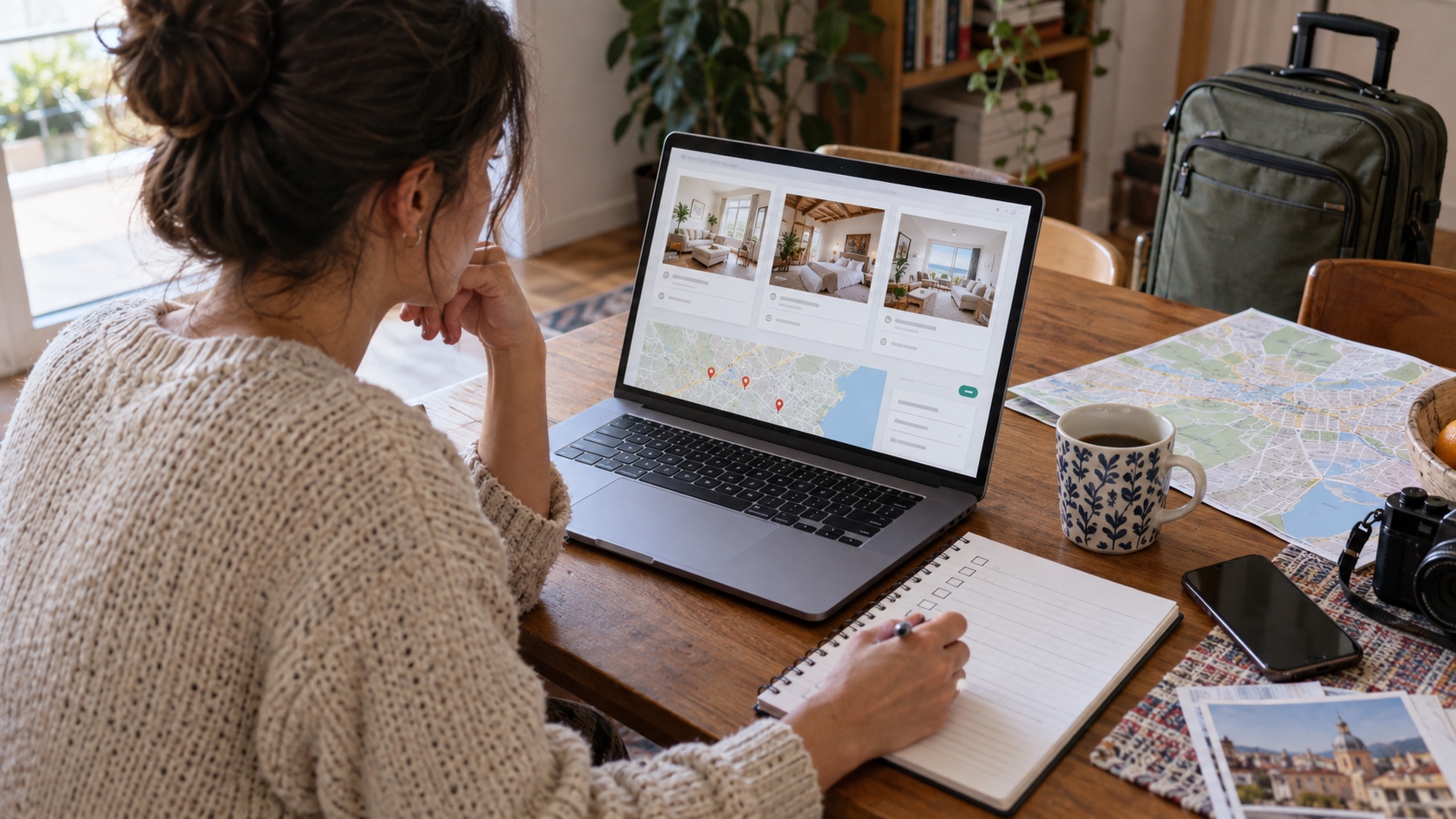
Why it matters: the first attractive result gives you no baseline. A three-listing shortlist makes odd prices, weak photos, restrictive cancellation terms, and missing amenities easier to spot. Use the same dates, guest count, map area, and space type, then compare the total rather than the nightly headline.
Rank your own non-negotiables before the property's decorative features. A light sleeper may care more about disclosed street noise than a styled kitchen; a remote worker may need a specific workspace and a credible answer about connectivity. If privacy is part of the decision, Airbnb prohibits indoor cameras in homes and requires controlled exterior cameras to be disclosed. Our practical hidden-camera checklist explains the limits of device-detection tricks.
2. The host is unresponsive before booking
Why it matters: response time is not a character test, and time zones or a one-off delay happen. It becomes a booking concern when the host ignores a clear, necessary question, gives partial answers over several messages, or responds only after you agree to pay. Airbnb displays a host's response time and response rate on listing pages; hosts must answer new inquiries or reservation requests within 24 hours for those messages to count toward their response rate.
Set a reasonable deadline based on how soon the trip begins. If a host cannot confirm access, accessibility, sleeping arrangements, or a major amenity before payment, book a better-documented option. During a stay, keep messages and photos on the platform: Airbnb's AirCover guide says documented serious problems and an unreachable host may qualify for rebooking help or a full or partial refund, subject to its terms.
1. Several details are too good to be true
Why it matters: the strongest red flag is a cluster: a copied-looking gallery, a price far below comparable homes, urgent pressure, contradictory location details, and a request to pay or communicate elsewhere. Airbnb's policy says pre-booking communication must stay on Airbnb and warns that paying off-platform can remove AirCover protections. Limited exceptions for disclosed hotel charges, taxes, or select software-connected hosts do not turn wire transfers, gift cards, or cryptocurrency into normal Airbnb payment methods.
The FTC's rental-scam guidance says scammers may copy a real listing, replace the contact details, and demand hard-to-recover payment. Airbnb's own payment and communication guidance tells guests to report a host who tries to move the reservation or pre-booking conversation away from the platform. Do not negotiate with the pressure. Leave the page, navigate to Airbnb directly, report the listing or message, and choose another property.
A 60-second check before you reserve
- Confirm the space type, dates, guest count, map area, and total checkout price.
- Read recent reviews for repeated accuracy, cleanliness, access, noise, and communication problems.
- Match the photos to the room count, amenities, privacy level, and written rules.
- Ask unresolved questions in Airbnb messaging and keep the answers there.
- Review cancellation terms and any local registration requirement.
- Never follow an off-platform payment request or an unfamiliar login link.
For a physical privacy check after arrival, see our separate guide to checking a hotel room or rental for hidden cameras. It covers what you can inspect without damaging property and when to contact the platform or local authorities.
Frequently asked questions
Is an Airbnb with no reviews a scam?
No. It may be a new listing. Check the host profile, listing details, price, cancellation terms, communication, and any available location or registration information before deciding.
Should I pay an Airbnb host outside Airbnb?
Not for the reservation. Airbnb prohibits off-platform reservation payments, subject to narrow disclosed exceptions such as certain hotel charges, taxes, and select software-connected hosts. Report an unexpected request instead of sending money.
Does an identity-verified badge guarantee a host or listing is safe?
No. Airbnb says identity verification has safeguards but is not a guarantee. It also says location verification, where shown, confirms a narrower set of facts and does not verify every listing detail.
Does every legal Airbnb need a registration number?
No. Requirements vary by jurisdiction, and some listings may be exempt or pending. Check the destination's official government guidance when registration matters.
Sources and review date
Airbnb policies and guest guidance were reviewed September 22, 2026: reviews for homes, host ground rules and listing accuracy, on-platform payment and communication, license and registration fields, camera restrictions, and AirCover for guests. General rental-scam warnings were checked against the U.S. Federal Trade Commission. Policies, listing details, prices, and local laws can change; verify them for the property and dates you are considering.