
10 Scariest-Looking Spiders and What Makes Them Unusual

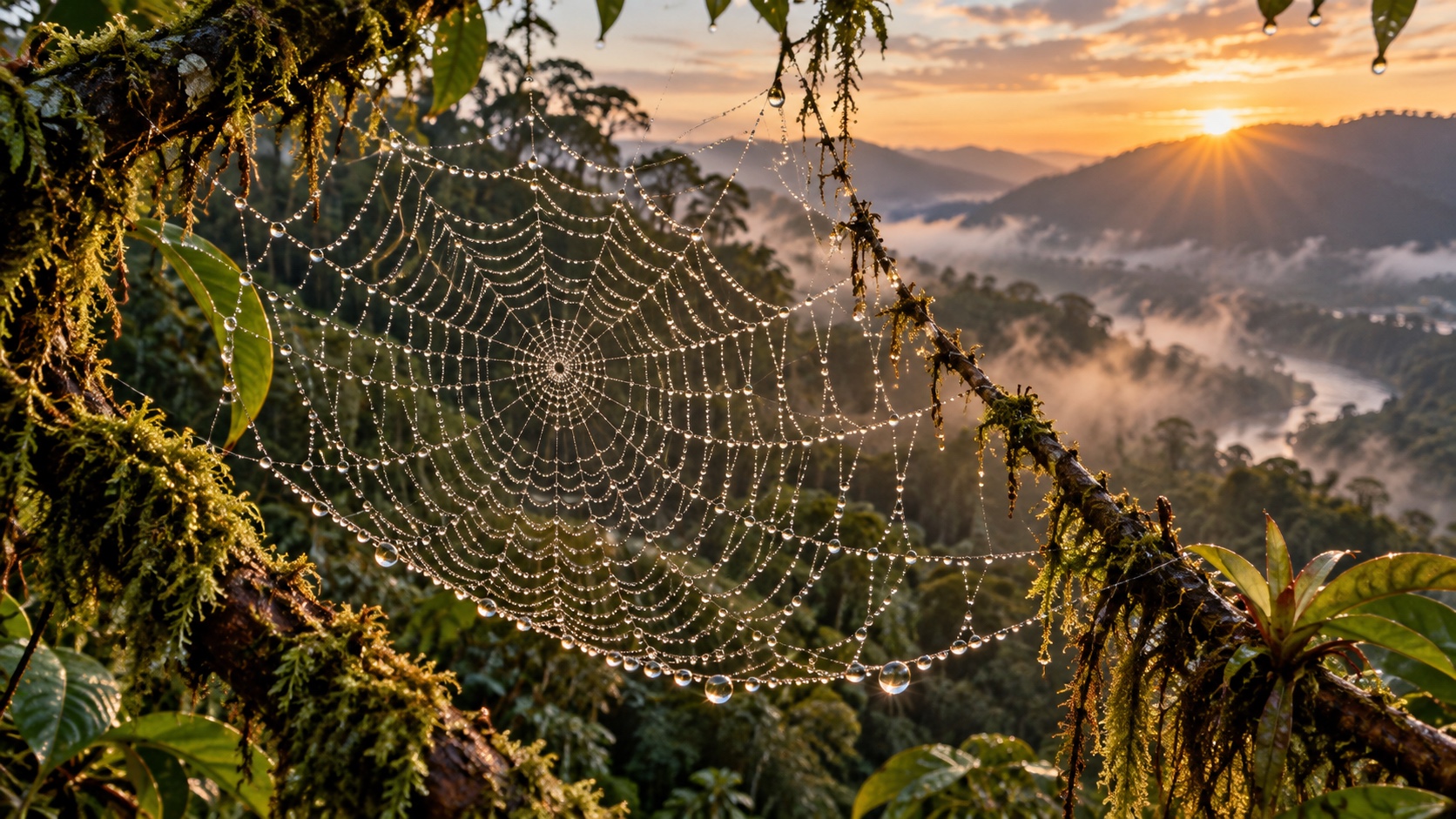
The spiders that look scariest are not always the ones that pose the greatest medical risk. The Goliath birdeater and giant huntsman dominate on size, while the Sydney funnel-web, Brazilian wandering spider, southern black widow, and brown recluse deserve more caution because their venom can cause serious illness. This ranking weighs four visible factors—size, defensive display, camouflage, and markings—then labels medical risk separately.
Scary-looking is not the same as dangerous
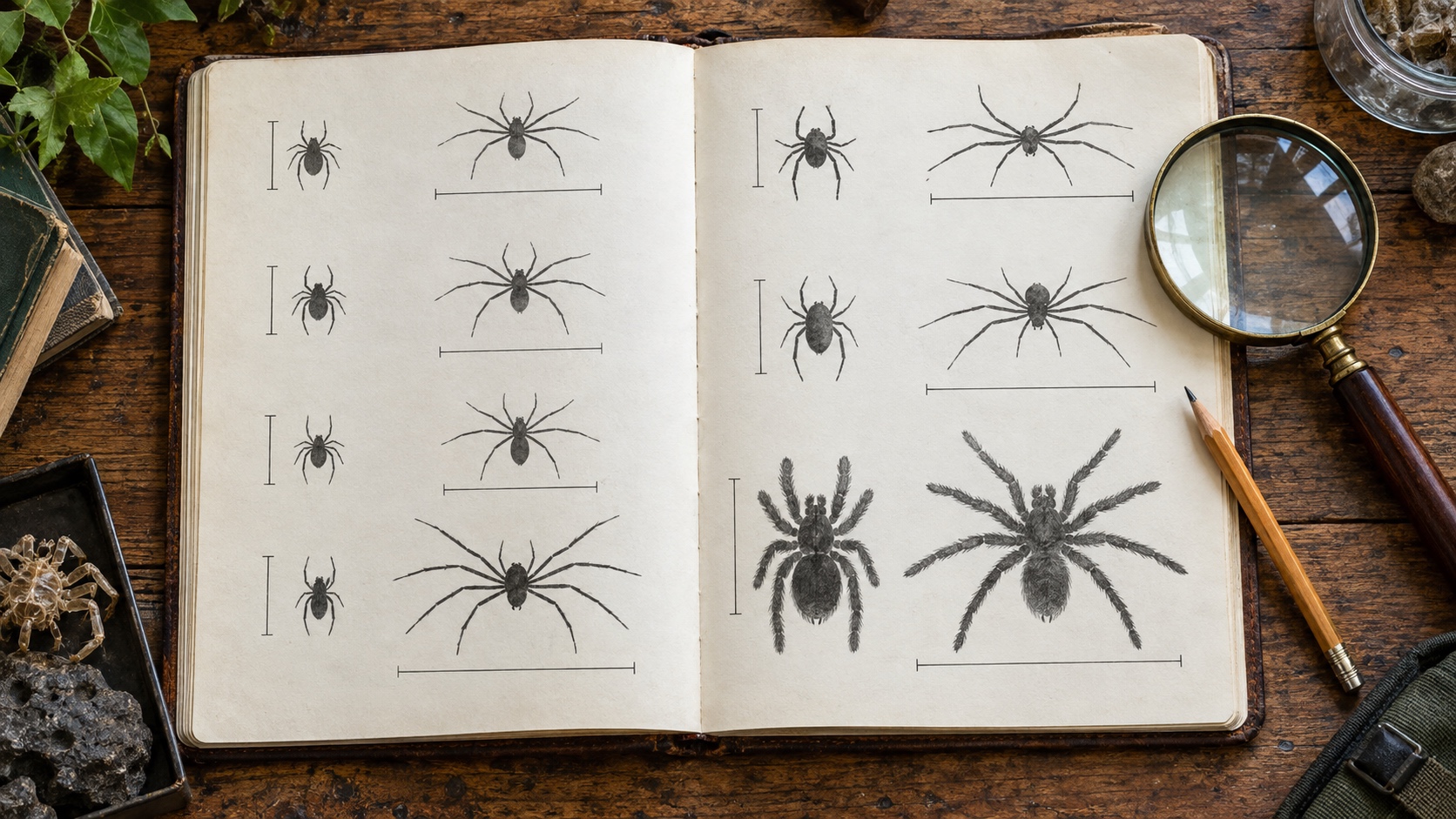
“Scariest” is an editorial judgment, not a scientific measurement. We ranked the species below by the effect of seeing one at close range: apparent size, body shape, speed or posture, and how effectively it disappears into its habitat. The medical notes use a different scale. A frightening spider may be reluctant to bite and cause only local effects, while a smaller species may have medically important venom.
Sizes are approximate adult maxima or published ranges, not what every individual reaches. A suspected bite should be assessed by a medical or poison-control professional; photographs and skin symptoms alone are unreliable ways to identify the species.
1. Goliath birdeater
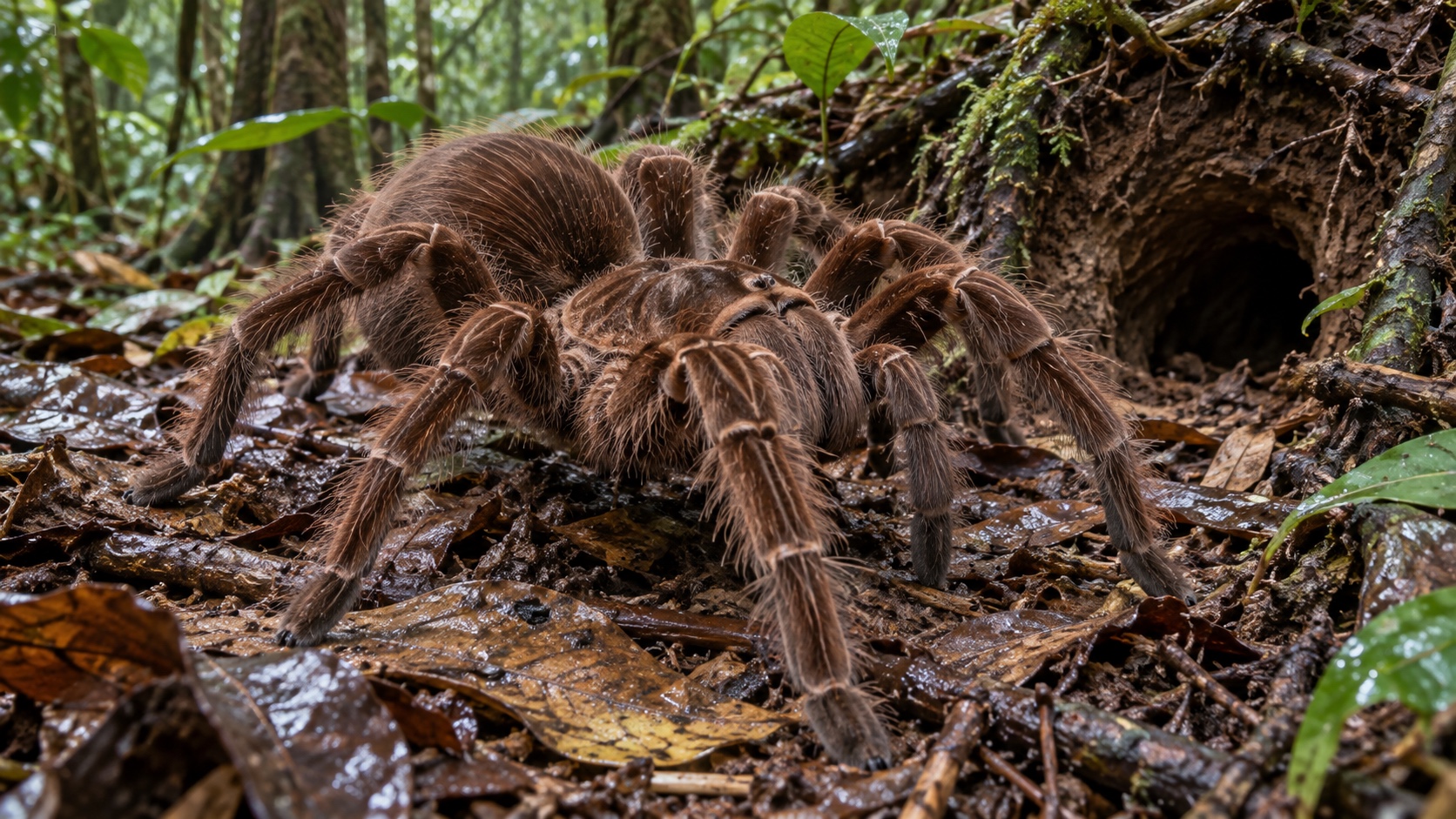
Theraphosa blondi · northern South America · body up to 12 cm (4.75 in), leg span up to 28 cm (11 in). The world's biggest tarantula by body size earns the top visual rank through mass, heavy fangs, and a defensive hiss produced by rubbing bristles together. It can also release irritating abdominal hairs. Smithsonian's National Zoo notes that birds are not its usual food despite the name. Its bite is painful, but the intimidating scale is the main reason it leads this list; it is not grouped with the medically dangerous species below.
2. Giant huntsman spider
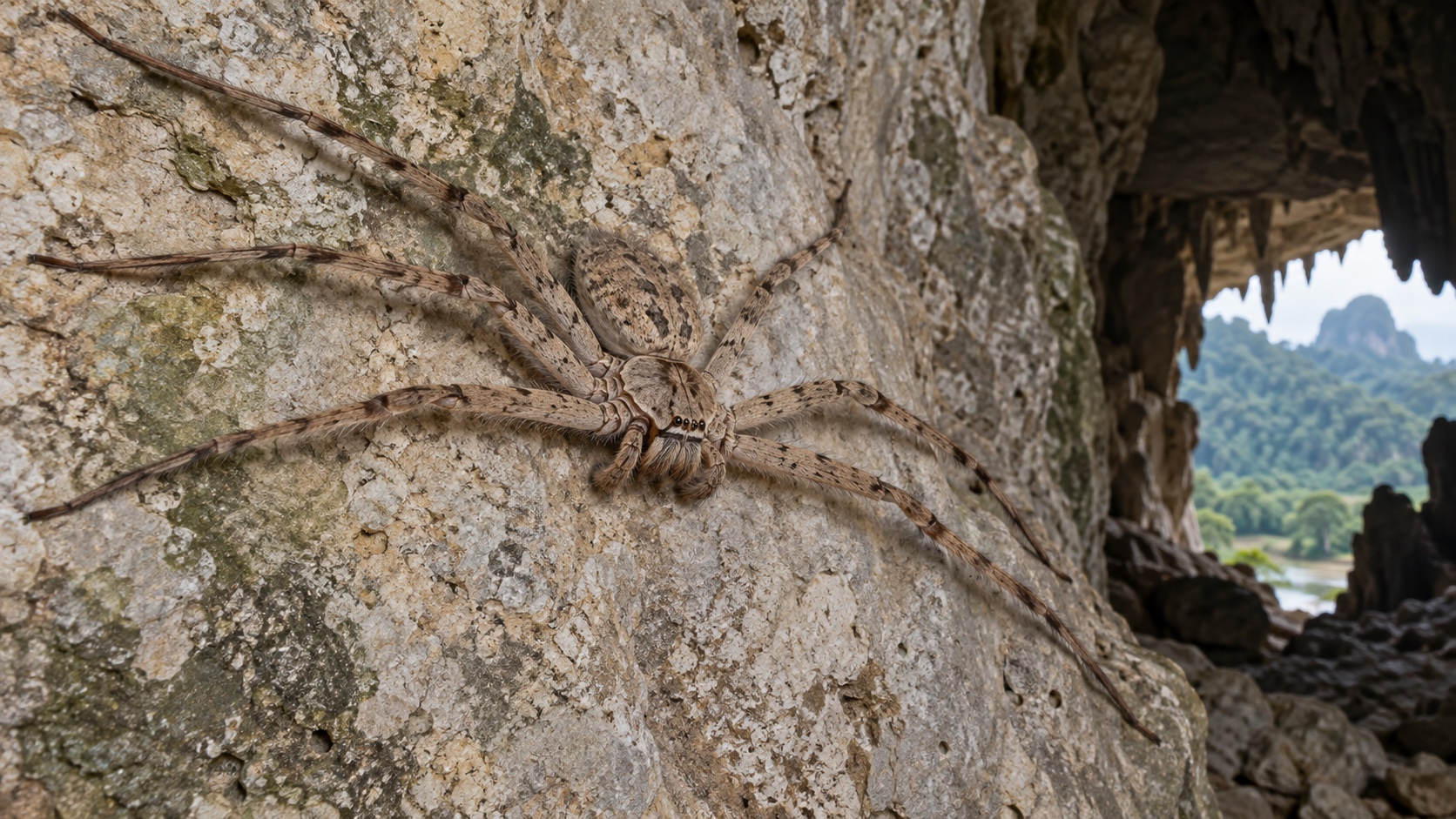
Heteropoda maxima · Laos · body over 4.6 cm (1.8 in), leg span about 25–30 cm (10–12 in). This is the record-holder for leg span. Its sideways-set legs create a dinner-plate silhouette, and the original species description links its long, pale limbs to cave life. Huntsman spiders chase prey instead of trapping it in an orb web, which adds speed to the surprise. Their size is easy to confuse with danger: the family is not generally considered medically dangerous, and avoidance is still the sensible response.
3. Brazilian wandering spider
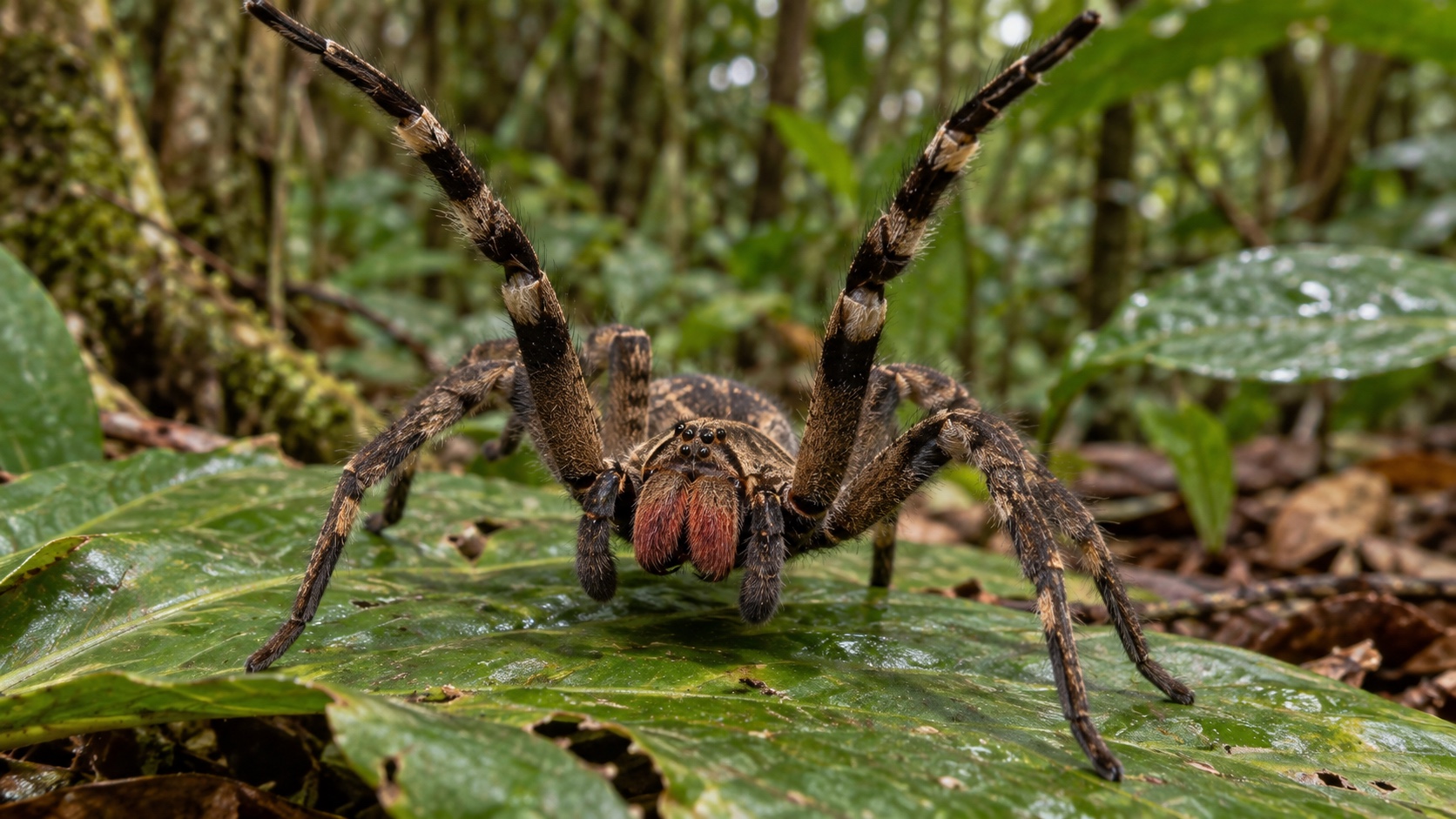
Phoneutria nigriventer · southern and southeastern Brazil into neighboring South America · body roughly 3–5 cm (1.2–2 in), leg span commonly around 10–15 cm (4–6 in). A raised front end, exposed reddish chelicerae, and roaming nocturnal behavior make this species look ready for a fight. Brazilian health guidance treats Phoneutria as medically important, but a defensive display is a warning, not proof that the spider is pursuing a person. Give it space and seek urgent medical advice after a suspected bite.
4. Sydney funnel-web spider
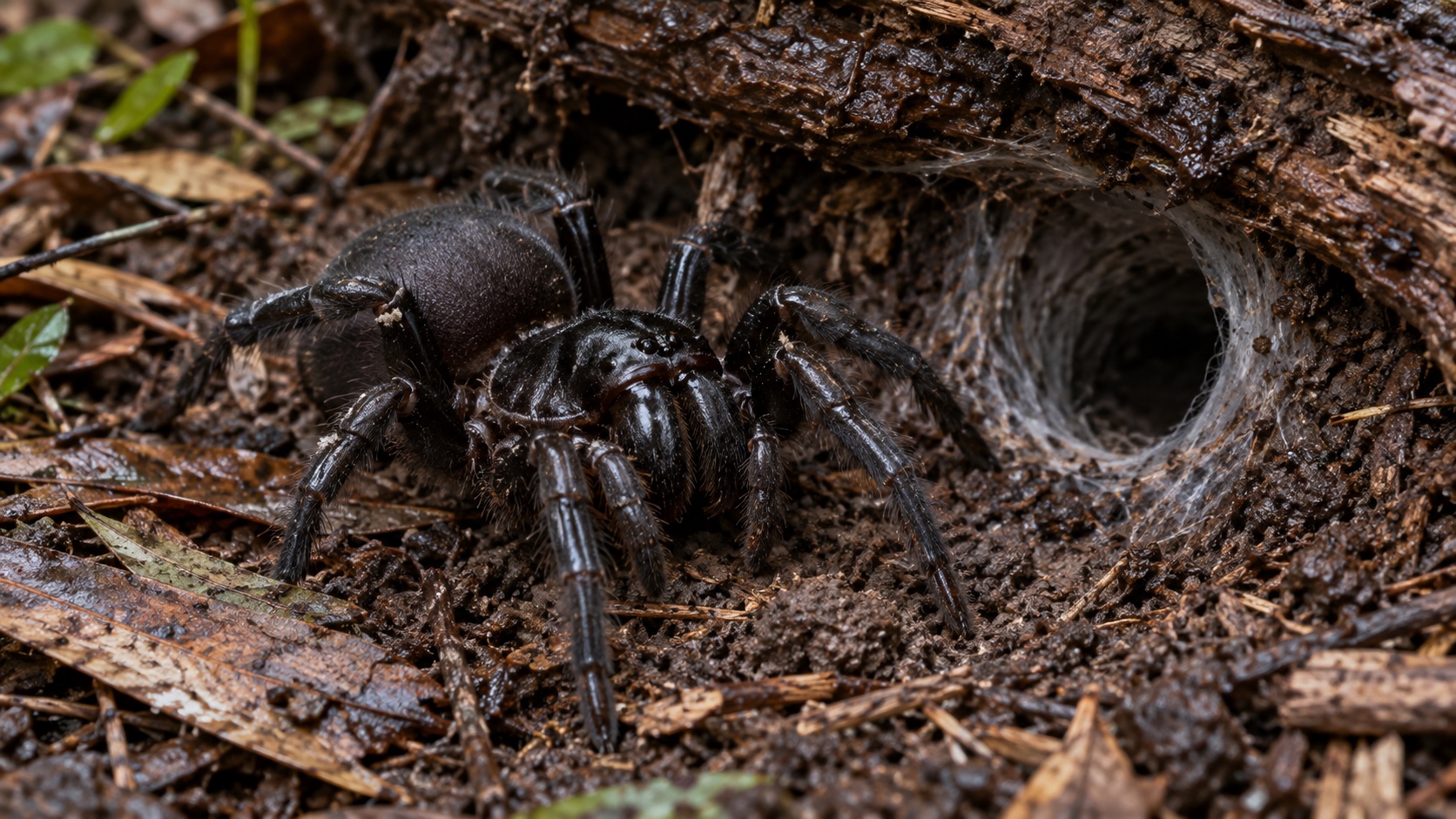
Atrax robustus · Greater Sydney and nearby New South Wales · body roughly 1–5 cm (0.4–2 in). The glossy black carapace, thick downward-pointing fangs, and threat posture are genuinely formidable. This is also one of the entries where appearance and medical risk align: severe envenomation is an emergency. The Australian Museum reports no recorded deaths since effective antivenom became available in 1981. That success argues for fast treatment, not complacency; suspected bites require pressure immobilization and emergency care.
5. Six-eyed sand spider
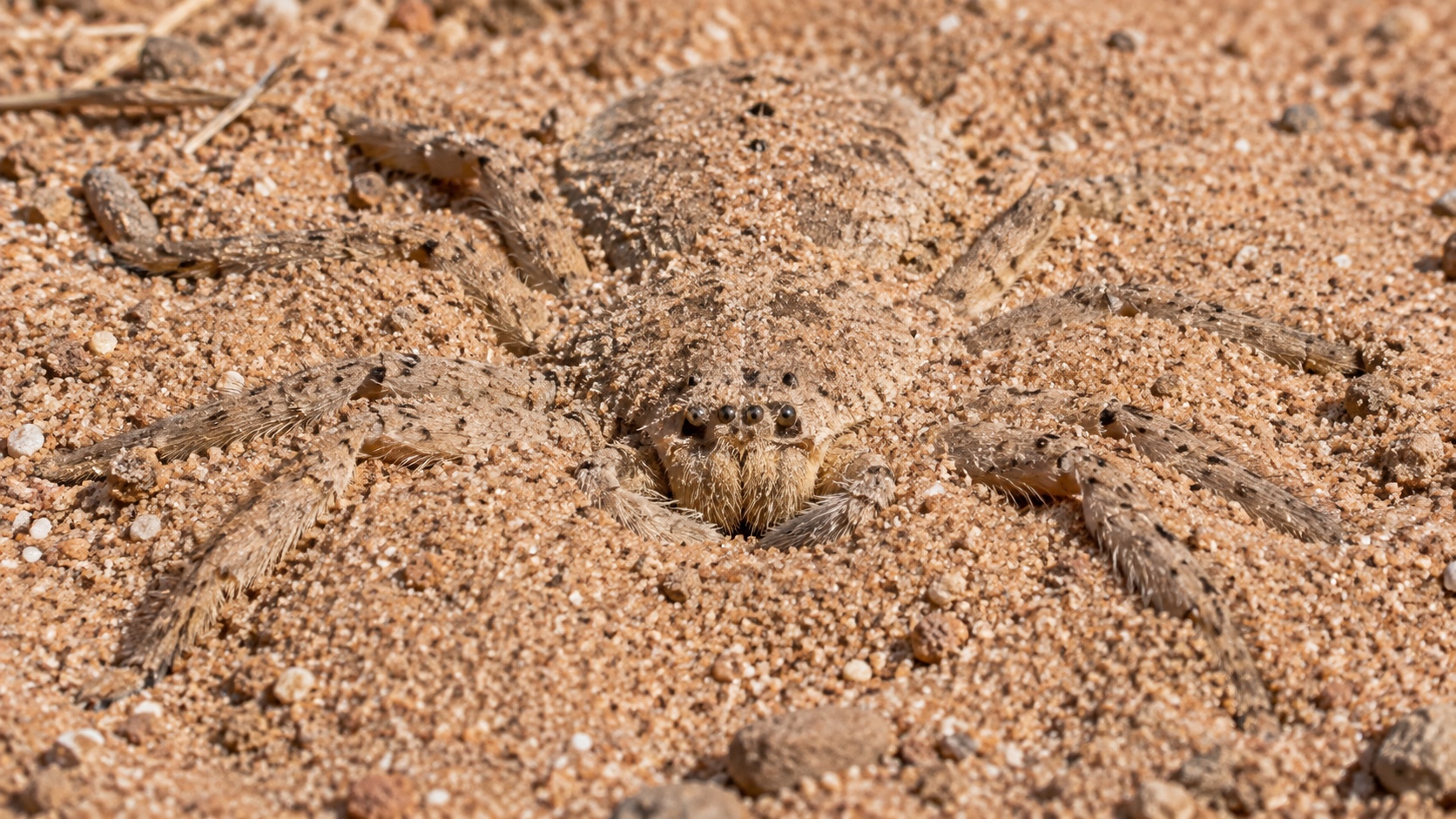
Hexophthalma hahni · arid southern Africa · body about 1–2 cm (0.4–0.8 in), with legs extending the silhouette. Its flat body gathers sand, turning the spider into a nearly invisible ambush predator. Laboratory work has identified venom components associated with tissue-damaging effects, but detailed effects in people remain poorly documented because verified bites are exceptionally rare. That gap matters: it is reasonable to treat the spider cautiously, but not to repeat internet claims that every bite causes amputation or death.
6. Southern black widow
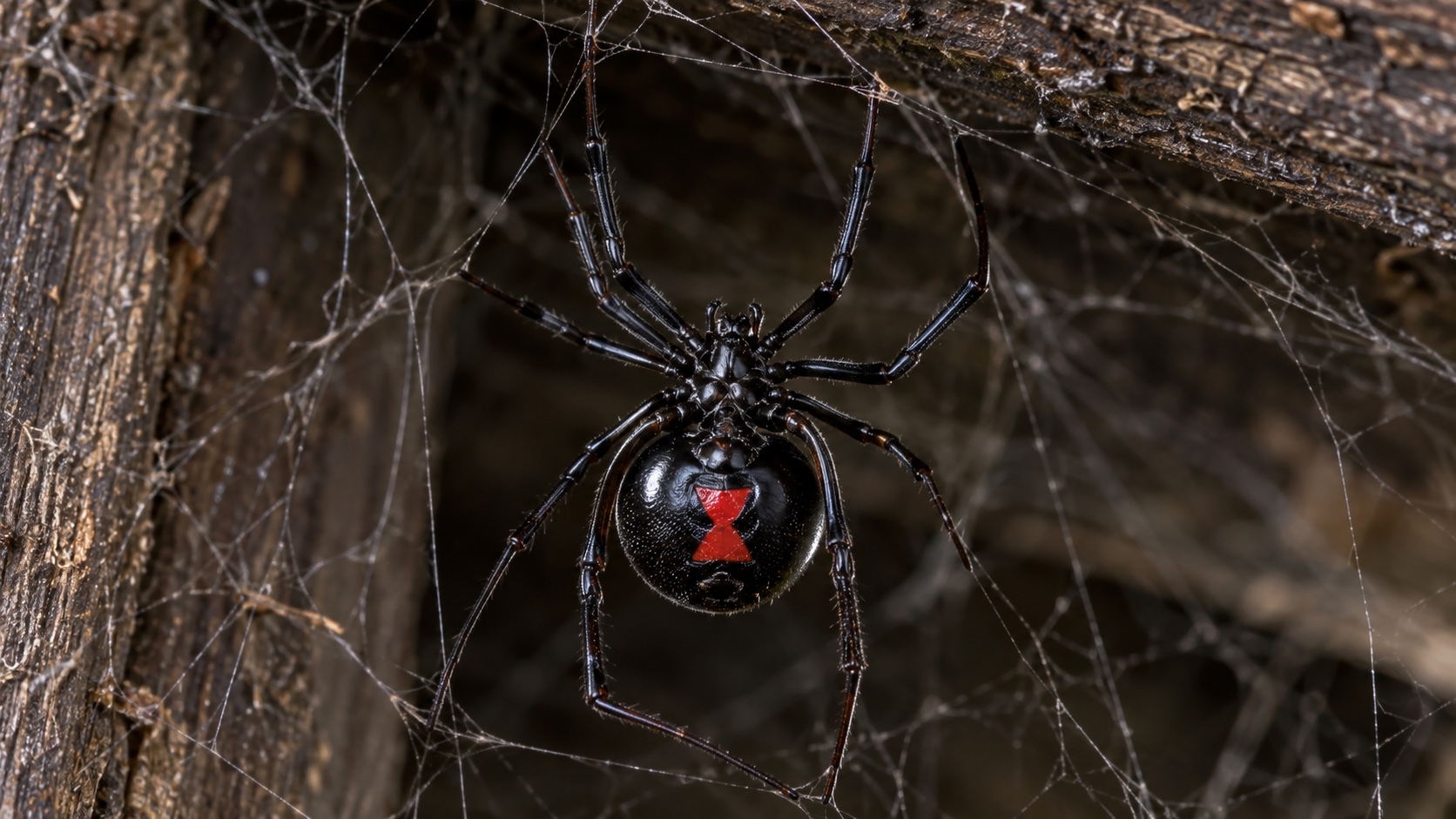
Latrodectus mactans · eastern and southern United States · female leg span about 3.8 cm (1.5 in). The polished black abdomen and red hourglass make this one of the world's most recognizable warning patterns. The female usually remains in an irregular web and is not aggressive unless confined or disturbed, especially near an egg sac. Venom can cause severe pain, cramping, and whole-body symptoms, yet fatalities are rare. The sensible response is medical evaluation, not a claim that any dark cobweb spider is a widow.
7. Brown recluse
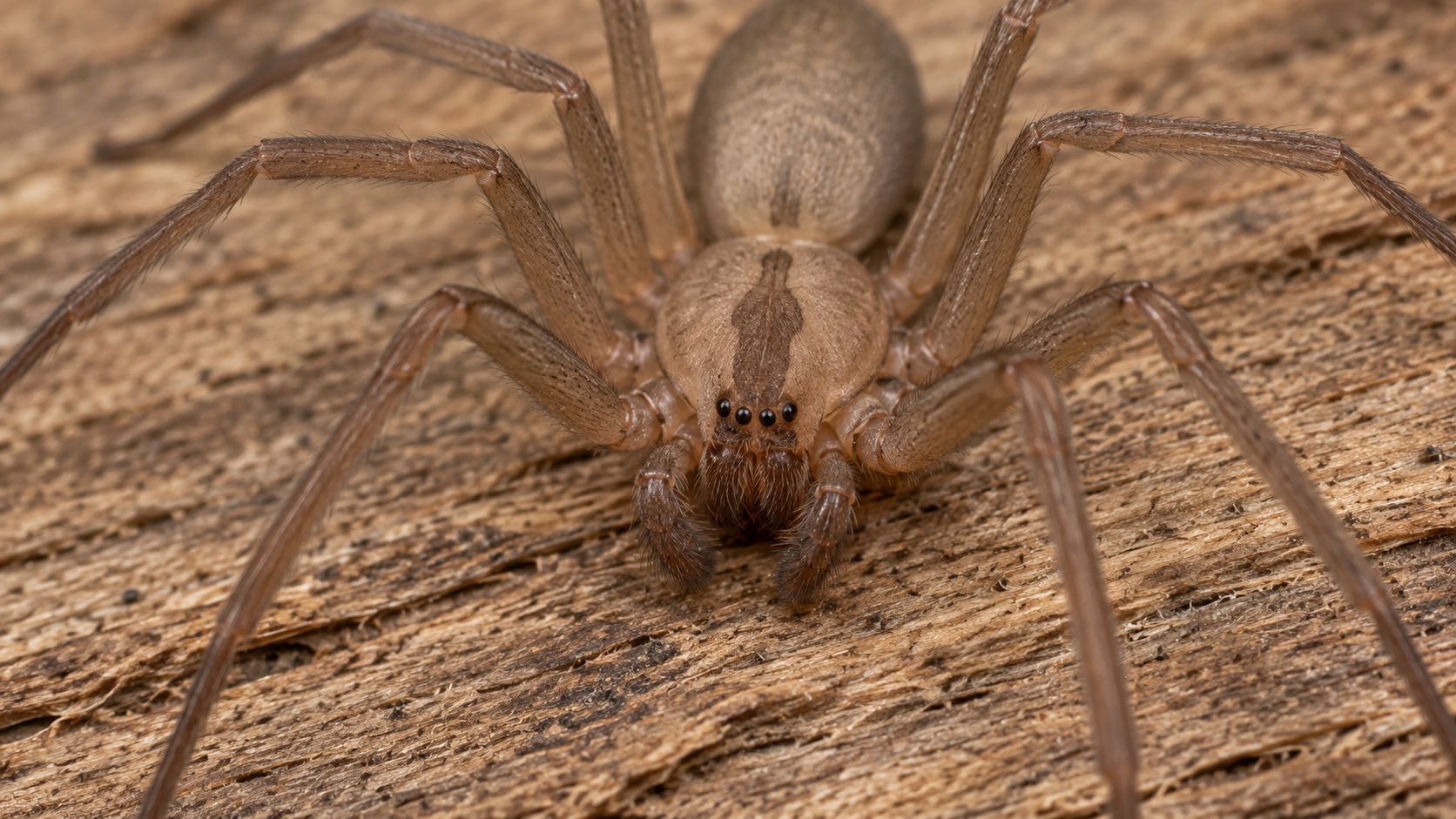
Loxosceles reclusa · central and southeastern United States · body about 7–12 mm (0.3–0.5 in). This is the least visually dramatic spider near the top of the medical-risk group. Its six eyes appear in three pairs, and a dark violin-shaped mark may be visible on the cephalothorax, but those features require expert identification. Most bites happen when a hidden spider is pressed against skin. Some produce tissue injury or systemic illness; many alleged recluse bites are never confirmed, so diagnosis should not rest on a skin lesion alone.
8. Red-headed mouse spider
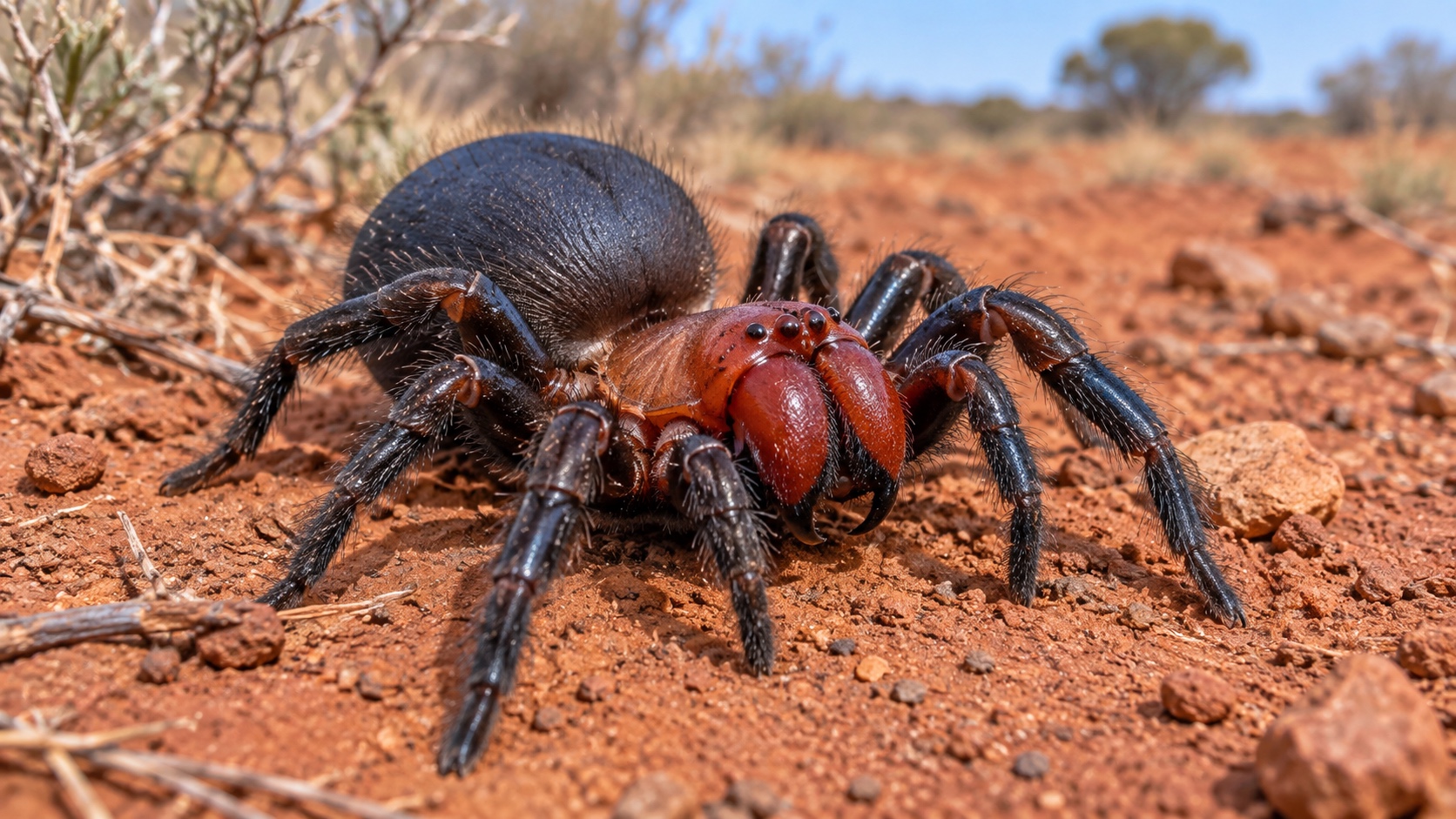
Missulena occatoria · much of mainland Australia · mouse-spider body range about 1–3.5 cm (0.4–1.4 in). The male's scarlet head and jaws against a gunmetal abdomen create a bold, armored look. Mouse spiders are often confused with funnel-webs. Australian Museum guidance says serious bites are uncommon, although the venom can produce funnel-web-like effects and funnel-web antivenom has worked in severe cases. That combination—rare encounters but meaningful potential risk—calls for pressure immobilization and urgent care after a suspected bite.
9. Redback spider
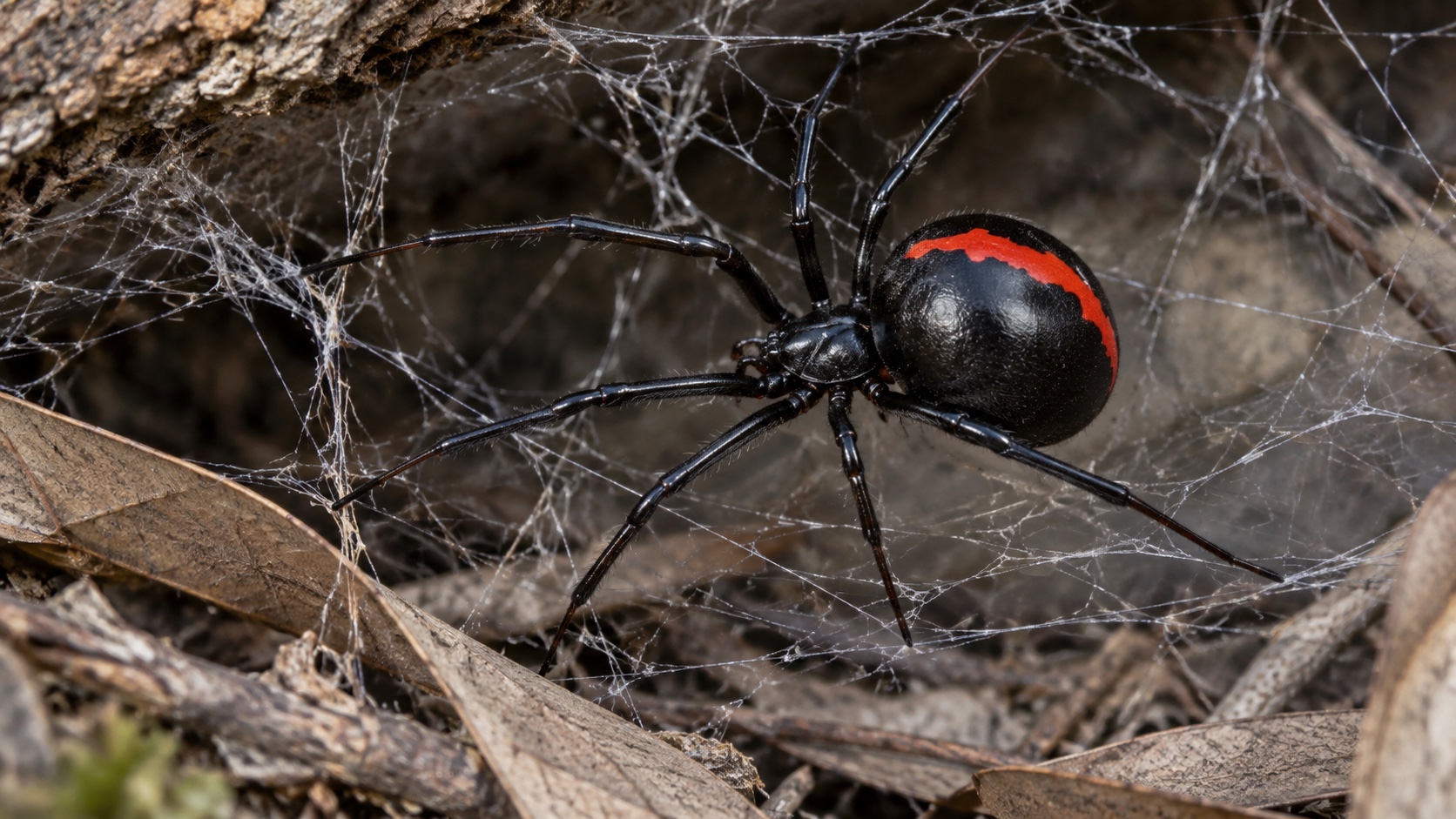
Latrodectus hasselti · throughout Australia and introduced elsewhere · female body about 1 cm (0.4 in), with slender legs around it. The red dorsal stripe interrupts an otherwise glossy black body, making the small spider look deliberately marked. Like other widows, it can cause intense pain and systemic symptoms. It is defensive rather than a hunter of people. Australian first-aid guidance specifically says not to use pressure immobilization for redback bites because pressure can worsen pain; apply a cold pack and seek medical attention.
10. Carolina wolf spider
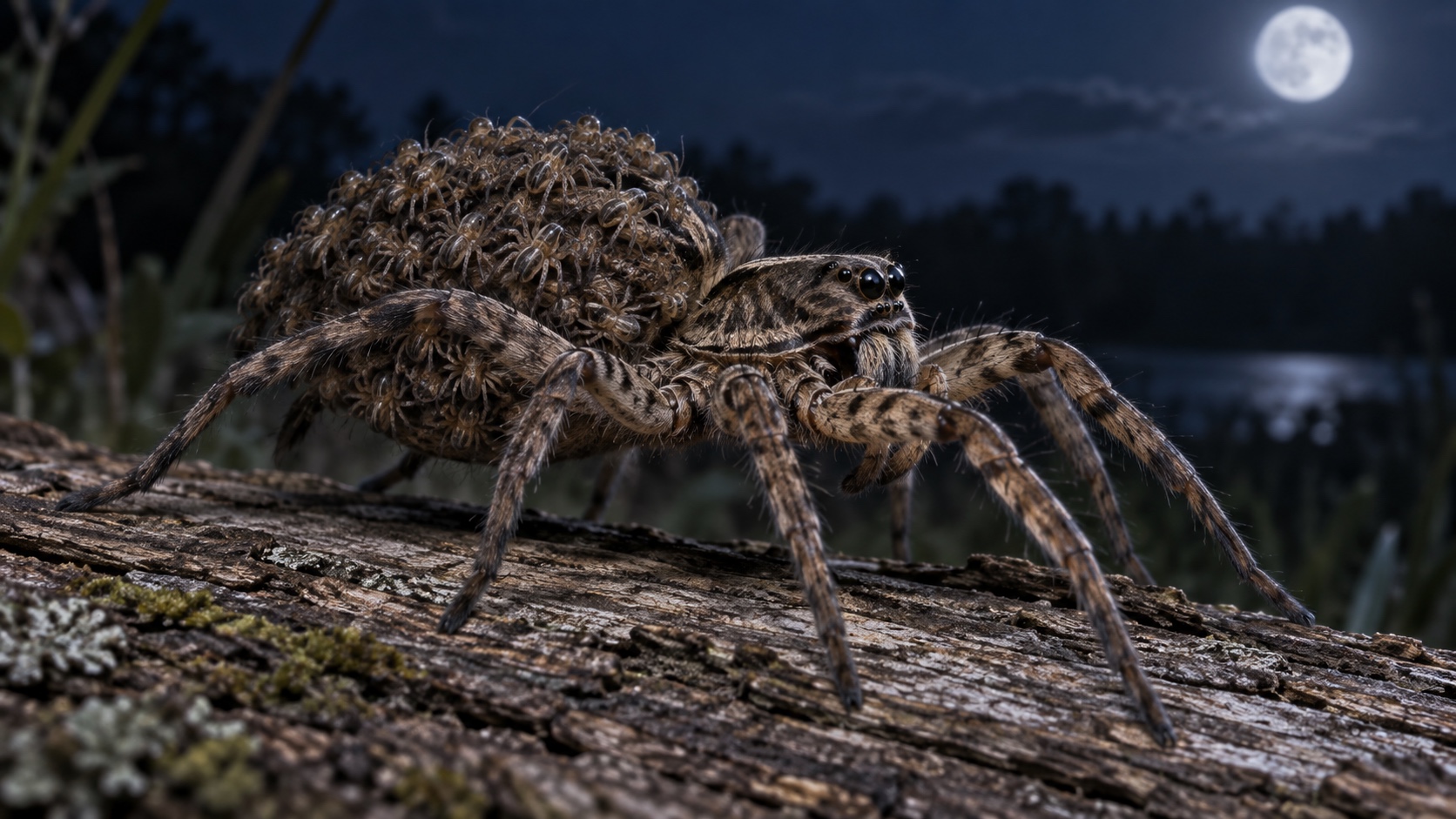
Hogna carolinensis · much of the United States and parts of North America · body up to roughly 3.5 cm (1.4 in). Large forward-facing eyes, a ground-hunting build, and dozens of young riding on a female's abdomen can look like a creature-feature effect. The biology is more useful than frightening: wolf spiders hunt insects without prey-catching webs. University extension guidance does not consider wolf spiders hazardous to people. This final position is almost entirely about appearance and behavior, not venom toxicity.
What the ranking tells us
The two biggest silhouettes—Goliath birdeater and giant huntsman—are not the species that demand the fastest medical response. The Sydney funnel-web and Brazilian wandering spider combine a frightening display with medically important venom, while the widow, recluse, mouse spider, and redback show why smaller animals can matter more clinically. The most reliable rule is simple: do not handle an unknown spider, and do not turn size alone into a danger score.
Frequently asked questions
What is the scariest spider in the world?
By visible size and defensive display, the Goliath birdeater is our pick. “Scariest” is subjective, though; the Sydney funnel-web and Brazilian wandering spider are more medically concerning.
What is the biggest spider in the world?
The Goliath birdeater is the biggest by body mass and bulk, while the giant huntsman holds the record for leg span at about 30 cm.
Are huntsman spiders dangerous to humans?
Huntsman spiders can bite, but museums do not classify the family as medically dangerous. Their speed and wide leg span create more alarm than their venom warrants.
What should you do after a suspected dangerous spider bite?
Move away from the spider, keep the person calm, and contact emergency or poison-control services. First aid differs by species: pressure immobilization is recommended for suspected Australian funnel-web or mouse-spider bites, but not for redback bites.
Sources and review date
Reviewed September 21, 2026. Taxonomy, size, range, and medical-risk distinctions were checked against the Smithsonian's National Zoo, the original Heteropoda maxima description, the Australian Museum's spider facts, its pages on mouse spiders and bite first aid, the Brazilian Ministry of Health venomous-animal guide, Oklahoma State University Extension, and the University of Florida brown-recluse profile.