10 Domino’s Pizza Secrets—Fact-Checked

The most useful Domino’s “secrets” are not employee gossip. They are the corrections hiding behind familiar stories: there is no credible evidence that workers deliberately ruin orders for free food, the famous U.S. 30-minute guarantee ended in 1993, and the 2017 Ford vehicle was a research test with a safety engineer—not a driverless delivery fleet.
This countdown is ranked by how much each correction changes the story, then by how clearly it can be verified in a current primary source. Company history and product claims come from Domino’s own records, while scale and digital-sales figures come from its fiscal 2025 annual report. Those sources can describe what the company did and what it reports today; they do not turn a marketing claim into an independent verdict on food quality.
10. A wrong order is not evidence of an intentional trick
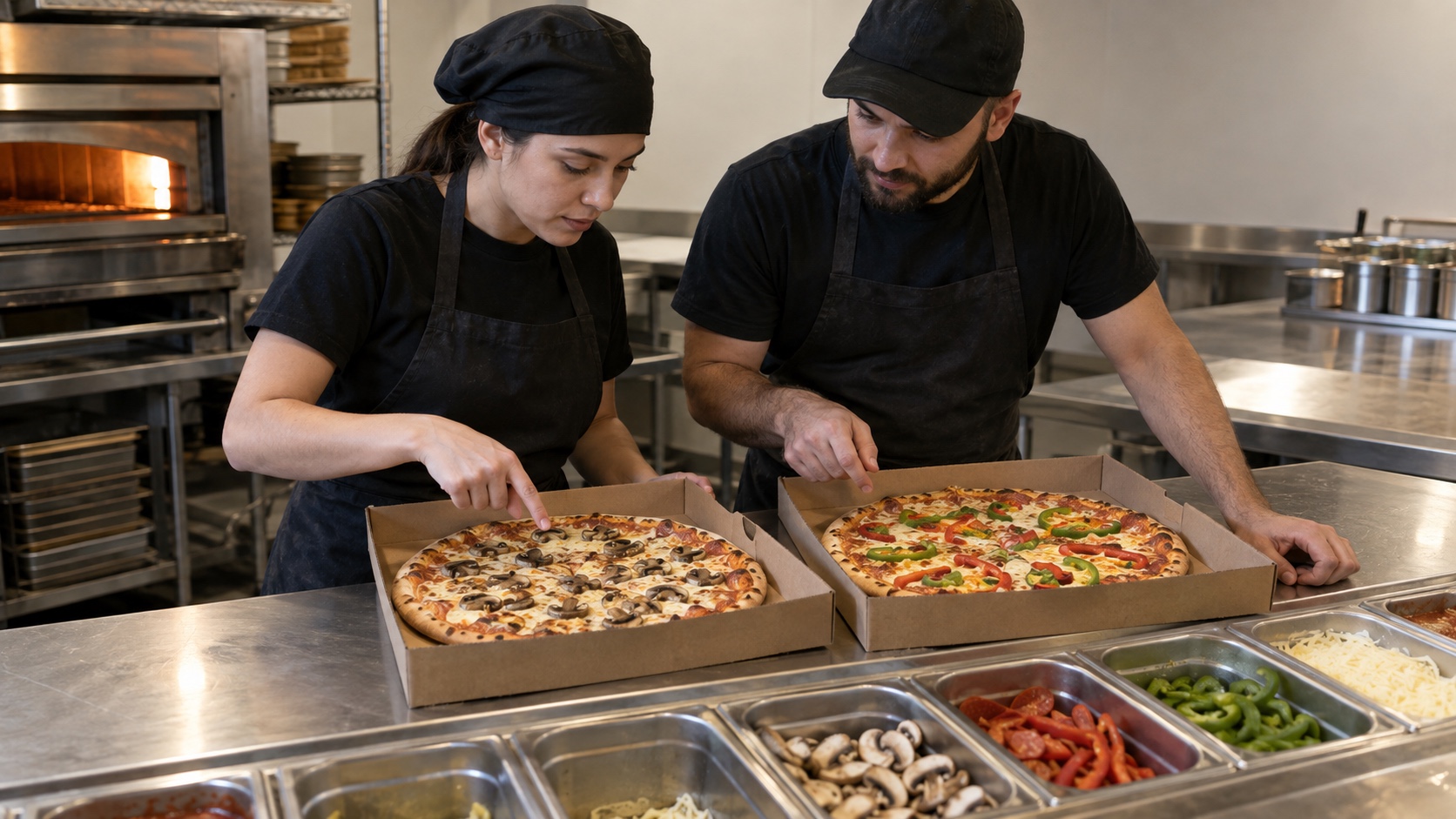
The old version claimed that workers sometimes spoiled orders on purpose so they could take the rejected food home. Its support was a recycled personal anecdote, not a Domino’s policy, audit, court record, or representative study. That is not enough evidence to accuse employees across a mostly franchised system of deliberate misconduct.
Domino’s current customer-support page says it cares about product and service quality and provides channels for complaints, but it does not prove that every store handles a mistake identically. The honest conclusion is narrower: mistakes happen, and one former worker’s story cannot establish a chain-wide practice. If an order is wrong, document the problem and contact the store or Domino’s customer support instead of treating the error as proof of a scheme.
9. Digital ordering does create a customer data trail
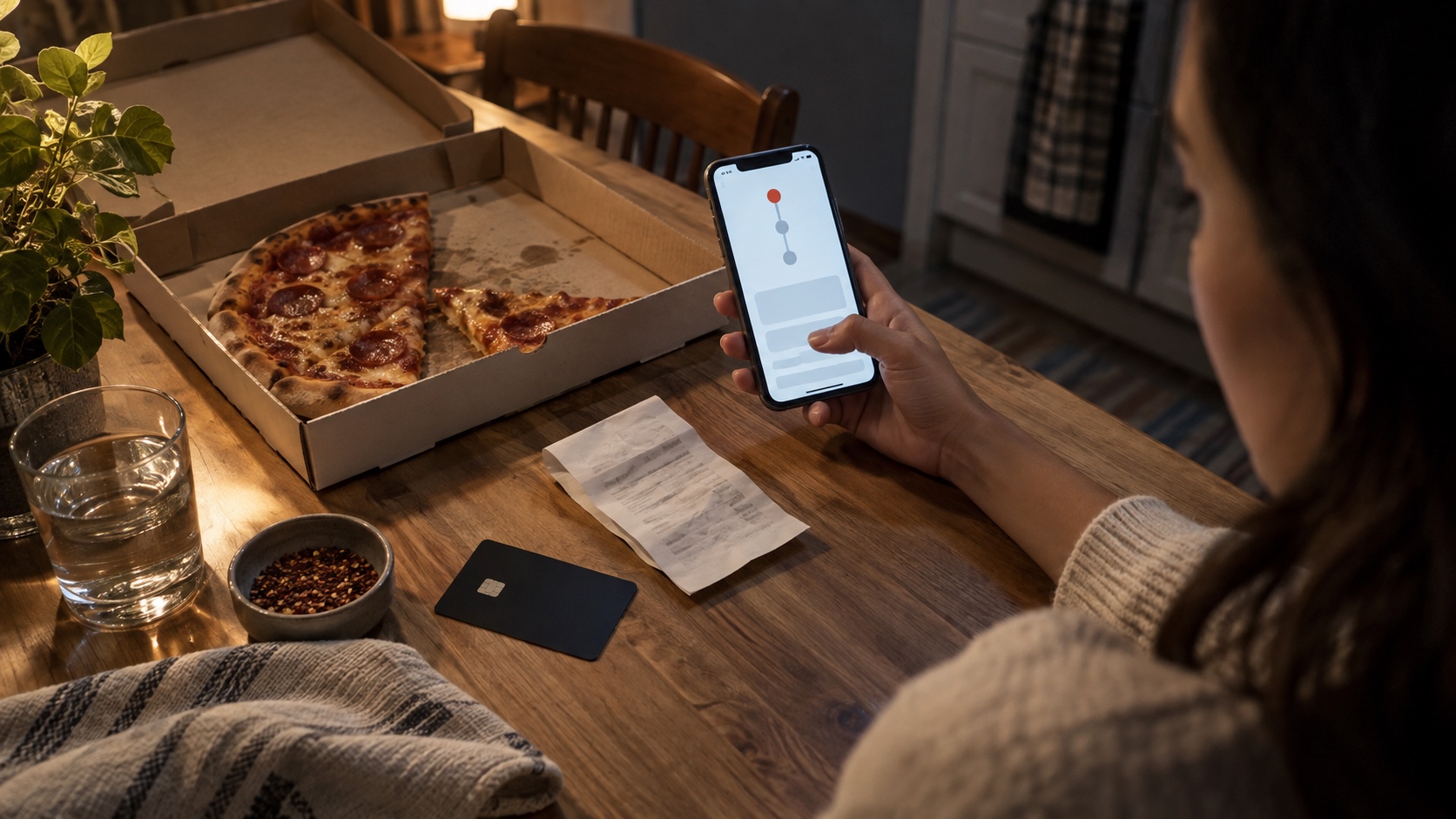
The lurid claim that store employees keep secret behavioral notes about every customer is not supported by a current primary source. What Domino’s does disclose is more specific. Its U.S. Privacy Policy, effective August 2026, says the company can collect contact identifiers, order details and coupons, profile favorites, device information, browsing activity, and approximate location. It also says order tracking may use contact information and that franchisees are separate entities whose own policies may apply.
That matters because the business is now heavily digital. Domino’s reports that more than 85% of U.S. retail sales in 2025 came through digital channels. A saved favorite or past interaction can make reordering easier, but it also means a pizza order is part of a larger account and device history. The useful “secret” is in the published policy: read the privacy choices, adjust browser or app permissions, and use the applicable access or deletion process if you want more control.
8. Domino’s began as DomiNick’s—and one brother traded his half for a Beetle
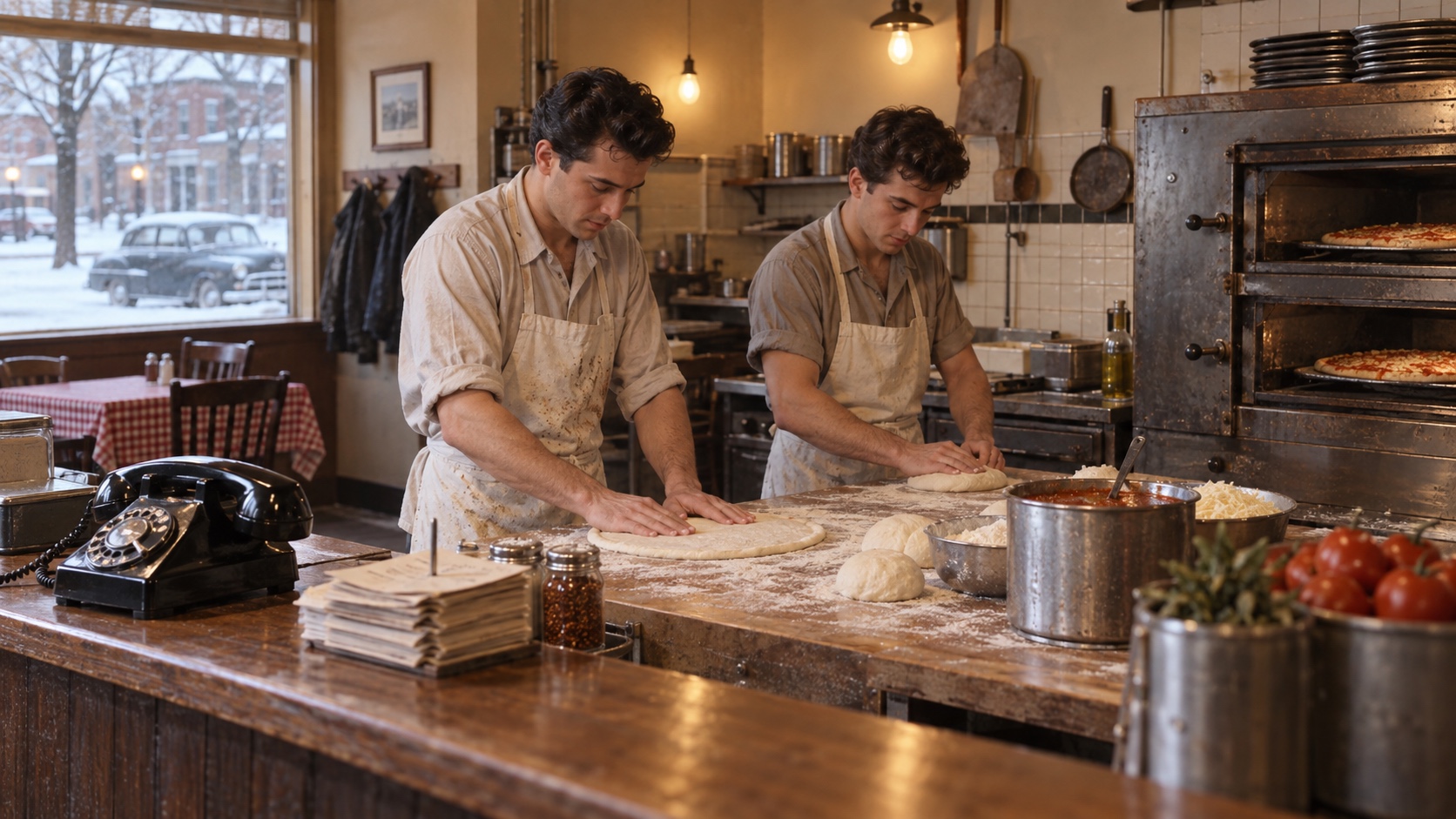
Tom and James Monaghan bought a pizza shop called DomiNick’s in Ypsilanti, Michigan, in 1960. The name did not come from a “Dominick Street,” as the imported article claimed. Domino’s own company history says James traded his share to Tom in 1961 for a Volkswagen Beetle; Tom renamed the business Domino’s Pizza, Inc. in 1965.
The familiar three-dot mark also had a practical origin: the dots represented the first three stores. The company says Tom considered adding a dot for every new location but abandoned the idea as growth accelerated. This is a better origin story than a polished founder myth because it captures how small and improvised the business still was before franchising turned it into a system.
7. The network passed 22,000 stores, but it is not one uniform operation
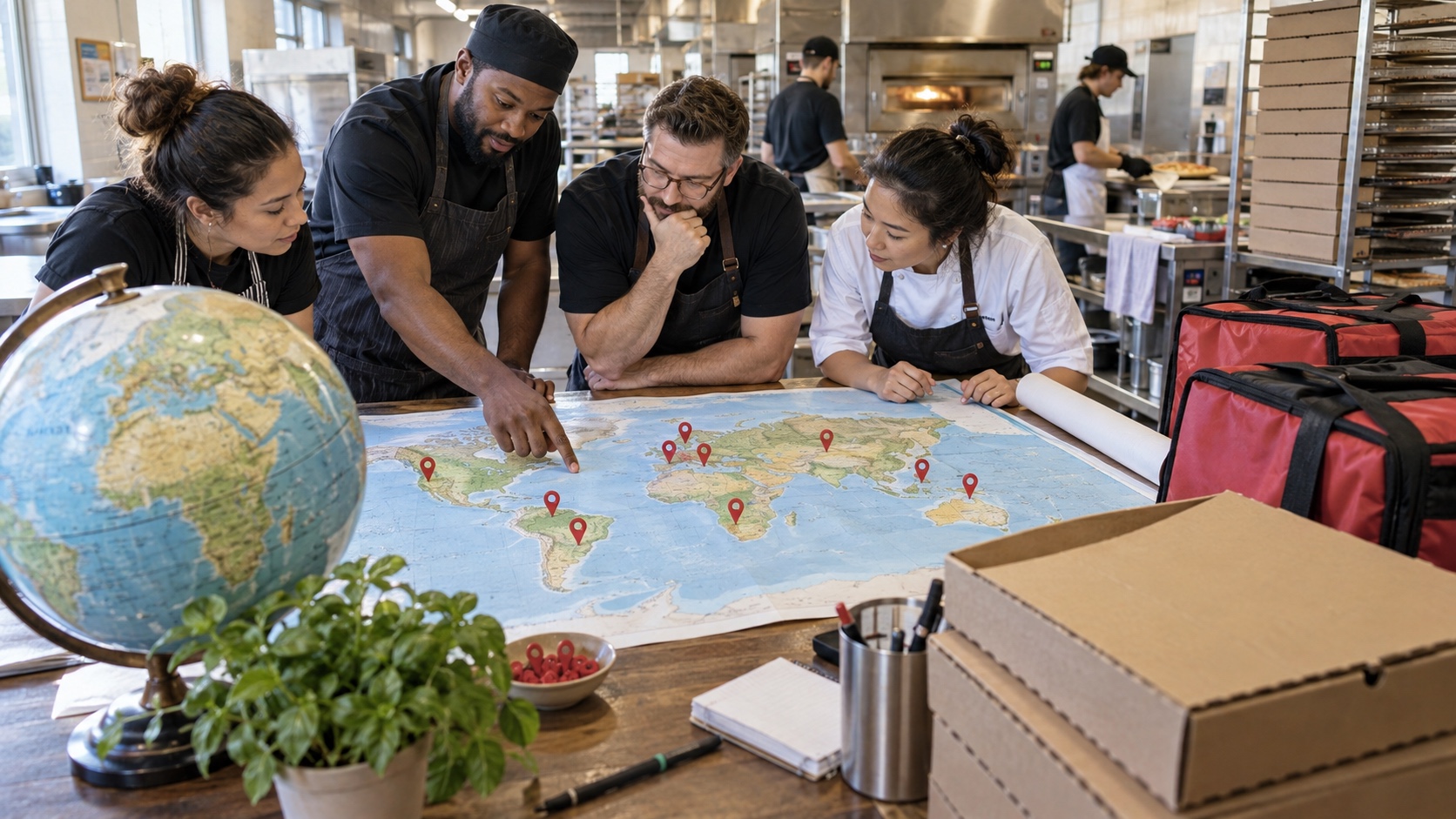
Domino’s ended fiscal 2025 with over 22,100 stores in more than 90 markets, according to its 2025 annual report. The U.S. total was 7,186: 6,924 franchised stores and 262 company-owned stores as of December 28, 2025. Those numbers replace the article’s stale “17,000 locations” line and show why a single-store anecdote should not be generalized worldwide.
International master franchisees can recommend products for local tastes, and independent U.S. franchise owners operate nearly all domestic stores. Menu availability, pricing, delivery areas, and service can therefore vary. Scale creates a recognizable system, not an identical experience at every counter. Our look at buffet chains that closed locations uses the same discipline: a brand’s national status and a particular restaurant’s status are different facts.
6. Domino’s did not invent pizza delivery; it built around delivery and carryout
The old article called Domino’s the first pizza chain to offer delivery. Domino’s historical materials say the brand pioneered aspects of pizza delivery, but they do not establish that it invented the service. Pizzerias delivered before Domino’s existed. The defensible claim is that Domino’s made delivery—and later carryout—the center of a highly repeatable store model.
The 2025 annual report describes U.S. stores as delivery- and carryout-oriented, with smaller, less expensive buildings than many dine-in restaurant concepts. It also explains the company’s “fortressing” strategy: adding stores within existing markets to shrink delivery areas and place carryout closer to customers. That operating model, rather than a claim to have invented delivery, is the distinctive fact.
5. Domino’s Tracker was a genuine national-chain first in 2008
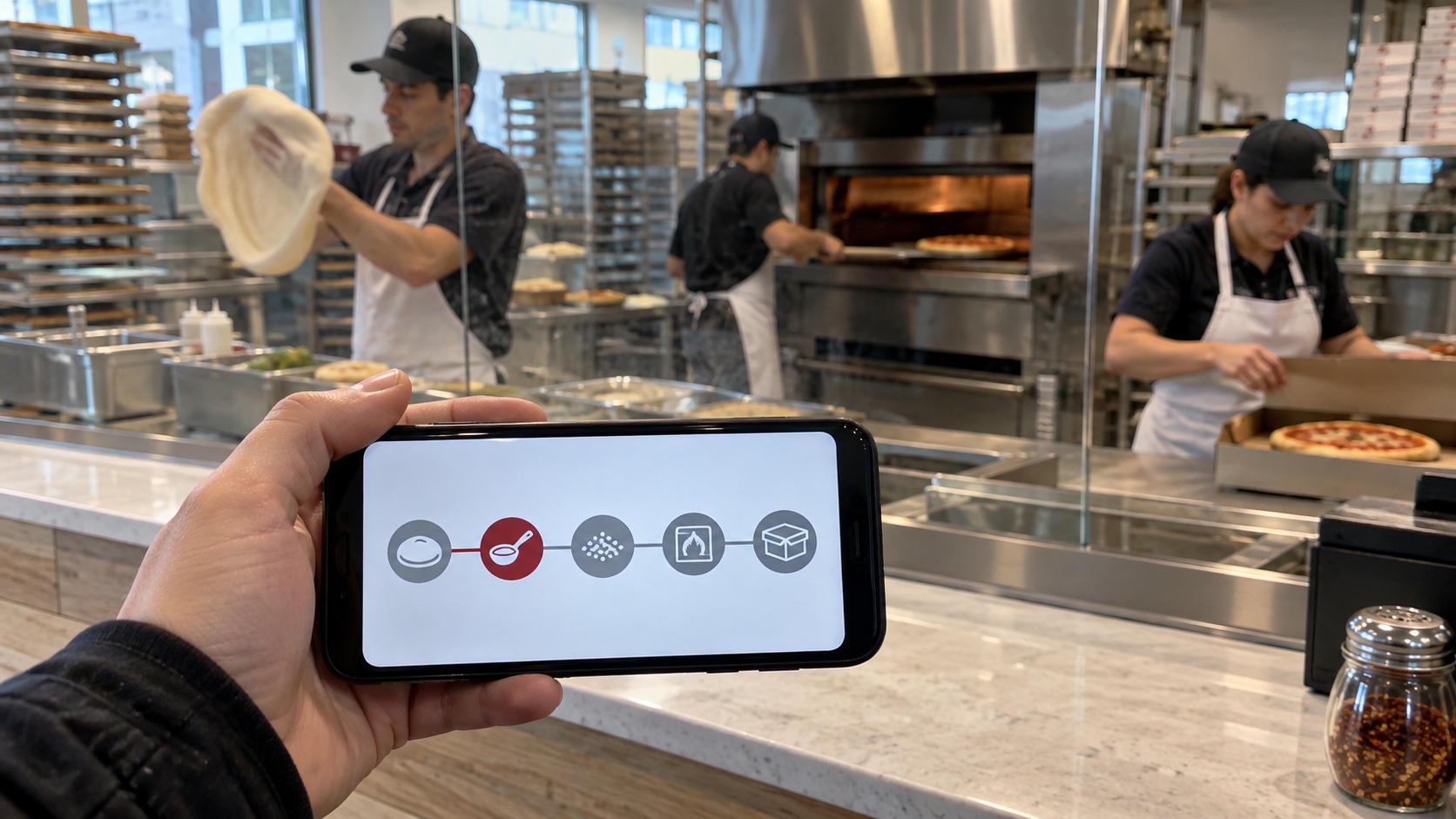
Domino’s tested its online order tracker with selected customers in December 2007 and rolled it out across the U.S. in January 2008. The original launch announcement described stages from order receipt and preparation through baking, boxing, and delivery. Domino’s calls it the first tracker developed and used by a national pizza chain, a claim that is narrower and more supportable than saying it invented all food-order tracking.
The clever part was operational, not merely visual. The display translated events from the store’s order system into something a customer could follow. Domino’s later added themes, devices, and GPS-related features, but the core promise stayed simple: make the wait legible. “Order: The Pizza Tracker Domino” is not a natural product name despite appearing in the supplied entity output; the verified name is Domino’s Tracker.
4. The U.S. 30-minute guarantee ended in 1993
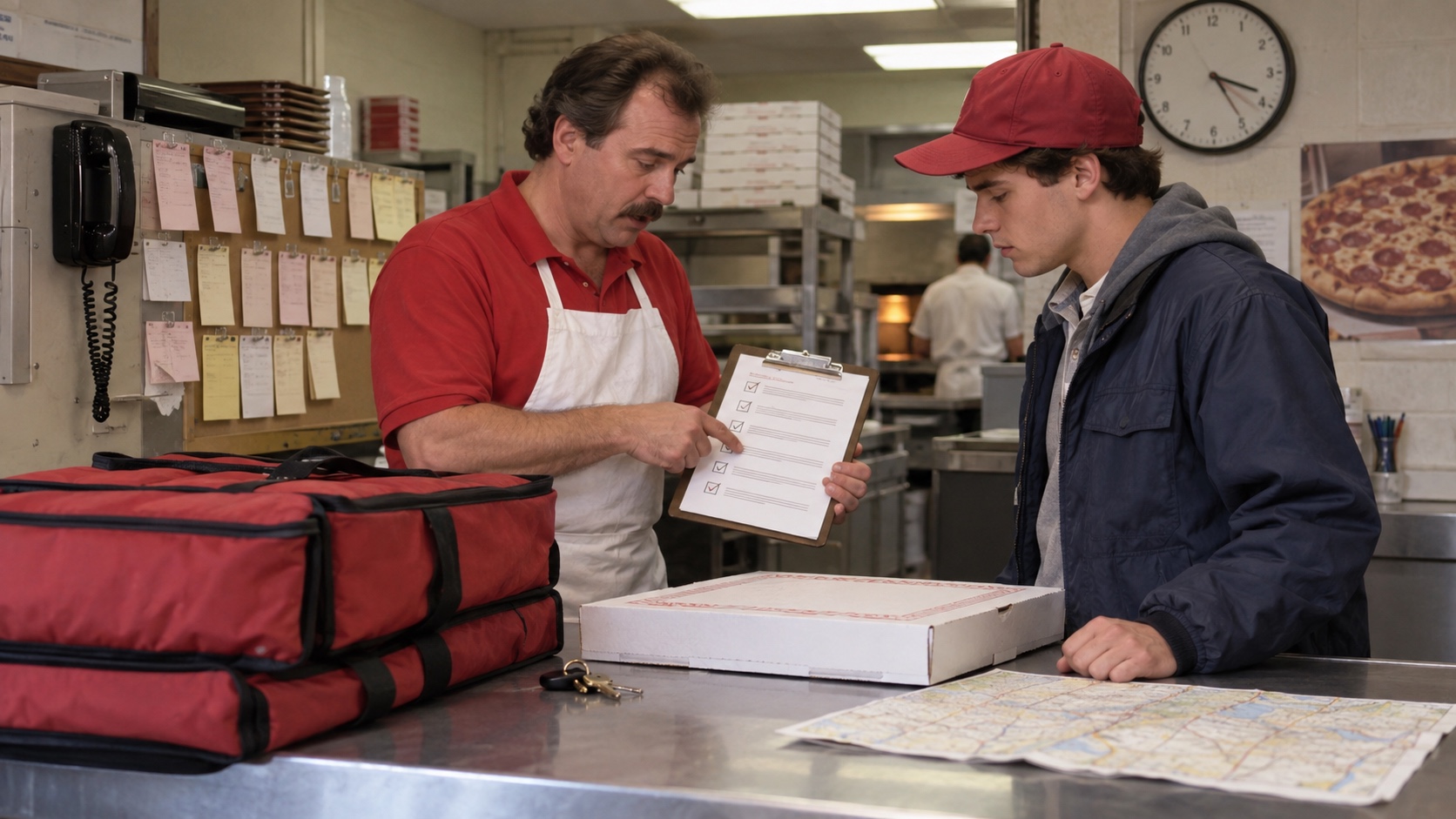
Domino’s once tied its identity to delivery in 30 minutes or less, but the national U.S. guarantee is history. In a 2007 corporate release, Domino’s said the famous guarantee promised $3 off when an order missed the half-hour mark and that the guarantee ended in 1993. The same release explicitly said its revived “You Got 30 Minutes” campaign did not guarantee delivery within 30 minutes.
That distinction removes two common errors at once: the old article treated the guarantee as current, and popular memory often turns it into “30 minutes or free.” Current delivery estimates, charges, minimums, participation, and customer remedies can vary by store and offer. Do not pressure a driver over a retired promotion; use the time shown for the actual order and contact the store if service fails.
3. The menu grew beyond pizza, but local availability still matters
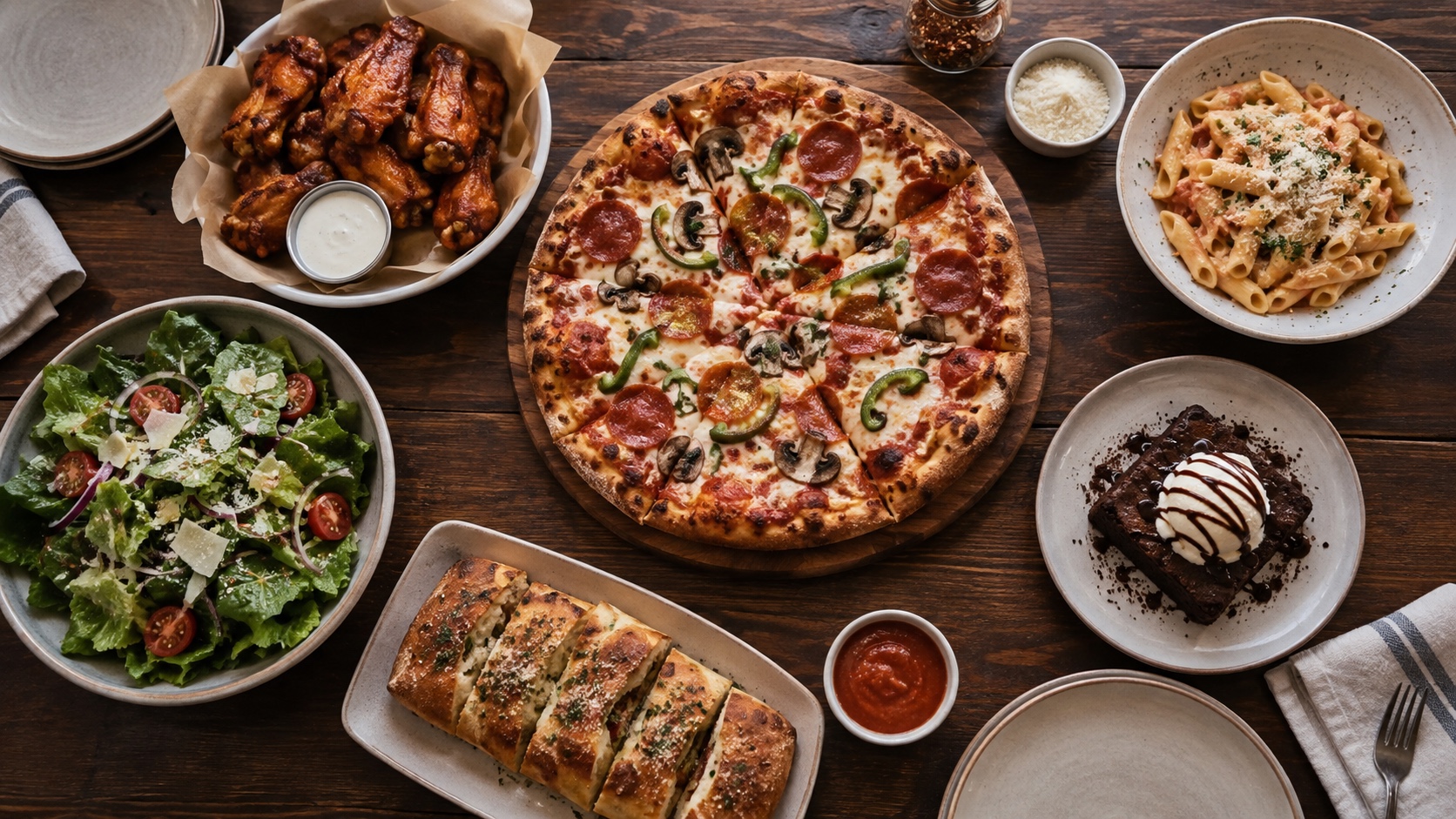
Domino’s official history dates its first national nonpizza item, breadsticks, to 1992 and Buffalo Wings to 1994. The current U.S. menu includes categories for breads, chicken, desserts, oven-baked pasta, oven-baked sandwiches, salads, drinks, and extras. This broadening lets one delivery order cover more preferences, but it also makes sweeping nutrition or value claims harder.
Participation, prices, charges, and item availability vary by store, so the national menu is a starting point rather than a promise about one address. Compare the local menu and nutrition information at checkout. If the ingredient label matters more than convenience, our current frozen-pizza label check shows how much results can change when serving sizes and product formulations are verified instead of assumed.
2. Pizza Theater was a 2012 store-design reset, not a live show
After years of development and testing, Domino’s unveiled its Pizza Theater store design in 2012. The company’s innovations page describes a more comfortable lobby, an open view of food preparation, and electronic carryout-order tracking on a lobby screen. Some stores also included chalkboards for customer feedback.
The name can sound like a themed attraction, but the practical change was visibility. Traditional Domino’s units were designed mainly for delivery, so carryout customers had little reason to linger or watch production. Pizza Theater acknowledged the growth of carryout and made the kitchen process part of the customer experience. It is a design concept used in some stores, not a guarantee that every location has an open kitchen.
1. The 2017 Ford “self-driving delivery” was a human-driven research pilot
Domino’s and Ford did run a real vehicle study in Ann Arbor in 2017, but it did not send empty autonomous cars around town as a commercial service. The official Ford announcement says randomly selected customers could receive an order from a Ford Fusion Hybrid Autonomous Research Vehicle. During the customer study, the vehicle was driven by a Ford safety engineer and carried researchers.
The research pilot focused on the “last 50 feet”: whether a customer would walk outside, find the vehicle, and use a code to open a heated compartment. Customers could follow the car through an upgraded Domino’s Tracker and receive instructions by text. That makes the test interesting even though it never proved a driverless fleet was imminent. It studied human behavior around a possible system; it was not the system itself.
What these Domino’s facts actually reveal
The pattern is more useful than a collection of rumors. Domino’s grew by simplifying a delivery-and-carryout operation, then used digital ordering, tracking, store redesigns, and highly visible experiments to reduce friction around that model. Some experiments became durable infrastructure; others remained snapshots of what the company was testing at the time.
When a claim sounds like a secret, ask what kind of evidence could verify it. A current privacy policy can document data categories. An annual report can document store counts. A dated pilot announcement can document what a test actually did. A recycled employee anecdote cannot establish a company-wide practice—and a nine-year-old concept test should not be written in the present tense.
Sources and verification
Current scale, U.S. store mix, digital-sales share, the delivery/carryout model, and the fortressing strategy were checked against Domino’s 2025 Annual Report. Founding dates and product milestones come from the official history and innovations pages. Customer-data claims were checked against the U.S. Privacy Policy effective August 2026. Tracker details come from the January 2008 launch release; the 30-minute correction comes from Domino’s 2007 campaign release; and the vehicle-test limits come from Ford’s August 2017 announcement. Facts were rechecked September 22, 2026.